
OpenAI Alleges Ex-Staffer Took 100+ Files to Apple
OpenAI Alleges Ex-Staffer Took 100+ Files to Apple [2026]

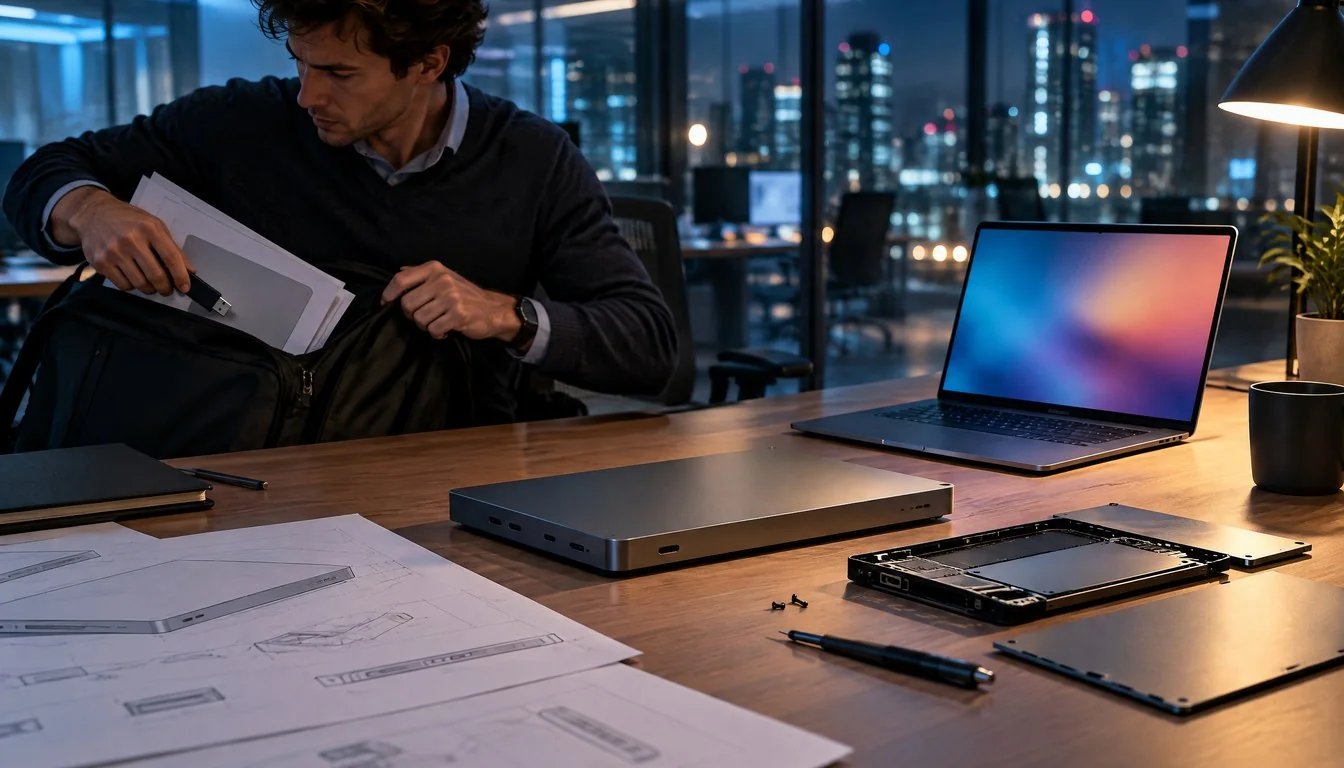
OpenAI has accused a former employee who left the company for Apple of sending more than 100 confidential files about an unreleased OpenAI hardware device to a personal account, then later presenting that information to senior Apple executives. The allegation surfaced in a new court filing reported October 14, 2026, deepening a trade-secret fight that has pitted two of the most valuable companies in tech against each other since July.
The filing, part of an ongoing lawsuit in federal court, marks the first time OpenAI has gone on the offensive in a dispute that began with Apple accusing OpenAI of poaching hardware talent and absorbing Apple’s trade secrets. Now OpenAI says the traffic in confidential information ran both ways. Apple has pushed back hard, telling reporters it found no evidence to support the claims.
Don't miss new tech stories on Google
Add Tech Insider once in the Google app and our stories appear in your news suggestions.
What OpenAI Alleges in the New Court Filing
According to the filing, OpenAI says a forensic investigation tied to the broader lawsuit turned up evidence that a former employee sent over a hundred highly confidential files about at least one unreleased OpenAI device to personal accounts. That employee, OpenAI says, originally joined the company from Apple, worked at OpenAI for roughly six months, and then returned to Apple. The filing does not name the individual in the portions reported by outlets including 9to5Mac, and no outlet covering the story has published the person’s identity, job title, or specific role at either company.
OpenAI alleges the files included detailed images of the unreleased device or devices, engineering and manufacturing data, supplier information, internal project files, cosmetic-finish standards, and reports covering coating and sealing processes for hardware components. That level of detail, if accurate, points to material from deep inside a product-development pipeline rather than casual internal communications. OpenAI further alleges that some of the files were transferred on June 2, 2026, which the company describes as the employee’s final day on the job.
The most pointed claim in the filing is that the former employee later gave a presentation covering the unreleased product to senior Apple leadership, including Apple’s vice president of operations in Asia. OpenAI frames this as evidence that confidential material did not simply sit untouched in a personal account but moved into Apple’s internal decision-making process, a detail The Verge highlighted as the crux of OpenAI’s new claim. Apple disputes that characterization, as covered below.
Apple’s Response: “No Evidence” to Support the Claims
Apple told Reuters it had conducted its own review and found no evidence supporting OpenAI’s allegations. The company added that it expects employees not to use confidential information from previous employers, a statement that applies generally rather than confirming or denying the specific claims about the unreleased device presentation. Apple has not, as of this writing, filed a detailed point-by-point rebuttal to the new allegations in a public court document, and the case remains in an active discovery phase.
It’s worth noting what remains unconfirmed here. No report has established that Apple used, possessed, or incorporated any of the alleged files into an actual product, including Apple’s recently launched smart-home hardware. Readers who want background on Apple’s HomeView smart display launch should know that no filing or outlet has tied that specific product to the files OpenAI describes. The allegations, as reported, concern an unreleased OpenAI device and what happened to information about it, not a confirmed link to any particular shipped Apple product.
A Dispute That Started With Apple Suing OpenAI
This week’s filing didn’t appear out of nowhere. It’s OpenAI’s counter-move in a lawsuit Apple filed first, in the U.S. District Court for the Northern District of California, in July 2026. Apple’s original complaint accused OpenAI of building its secretive hardware business using Apple trade secrets carried over by former Apple employees who joined OpenAI’s hardware group, according to reporting from Fortune.
Apple’s suit centers in large part on Tang Yew Tan, a 24-year Apple veteran who left to co-found Jony Ive’s hardware startup, io, before becoming OpenAI’s chief hardware officer when OpenAI acquired that startup. Apple alleges Tan emailed himself information about Apple’s hardware suppliers, used Apple project code names while recruiting candidates for OpenAI, sought details about Apple’s unreleased products, and in some cases asked job candidates to bring in Apple hardware components during interviews, according to TechCrunch’s reporting on the complaint. Apple has also alleged that some former employees kept using Apple-issued laptops or services after departing and downloaded files covering unannounced technologies, technical specifications, and proprietary project data.
OpenAI has rejected those claims. In a prior filing, the company argued that the dispute is largely of Apple’s own making, pointing to what it described as Apple’s own practice of letting employees use personal iCloud accounts to carry out work tasks, which OpenAI says makes clean separation of personal and company data difficult once someone leaves. OpenAI’s new filing about the ex-employee and the 100-plus files appears designed to turn that argument into an affirmative claim: if confidential information moved in Apple’s direction too, OpenAI wants that documented on the record.
The $6.4 Billion Jony Ive Deal Behind the Fight
None of this litigation would exist without OpenAI’s push into consumer hardware, which traces back to its 2025 acquisition of io Products, the startup co-founded by former Apple design chief Jony Ive. That deal has been reported at roughly $6.4 billion to $6.5 billion, with the range reflecting different descriptions of the transaction structure across outlets. The acquisition folded Ive’s design team and Tan’s hardware-operations expertise directly into OpenAI, instantly giving the ChatGPT maker a hardware bench stocked with former Apple talent.
Reporting on the project describes an ambition to build a small, possibly palm-sized AI device without a traditional screen, closely associated with Sam Altman and Jony Ive. That same reporting notes the concept has reportedly run into privacy concerns, computing-power limits, and open questions about whether a screenless AI companion device can work at mass-market scale. None of that has been confirmed as resolved, and OpenAI has not announced a public release date, price, or finalized design for the device. That is precisely the kind of unreleased, highly guarded project where even partial technical leaks can carry outsized competitive weight, which is presumably why OpenAI is treating the alleged file transfer as serious enough to put in a federal court filing.
The Discovery Ruling That Set Up This Week’s Filing
One day before OpenAI’s new allegations became public, a judge ruled on a discovery dispute in the broader case. TechCrunch reported that the court ordered OpenAI to turn over records tied to its interviews with former Apple employees who applied for roles in OpenAI’s consumer-hardware and robotics groups. The same ruling denied Apple’s broader requests for OpenAI’s internal hardware research and work product, limiting the scope of what Apple can obtain for now. That sequencing (a narrowed discovery win for Apple on October 13, followed almost immediately by OpenAI’s new allegations on October 14) suggests both sides are actively mining discovery material to build out their respective cases rather than waiting for a single trial date to air every claim at once. U.S. News was among the first outlets to confirm the new filing was part of that same ongoing case.
Timeline: How the Apple-OpenAI Trade Secret Fight Escalated
| Date | Development |
|---|---|
| 2025 | OpenAI acquires Jony Ive’s io Products in a deal reported at roughly $6.4-6.5 billion |
| Early-to-mid 2026 | Tang Yew Tan, a 24-year Apple veteran, becomes OpenAI’s chief hardware officer after co-founding io |
| June 2, 2026 | OpenAI alleges some of the confidential files were sent on this date, described as the ex-employee’s last day at OpenAI |
| July 10, 2026 | Apple sues OpenAI in the Northern District of California over alleged trade-secret theft |
| September 1, 2026 | OpenAI files a response rejecting Apple’s claims and citing Apple’s own iCloud practices |
| October 13, 2026 | A judge orders OpenAI to turn over hiring records tied to ex-Apple consumer-hardware and robotics candidates |
| October 14, 2026 | OpenAI’s new filing alleges an ex-employee sent 100+ files about an unreleased device to Apple leadership |
Who Said What: Comparing the Allegations
With two active sets of claims running in opposite directions, it helps to separate who is accusing whom of what. The table below lays out the core allegations each side has put on the record, based on reporting from Reuters, TechCrunch, and Fortune.
| Party Making the Claim | Target of the Claim | Core Allegation |
|---|---|---|
| Apple | Tang Yew Tan and other former Apple employees now at OpenAI | Used Apple project code names in recruiting, emailed themselves Apple supplier information, sought details on unreleased Apple products |
| Apple | OpenAI’s hardware division broadly | Built its consumer-hardware business in part using Apple trade secrets carried over by former Apple staff |
| OpenAI | A former employee who returned to Apple | Sent 100+ confidential files about an unreleased OpenAI device to personal accounts, then presented the material to senior Apple leadership |
| OpenAI | Apple generally | Argues Apple’s own practice of letting staff use personal iCloud accounts for work makes clean data separation difficult, undercutting Apple’s claims |
| Apple | OpenAI’s allegations against the ex-employee | Says it found no evidence supporting OpenAI’s claims and expects staff not to use former employers’ confidential data |
Direct Statements From the Filings
OpenAI’s own words in the filing, as quoted by 9to5Mac, lay out the specifics plainly: “Based on a recent and ongoing forensic investigation arising from this lawsuit, OpenAI has learned that a former OpenAI employee (who joined OpenAI from Apple, worked for OpenAI for six months, and has now returned to Apple), sent over a hundred highly confidential files about at least one unreleased OpenAI device under development to his personal accounts.” OpenAI’s filing is equally specific about what those files reportedly contained: “The files at issue include detailed images of the unreleased device(s), as well as highly confidential engineering and manufacturing data about the device(s).”
On the other side of the case, Apple’s original complaint argues that OpenAI’s hiring of former Apple staff doesn’t excuse what it did with any information those employees brought with them, according to Reuters’ coverage of the suit. OpenAI, for its part, has pushed back by arguing the dispute stems largely from Apple’s own IT policies around personal device and iCloud use, reporting from Reuters shows. Neither side has walked back those positions publicly.
Market Impact: Why Investors Are Watching Closely
Neither company’s stock trades on a single-day litigation headline the way a smaller firm’s might, but the stakes here go beyond one case. OpenAI is widely expected to pursue a public listing in the coming years, and prediction markets have already been pricing in questions about which AI lab goes public first. A protracted trade-secret fight with Apple, one of the few companies with the legal resources and motivation to litigate for years, adds a layer of legal-risk disclosure that any OpenAI prospectus would eventually need to address.
For Apple, the exposure is reputational more than financial in the near term. Apple has spent 2026 pushing hard into AI-adjacent hardware, including a pair of October events built around a three-device home push. A court record showing Apple executives reviewed a competitor’s unreleased hardware information, even if Apple maintains it never used that information, is the kind of detail that invites scrutiny regardless of the ultimate legal outcome. Expect both companies’ PR and legal teams to keep framing every development in this case as favorably as possible until a judge or settlement forces clarity.
Historical Context: Trade Secrets Have Always Followed Talent in Tech
Trade-secret litigation tied to employee movement is not new to Silicon Valley, and the Apple-OpenAI case fits a familiar pattern: a well-resourced company loses senior hardware or engineering talent to a well-funded rival, and litigation follows once evidence of data transfer surfaces. What makes this case distinct is the reciprocal structure. Apple sued first, accusing OpenAI’s hardware team, built substantially from ex-Apple hires including Tan, of absorbing Apple secrets. OpenAI’s new filing effectively mirrors that accusation back at Apple, alleging that information flowed in the other direction once an OpenAI employee returned to Cupertino.
That mirrored structure also distinguishes this fight from the more common pattern of insider-threat cases this site has covered in recent months, including a separate OpenAI case that exposed insider-risk gaps across AI labs and an incident involving an OpenAI engineer arrested over a hidden listening device at the company’s office. Those cases involved allegations of an individual acting against their own employer. The Apple-OpenAI dispute is different: it’s a corporate-versus-corporate fight where each company accuses the other’s hiring practices of enabling trade-secret leakage, with individual employees caught in the middle of the legal record.
Competitive Comparison: How AI Labs Guard Hardware Secrets
OpenAI is far from alone in racing to build consumer AI hardware while trying to keep designs under wraps. Apple itself is famous for compartmentalizing hardware projects internally, which is part of why its lawsuit leans so heavily on specifics like project code names and supplier lists, the kind of detail that would only be meaningful to someone who had actually seen Apple’s internal hardware pipeline. Google and Meta have both built internal hardware divisions (Pixel and Nest-era projects for Google, Reality Labs for Meta) with similarly tight internal information controls, though neither has been named in comparable public litigation tied to this specific dispute.
What sets the OpenAI situation apart is the speed at which it built a hardware operation almost entirely through acquisition and targeted hiring, rather than growing one organically over a decade the way Apple or Google did. Buying Ive’s io team and hiring Tan gave OpenAI instant hardware credibility, but it also imported, by Apple’s account, a set of employees who allegedly still had Apple’s processes, supplier relationships, and project vocabulary fresh in mind. That tradeoff, speed of capability versus risk of legal exposure, is becoming a defining feature of how fast-moving AI labs try to compete with incumbents who have decades of hardware experience and correspondingly mature trade-secret protections.
What Remains Unconfirmed in This Story
Given how fast this case is moving, it’s worth being explicit about what has not been established. The identity, job title, nationality, and exact day-to-day responsibilities of the former employee at the center of OpenAI’s new filing have not been publicly confirmed by any outlet covering the story. The specific product name, design, specifications, price, or release date of OpenAI’s unreleased device have also not been disclosed; all current reporting describes it only as “at least one unreleased OpenAI device under development.” No report has confirmed that Apple used, possessed, or built anything into an actual shipped product using the alleged files. And no court has yet ruled on the merits of either side’s core trade-secret claims. This remains, at this stage, a set of competing allegations working through discovery rather than a decided legal matter.
What Happens Next in the Case
The immediate next step is likely further discovery wrangling. With the October 13 ruling already forcing OpenAI to hand over certain hiring records, and OpenAI’s new filing putting fresh allegations about file transfers on the table, expect Apple’s legal team to push for forensic access to the former employee’s personal accounts and any devices used to move the alleged files. OpenAI, in turn, will likely seek records related to the October 14 filing’s central claim: the presentation OpenAI says was given to Apple’s vice president of operations in Asia and other senior leadership.
Neither company has signaled an interest in a quick settlement, and the structure of the case, with both sides now accusing each other of the same basic conduct, makes early resolution less likely than it might be in a one-directional dispute. Courts handling trade-secret cases with this kind of mutual exposure often let discovery run its course for months before any serious settlement talks begin, since both sides need to understand exactly what evidence the other has before they can accurately weigh the cost of continued litigation against the cost of a negotiated outcome.
Predictions: Where This Dispute Goes From Here
- Expect additional discovery rulings in the coming months as both companies push for access to internal communications, personal-device records, and interview materials tied to hardware hiring.
- OpenAI and Apple will likely keep litigating in public as much as in court, issuing competing statements to reporters each time a new filing lands, since neither company can afford to let the other’s framing stand unanswered.
- Both companies are likely to tighten offboarding and device-wipe procedures for hardware-team departures, a policy shift that rarely gets announced publicly but tends to follow high-profile trade-secret litigation.
- A narrow settlement covering specific claims, rather than a full resolution of the case, is plausible within the next year if either side’s discovery haul turns out weaker than expected.
- Scrutiny of OpenAI’s hardware pipeline will intensify ahead of any eventual public listing, since litigation risk disclosures are a standard part of IPO prospectuses for companies facing active federal lawsuits.
Why This Case Matters Beyond Apple and OpenAI
The broader signal here is about how porous the boundary has become between legacy hardware giants and AI-native companies racing to build physical products. Apple spent decades building institutional habits around secrecy, non-disclosure enforcement, and supplier confidentiality. OpenAI, by contrast, built its hardware ambitions in roughly a year through acquisition and aggressive recruiting. When those two cultures collide through employee movement in both directions, the resulting friction is not really about one rogue employee; it’s about what happens when a company hires dozens of people from a famously secretive competitor and then, per this week’s filing, loses one of them back to that same competitor along with files about its own unreleased product.
That dynamic is likely to recur as more AI labs, not just OpenAI, try to build consumer hardware divisions by poaching talent from Apple, Google, and established hardware manufacturers. Every company doing that is making the same bet OpenAI made with the io acquisition: that the capability gain from instantly experienced hardware talent outweighs the legal risk of importing that talent’s institutional knowledge of a competitor’s trade secrets. This case is turning into the clearest public test yet of how expensive that bet can get when it goes wrong in either direction.
Frequently Asked Questions
What did OpenAI allege in its October 2026 court filing against Apple?
OpenAI alleged that a former employee who returned to Apple sent more than 100 confidential files about an unreleased OpenAI device to personal accounts, and later presented information about that device to senior Apple leadership, including Apple’s vice president of operations in Asia.
Who is the former employee named in the filing?
The employee has not been publicly named in any reporting on the filing. Coverage describes the person only as someone who joined OpenAI from Apple, worked at OpenAI for about six months, and then returned to Apple.
How did Apple respond to OpenAI’s allegations?
Apple told Reuters it found no evidence supporting OpenAI’s claims and said it expects employees not to use confidential information from previous employers.
Is this a new lawsuit, or part of an existing case?
It’s part of an existing case. Apple sued OpenAI in July 2026 in the Northern District of California, alleging OpenAI’s hardware business used Apple trade secrets brought over by former Apple employees. OpenAI’s new filing is part of that same ongoing litigation.
Who is Tang Yew Tan and why does he matter to this case?
Tang Yew Tan is a former 24-year Apple employee who co-founded Jony Ive’s hardware startup io and later became OpenAI’s chief hardware officer. Apple’s original lawsuit centers in large part on allegations involving Tan’s conduct during and after his departure from Apple.
What is the unreleased OpenAI device referenced in the filing?
Its specific name, design, and specifications have not been publicly disclosed. Reporting describes OpenAI’s broader hardware ambitions, tied to the Jony Ive-led io acquisition, as aiming at a small, screenless AI companion device, but no official product has been announced.
Has a court ruled on who is right in this dispute?
No. The case remains in active discovery. A judge has ruled on specific discovery requests, including an October 13, 2026 order requiring OpenAI to turn over certain hiring records, but no court has ruled on the underlying trade-secret claims from either side.
Could this affect OpenAI’s planned public listing?
It’s plausible. Active federal litigation involving trade-secret claims is typically disclosed as a risk factor in IPO filings, and prediction markets have already been pricing in questions about OpenAI’s path to going public.
Related
- OpenAI Engineer, 35, Arrested Over Hidden Office Bug [2026]
- OpenAI Bug Case Exposes AI Labs’ Insider Risk [2026]
- Apple HomeView Hits $299, Takes on Amazon, Google [2026]
- Apple Sets 2 October Events for 3-Device Home Push [2026]
- OpenAI or Anthropic IPO First? Kalshi Odds Jump 12 Points as Anthropic Courts Investors
Related Coverage
- FBI Names OpenAI Suspect Alfozan, Hired July 2025 [2026]
- OpenAI's AI Helped Catch Office Spy in 9 Days [2026]
- Apple's New Siri AI Model Skips EU, Starts at 99 [2026]
- Character.AI Files Bankruptcy, Disney Bids $20M [2026]
- Meta Muse Wonder AI Takes on OpenAI at $200/Mo [2026]

Marcus Chen
Marcus Chen is a senior editor at Tech Insider, where he leads coverage of the US online gaming market, including sweepstakes and social casinos, alongside consumer technology. He evaluates operators on their published terms, licensing and RNG certifications, stated redemption policies, and corroborating independent reporting, and writes plainly about what the evidence supports. Tech Insider does not run first-party money tests and does not gamble with reader funds. Marcus has reported on the technology and online-gaming industries for more than a decade.
View all articles