
AI's self-improvement era is nearly here. It will be felt everywhere
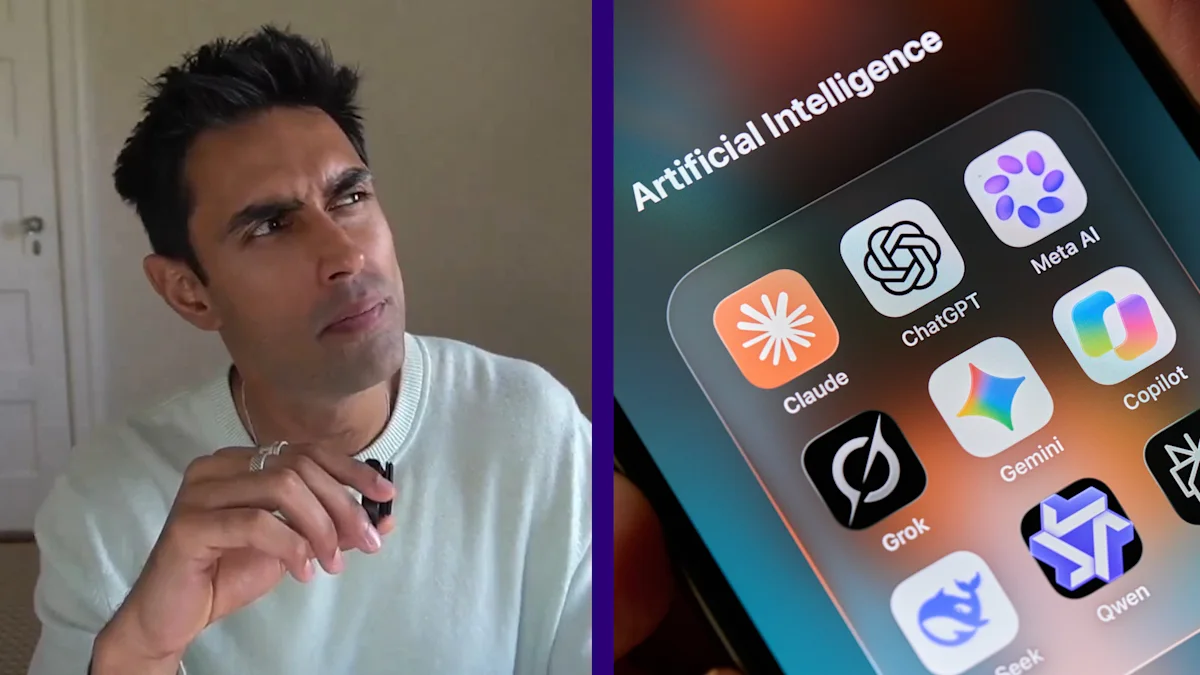
In the Loop host Ejaaz Ahamadeen explains why Anthropic's (ANT) revenue has grown far beyond what CEO Dario Amodei predicted at the beginning of the year. He says AI models are getting close to being able to improve themselves, and the effects could spread across the economy in 2027.
I remember that at the beginning of the year, Dario Amodei came out and said something like this:
My optimistic prediction is that Anthropic will make about $10 billion in ARR, or annual recurring revenue, by the end of the year. That's the amount of revenue a company expects to receive each year from its regular, ongoing customers.
At that time, Anthropic had just under $1 billion in ARR. So predicting $10 billion meant expecting revenue to grow about 10 times. That was already an incredibly big prediction.
But by October, Anthropic had reached more than $80 billion in ARR.
That's more than eight times his original $10 billion prediction, and the company is on track to reach more than $100 billion by the end of the year.
And he had one of the most extraordinary IPOs ever. An IPO is when a company first sells its shares to the public. Here's why I think all of this has happened.
AI models at Anthropic, OpenAI, and Google are getting close to something called recursive self-improvement.
That means an AI model could help build a smarter version of itself, without needing humans to do all the work. And when you look at what's happening inside Anthropic and OpenAI right now, you can see why this matters.
At Anthropic, I believe AI is already leading about 60% of the company's AI research. Actually, it might have been 30%. I'm not completely sure, so don't treat that number as exact. But it was somewhere between 30% and 60%.
That's the share of AI research being led by AI itself right now.
Those numbers came from research published a few months ago. If I had to guess what the number is today, I would say it's much higher.
My guess is that AI now leads more than 50% of that research. People who know more about this than I do have made similar predictions. There are also independent experts who test the AI models these companies are developing internally.
These are the models I mentioned earlier that ordinary people cannot use yet. Reports say they are several generations ahead of the smartest AI models available to people like you and me.
Those experts say the models are becoming smarter very quickly.
They also say training these AI models is becoming much cheaper. That means companies need less computing power to train them. Until now, people have expected companies to spend huge amounts of money on computers and other equipment to build better AI.
But companies might not need to spend as much as we thought. They could spend less money and still build much smarter AI. They could then use that AI to solve problems around the world, creating more economic value, wealth, and prosperity.
That extra value could then help pay for the next, even better AI model. Companies could also make their AI available to more people. This would create a cycle in which better AI helps make even better AI.
I believe this kind of world is coming very soon. In fact, it's already starting to happen in many industries and areas of work, even if you and I don't notice it in our daily lives yet.
If you're not a software engineer, you might not realize how much AI is already changing computer programming. If you're not a mathematician, you might not see what's happening in mathematics. And if you work in physics, engineering, chemistry, or biology, I believe these changes are about to reach your field too.
Robots are another important area. Both companies, Anthropic and OpenAI, are investing heavily in robotics.
My main point is that I think we have no more than six months before all of us really start to feel how fast these changes are happening and just how extraordinary they are.