
Micronics Japan And 2 More AI Chip Stocks To Watch
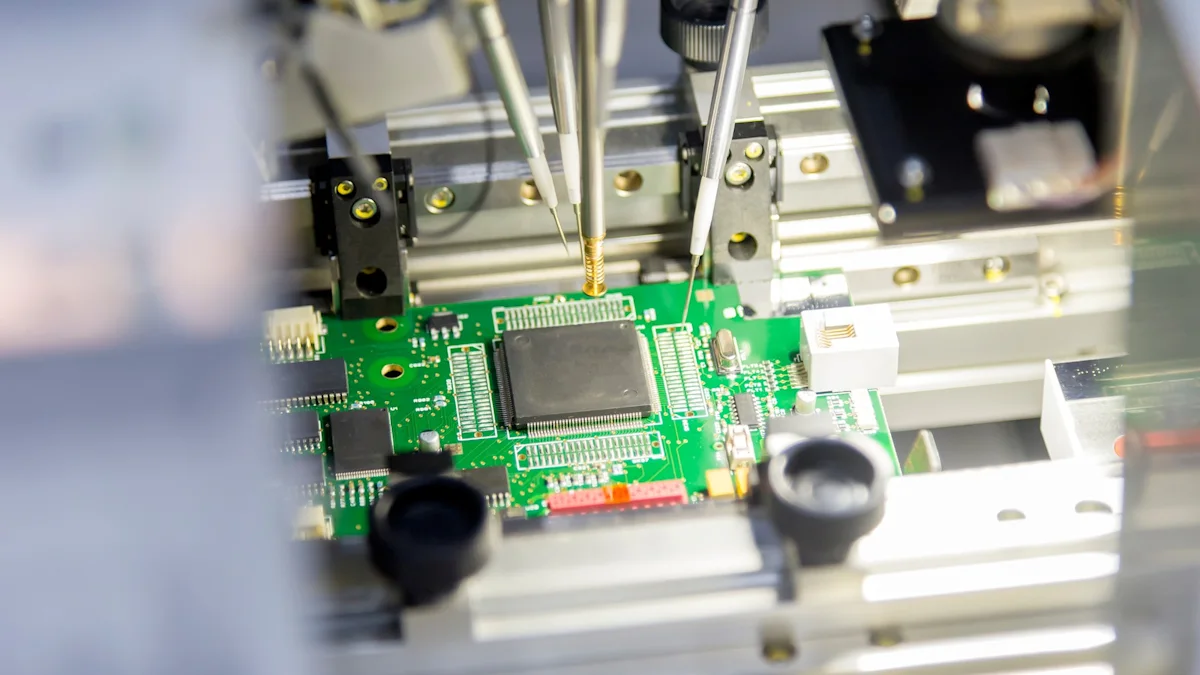
Computer chips recently passed oil and gas to become the world's biggest category of exported goods. This shows where countries and businesses are putting more of their money and attention. The equipment used to make chips for artificial intelligence (AI) is now important to international trade, relationships between countries, and investment. Investors who ignore this change could miss opportunities. This article looks at three stocks selected from our semiconductor hardware supply chain screening tool. These companies could benefit from the growing demand for AI chips.
The three stocks below are only a small part of the industry. Our full Semiconductor Supply Chain screening tool found 70 more hardware companies with potentially interesting investment opportunities that are not discussed here.
Micronics Japan (TSE:6871)
Overview: Micronics Japan makes and sells equipment used to test computer chips. Its products include probe cards and wafer probers, which help check chips during manufacturing. It also makes tools for measuring the human body and checking display screens.
Operations: Micronics Japan earns most of its ¥101,725 million in revenue from its Probe Card Business. Its TE Business brings in a smaller amount.
Market Cap: ¥317.1 billion.
Micronics Japan plays a direct role in the growth of AI hardware. Its probe cards, wafer probers, and test sockets help manufacturers check that chips work properly before shipping them to customers. Analysts expect the company's revenue to grow by about 20.4% each year. Its profit margins are in the mid-20% range. This means profits could grow strongly if demand for chip testing keeps increasing. However, the outcome also depends on a particular risk in the market for chip-testing equipment that investors may overlook.
Technoprobe (BIT:TPRO)
Overview: Technoprobe designs and makes probe cards and mechanical connections that allow chip manufacturers to use electricity to test advanced semiconductor wafers and chips designed for AI.
Operations: Technoprobe earns about €766.6 million from semiconductor equipment and services. Much of this comes from Asia, which accounts for €410 million, and America, which accounts for €313.2 million.
Market Cap: €11.0 billion.
Technoprobe is important to the AI chip supply chain because its testing equipment helps decide whether chips are ready to leave the factory and be shipped to customers. Sandrodream, an investor in the Simply Wall St Community who wrote the original analysis, believes the company's future depends on how much it can expand this testing business.
"The company's operating plan aims to reach an annual production capacity worth €1.6 billion by the end of the first quarter of 2027 and €2 billion by the end of 2027. However, management explains that these figures describe how much the company could produce, not revenue it is guaranteed to earn (conference call covering the first nine months of 2026)."
A key question for Technoprobe is whether future demand for AI chip testing will be high enough to make good use of its planned increase in production capacity. This depends on an assumption about future demand that has not yet been proven.
The full analysis of Technoprobe looks more closely at this question. It explains how production capacity, the company's ability to set prices, and demand for AI chip testing could help the business grow faster or cause its growth to slow.
Teradyne (TER)
Overview: Teradyne makes automated machines that test large numbers of computer chips, including chips used in AI data centers. It also has smaller businesses that make robotics equipment and test other products.
Operations: Teradyne earns about US$4.2 billion from its Semiconductor Test business. Its smaller Robotics business brings in US$376 million, while its Product Test business brings in US$436 million.
Market Cap: US$33.3 billion.
Teradyne is an important company in the semiconductor supply chain because its testing machines help make sure advanced AI chips are ready to be used in data centers. Analysts whose views are combined in the Simply Wall St analysis believe this role could strongly influence the company's future profits and cash flow, which is the money moving into and out of the business.
"Teradyne continues to get more than 60% of its revenue from demand linked to AI data centers. The company reported record revenue of about US$1.33 billion in the second quarter of 2026 and expects an even stronger second half of 2026. This suggests that orders for AI-related testing and automation equipment are continuing and could help increase future revenue and profits."
One important risk is that companies may quietly change how much money they plan to spend on AI equipment and infrastructure. These changes could affect how much they spend on chip testing and how much profit Teradyne earns from its sales.
The full analysis of Teradyne examines how these spending changes could affect the company. It looks at whether demand for testing equipment is growing faster or whether that growth could be hiding new risks.
This article provides general information and was created with help from AI tools, using data and research from Simply Wall St. Our comments are based only on past financial information and analysts' predictions. We use a method designed to be fair and unbiased. Our articles are not financial advice. This article does not recommend buying or selling any stock. It also does not consider your personal goals or financial situation. Our aim is to provide research focused on long-term investing, using important business and financial information. Our analysis may not include the latest company announcements that could affect stock prices or other important information that cannot easily be measured with numbers. Simply Wall St does not own shares in any of the stocks mentioned.