
6 Ways AI Is Changing the Cybersecurity Landscape
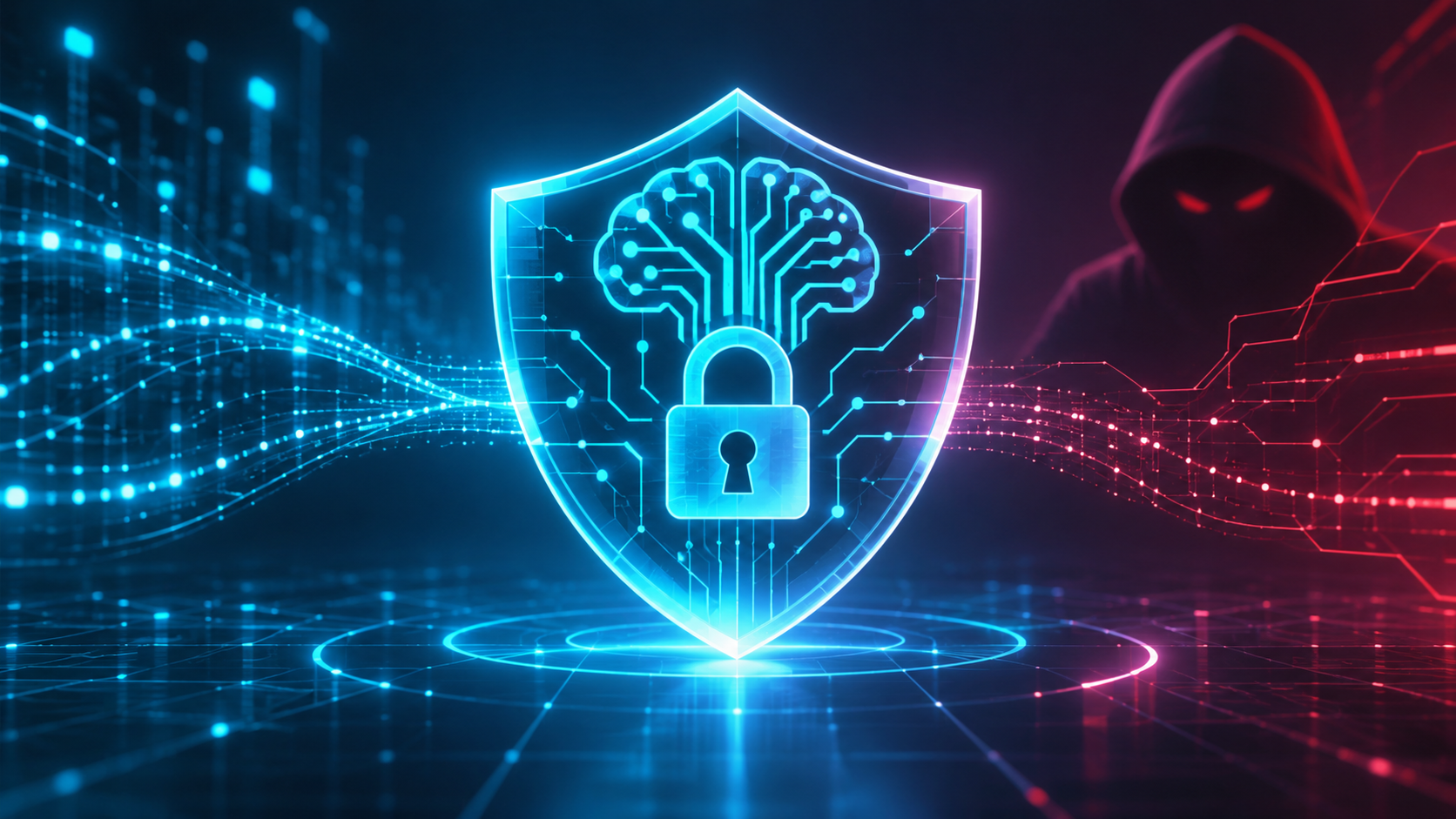
Artificial intelligence (AI) is changing almost every industry, including cybersecurity. Cybersecurity means protecting computers, networks and information from online attacks. AI can help find threats as they happen, but it can also help criminals carry out more advanced attacks. This makes AI one of the most important technologies affecting online security today.
According to the World Economic Forum's Global Cybersecurity Outlook 2026, 94% of people surveyed believe AI will be the biggest cause of change in cybersecurity over the next year. AI gives organisations powerful new ways to protect themselves, but it also creates new dangers that they need to take seriously.
Here are six ways AI is changing cybersecurity, both for better and for worse.
Finding threats faster and more accurately
One of the biggest benefits of AI is that it can spot possible security threats faster than older security tools.
Security tools that use AI can look through huge amounts of information, notice unusual behaviour and warn people about suspicious activity they might otherwise miss. This is especially helpful because cyberattacks are becoming more complicated, and security teams are receiving more warnings than they can easily handle.
AI can automatically handle some of the work involved in finding threats. This gives cybersecurity experts more time to focus on the most dangerous problems. It may even help them stop attacks before they cause serious harm.
More convincing phishing scams
Unfortunately, criminals are also using the same AI technology that helps organisations improve their security.
Phishing is when criminals send fake messages to trick people into sharing information or doing something unsafe. AI helps criminals write much more believable phishing emails. They can create personal messages that look as though they came from real companies, coworkers or senior managers. The days when scam emails were easy to recognise, such as messages from supposedly rich Nigerian royalty, are fading.
Microsoft's Digital Defense Report 2026 explains that AI helps attackers create large numbers of personalised phishing scams and other tricks that manipulate people. This makes it harder to tell whether a message is real or dangerous.
Because of this, organisations need to teach employees how to recognise these scams. They also need extra protection, such as phishing-resistant multi-factor authentication, which uses additional identity checks designed to stop attackers from getting into accounts through phishing.
Responding to attacks automatically
When a cyberattack happens, acting quickly is very important. AI helps organisations respond faster by automatically handling some of the steps needed to deal with an attack.
AI security systems can help find accounts that attackers have broken into, separate suspicious devices from other systems and warn security teams before the problem gets worse. This can take some of the pressure off cybersecurity workers who already have too much to do. It also gives them more time to investigate difficult problems and help systems recover after an attack.
However, people still need to watch over these systems. Organisations must carefully check what AI is doing because a wrong decision could interrupt normal work or cause unnecessary problems.
Deepfakes are creating new security problems
AI can now create realistic-looking videos and realistic-sounding voices. This has created a new danger called deepfake impersonation, where someone uses AI to pretend to be another person.
Cybercriminals can use AI to copy the voices and appearances of people others trust, such as company leaders, coworkers and business partners. They can use these fake voices and videos to trick employees into sending money, sharing private information or giving someone access to important computer systems. As deepfake tools become easier to use, organisations can no longer trust someone's voice or appearance alone as proof of who they are.
It will become more important for organisations to check important requests in a separate, reliable way. They will also need to teach employees how criminals can use AI to pretend to be someone else.
AI helps organisations find security weaknesses
Another big advantage of AI is that it can help organisations protect themselves before an attack happens.
Instead of waiting for criminals to discover a weakness, organisations can use AI tools to check their computer systems, find possible security problems and decide which problems need to be fixed first.
AI can also help cybersecurity teams study information about possible threats and understand which security weaknesses are most dangerous for their organisation.
Finding and fixing problems earlier could help businesses lower their chances of being attacked. This is especially useful as their computer systems, networks and online services become more complicated.
However, people still need to check the problems AI finds. This helps make sure the risks are real and that the most important problems get attention first.
Cyberattacks using AI are becoming real
One of the most worrying changes is that attackers are starting to use AI to carry out increasingly complicated parts of cyberattacks.
AI company Anthropic has already reported four documented cases, at the time of writing, involving AI-directed cyber spying campaigns. Cyber spying means secretly trying to get information from computer systems. According to Anthropic, attackers used its Claude AI system to automatically carry out large parts of an attack campaign. This showed that AI could make advanced cyberattacks possible with less time, fewer resources and less specialist knowledge.
As AI becomes more capable, organisations need to prepare for a world where attackers can launch more attacks, change their methods and operate much faster than before.
Finding the right balance
AI is clearly changing cybersecurity. But whether it becomes one of an organisation's best tools or one of its biggest weaknesses depends on how well the organisation uses and manages it.
AI offers useful ways to find threats, respond to attacks automatically and make computer systems safer. At the same time, it gives cybercriminals new ways to find and take advantage of security weaknesses.
Businesses that start using AI must do so carefully and responsibly. They also need strong security practices and must keep investing in skilled people who understand cybersecurity. In the end, the future of cybersecurity is not about replacing people with AI. It is about people and technology working together to stay ahead of new and changing threats.