
UNU Macau AI Conference 2026 advances a human-centred approach to AI and education
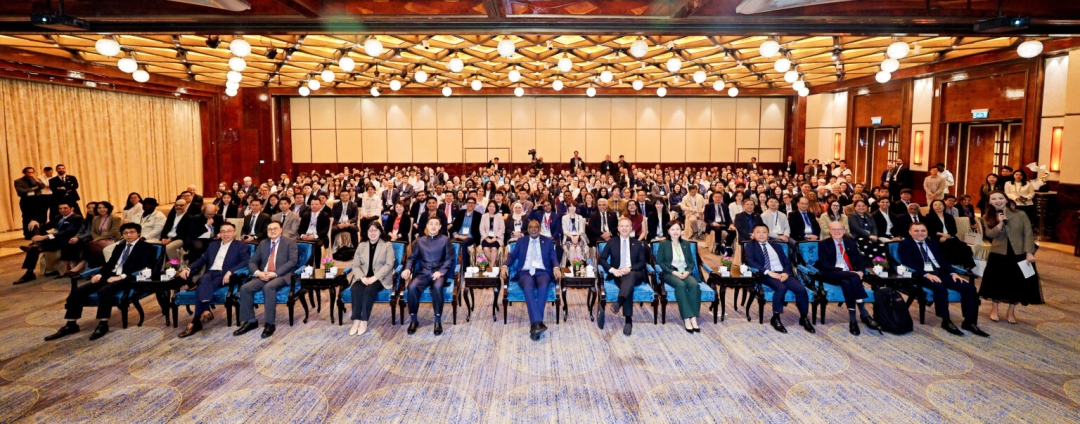
Macau SAR, China – Nov. 26, 2026 – Artificial intelligence (AI) is changing how people learn, how schools check what students know, and what skills people need. Education has two important jobs during this change. It must use AI to help people learn better. It must also teach people the knowledge and good judgment they need to guide how AI is developed and used responsibly.
- Working on Two Challenges: More than 400 leaders, teachers, researchers, and young inventors from around the world met at MGM MACAU. They discussed two connected goals: using AI to help people learn, called AI for Learning, and teaching people about AI, called Learning for AI.
- Putting the Global Majority First: Organizers received 340 proposals from 74 countries and regions. Almost three out of four came from the Global South. They chose 16 discussion sessions where participants worked together on fair international rules for AI and better ways to teach with and about it.
- Helping the Region and Young People: A youth competition received 314 applications from 128 countries and regions. There were 15 finalist teams, and the conference included 12 practical workshops. These activities helped teachers and students in Macau and the Greater Bay Area learn directly about new ideas and methods being used around the world.
- Continuing to Share Knowledge: The main ideas and policy suggestions from the conference will be recorded in the UNU-Springer Book Series. This will help people around the world use what was learned during the two-day event long after it ends.
These two challenges were the main focus of the UNU Macau AI Conference 2026. This was the third annual AI conference held by UNU-IIST. It took place on November 25–26 at MGM MACAU. Its theme was “AI x Education: AI for Learning, Learning for AI.” More than 400 government decision-makers, education leaders, researchers, technology experts, and young inventors came together. They discussed how AI and education can improve together while making sure people still have control, everyone is treated fairly, and technology can be trusted. Participants represented more than 200 organizations, including universities, schools, governments, businesses, and United Nations organizations. More than 120 participants were students.
The conference was organized by the United Nations University International Institute for Software Technology (UNU-IIST) together with MGM. It was supported by the Education and Youth Development Bureau (DSEDJ) of the Macao SAR Government and the Asia-Europe Foundation (ASEF). The program included a main meeting with senior speakers, 16 sessions on different topics, 12 practical workshops, the final round of a worldwide youth innovation competition, and the first Asia-Europe Education Next Fellowship (ASEFNextEd1) Conference as a special event.
At the opening ceremony, Prof. Tshilidzi Marwala, United Nations Under-Secretary-General and Rector of the United Nations University, said that every major technology in history has eventually changed what people need to learn. He explained that AI brings an even harder challenge. Schools must teach people how to think, make judgments, and make decisions in a world where machines can also give answers. He said people will decide the future of AI, and education helps shape those people.
Dr. Jingbo Huang, Director of UNU-IIST, said what stood out most was not just how quickly AI is changing education, but how differently people are experiencing those changes. She said people have much to learn from one another. She also said that dealing with the challenges and opportunities of AI requires people who can lead change, as well as a regular meeting place like this conference.
Inside the Conference: Rethinking AI Rules, Teaching Methods, and the Role of the Global Majority
People around the world showed strong interest in the conference. The open invitation for session proposals brought in 340 submissions from 74 countries and regions. Nearly three-quarters came from the Global South. Organizers recognized that education systems do not all have the same technology, access to data, or resources and ability to carry out new plans. Because of this, the 16 selected sessions put the experiences of the Global South at the heart of the discussions. These experiences were treated as important sources of knowledge, not just examples of problems that needed solving.
During the main meeting and smaller discussion sessions, speakers looked at important questions about how education is changing:
- Qualifications and Jobs: How can schools and employers check what people have truly learned and what they can actually do when AI is helping them complete tasks? This matters as the skills needed for jobs continue to change.
- Rules and Responsibility: How can governments and schools create clear laws, rules for universities, and ways to protect trustworthy information? They also need to make clear who is responsible when automated systems affect students and their education.
- Fairness and Working Together: How can AI education include more people, especially children from kindergarten through grade 12 and schools with limited resources? Discussions also covered protecting cultural traditions and important natural places, and creating international AI education standards together with the Global Majority, rather than making decisions for them.
Connecting Worldwide Discussions with Macau and the Greater Bay Area
Although the conference brought together people from around the world, it also focused on working with local and regional partners. Support from the Macao SAR Government and DSEDJ helped connect international discussions about rules and policies with Macau's long-term goals for education and developing skilled people. As part of this partnership, UNU-IIST and DSEDJ have already worked together to train primary and secondary school teachers in Macao about AI. This training helps teachers use AI responsibly in their classrooms. MGM helped provide a place where United Nations organizations, government departments, universities, businesses, and community groups could meet. During the same week, ASEF also held its ASEFNextEd event in Macau, bringing together education leaders and people who train teachers from Asia and Europe.
Iun Pui Iun, Deputy Director of the Education and Youth Development Bureau, said the SAR Government is working to follow national plans and bring education, science, technology, and the development of skilled workers closer together. The government is also gradually bringing AI education into all levels of schooling. Iun said Macao is using the benefits of the “One Country, Two Systems” arrangement to develop the Macao-Hengqin International Education (University) Town and strengthen cooperation with the Greater Bay Area and Hengqin. Macao will also continue its role as “One Centre, One Platform, One Base.” Through this role, it aims to support international cooperation in education, research, and technology, while working with partners to make AI fair, open to everyone, responsible, and able to benefit people over the long term.
Kenneth Feng, CEO and Executive Director of MGM China Holdings Limited, said AI is changing quickly, but people are still the most important part of technological progress. He explained that MGM believes using new technology should happen alongside helping people develop their talents and encouraging them to think of new ideas. This belief guides MGM's work to bring technology and human needs together, find new ways to use technology in tourism, and support young people and learning throughout life. Feng said MGM was pleased to strengthen its partnership with UNU-IIST through the conference. The partnership brings important new ideas about technology and education to Macau and gives young people in Macau and the Greater Bay Area more chances to connect with people from around the world.
Reka Tozsa, Director of ASEF's Education Department, said the future of AI in education is not only about what technology can do. It is also about giving people the ability to decide how AI should be used. Through ASEFNextEd, education leaders from Asia and Europe are meeting to rethink how future teachers are trained. They want to help teachers make their own informed decisions and use shared knowledge to improve education rules and everyday teaching. Tozsa said ASEF's partnership with UNU-IIST shows that both organizations want new ideas in education to include everyone, be used responsibly, and keep people at the center.
About 150 participants from Macau and the Guangdong-Hong Kong-Macao Greater Bay Area had the chance to learn directly from international research, ideas about education policy, and practical ways to teach with AI. Local teachers, students, and professionals could also share their own experiences with the wider group. These conversations connected knowledge from around the world with the needs of the region. They also helped Macau strengthen its role as a place where different regions and education systems can work together.
Youth Innovation: Bringing Together Young People from Around the World and Macau
Young inventors and problem-solvers were an important part of the conference, helping connect the ideas of different generations. On the second day, the conference hosted the final round of the AI for SDGs – Global Youth AI Future Innovation Competition 2026. The competition was started by the UNU Global AI Network, co-organized by Venture Cup China, and supported locally by the Macao Computer Society. It received 314 applications from 128 countries and regions. From these, 12 international finalist teams from 10 countries and regions were chosen to present their ideas. Their projects fell into three groups: AI for Education, AI for Social Innovation, and AI for Less Developed Countries. Three teams that had won Gold Awards in the Macao Secondary School Division also joined the finalists, bringing the total to 15 teams.
The special Macao Secondary School Division shows UNU-IIST's commitment to helping young people in Macao develop their abilities. It gives local students a way to present their work on an international stage. Youth teams from Macau competed alongside finalists from other countries and regions. Judges looked not only at how advanced their technology was, but also at whether their ideas could solve real problems in communities and produce benefits that could be measured.
From Ideas to Action: Practical Training and Workshops
The AI x Education Workshops and Training program helped turn big ideas into skills people could use in everyday life. It recorded around 200 attendances from teachers, students, government decision-makers, and people working in related fields. The program included 12 interactive sessions in three groups: Education and Learning Innovation; Technology, Society and Policy; and Simulation and Applied Learning for Youth.
Participants took part in practical lessons about thinking carefully and solving problems with computers in the age of AI. They also learned how to design responsible AI learning activities for children from kindergarten through grade 12, how schools and other organizations can prepare to use AI, and how to build and use AI systems that can take actions to complete tasks. These lessons covered both the basic technology and real-life uses of such systems. Other sessions explored Model United Nations practice activities powered by AI through Remodel UN, as well as how rules for AI are changing around the world.
Continuing the Work: Publishing Results in the UNU-Springer Book Series
The discussion sessions, workshops, and youth competition were designed to work together. First, participants learned about problems that need better rules and policies. Next, they tried out practical ways to solve those problems. Finally, young inventors had a chance to present ideas and take action.
To keep sharing what people learned after the conference, selected research papers and discussions will be published in the UNU-Springer Book Series as an official record of the event. UNU-IIST believes that bringing international experts together, publishing research, and helping people build practical skills are all important ways to create lasting benefits for Macau, the surrounding region, and the wider United Nations system.
As AI continues to change education, the ways people teach and the rules governments and schools make will help shape AI's future. During the two days in Macau, discussions, practical workshops, and ideas from young inventors helped participants move toward a shared goal of AI education that includes everyone and is used responsibly. UNU-IIST plans to build on what was learned and continue working with local and international partners. Its goal is an AI future that includes everyone, makes responsibility clear, and keeps people at the center.
About UNU-IIST
The United Nations University International Institute for Software Technology (UNU-IIST) was founded in 1992. It is one of the 13 research institutes of the United Nations University and the only United Nations organization based in Macau. It is an international research and policy organization that works on digital technology and sustainable development, meaning progress that can benefit people over the long term. Its main areas of work are AI research, education, and training. It gives special attention to helping young people develop. Through internships, training, and education programs, it helps prepare a new generation with digital skills and an understanding of the wider world.
UNU-IIST is thankful for the many years of support it has received from the Macao SAR Government and the wider Macau community. It plans to continue helping Macau build connections with the rest of the world, develop new technology, and improve education for young people.