
How Ants Can Help Us Understand AI Agents
- News
- November 26, 2026
- 5
- Animal mind, Artificial Intelligence
You may remember an interesting YouTube video we shared about how chatbots work. That video asked us to imagine a chatbot as a mushroom.
The same team has now made another video, this time explaining how AI agents work. An AI agent is a tool that can do things for you, such as book a flight or reserve a table at a restaurant. The video compares these agents to hardworking ants.
According to the video, by the summer of 2026, one in six Americans was using AI agents. At the beginning of the year, it was only one in ten. But how many of these people understand the risks and limits of AI agents, as well as how useful they can be?
[00:52] Your chatbot may offer to reserve a table, fill out a form, or buy something for you. But before you agree, you should understand what has changed. The same chatbot asking for your credit card information can still make mistakes about simple facts.
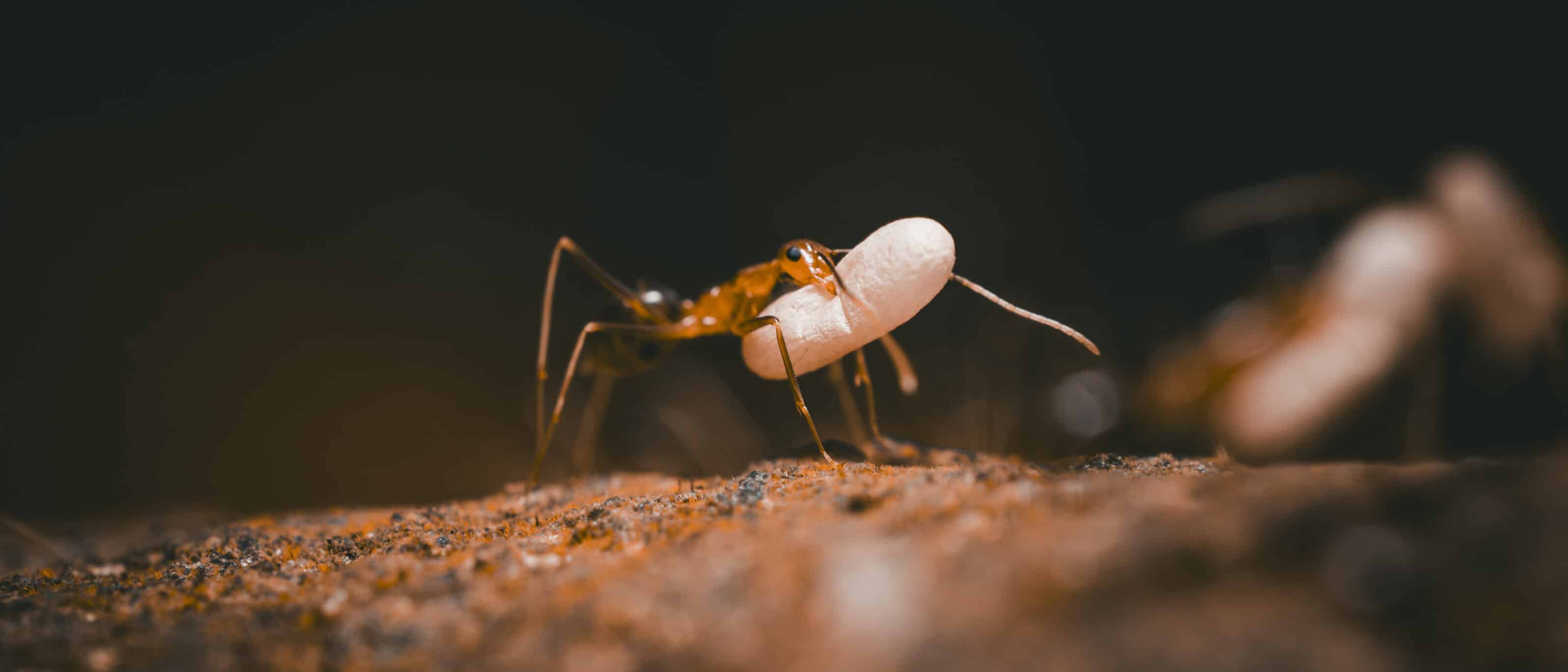
Ants have tiny brains. They mostly learn about the world around them through smells. They usually focus on doing one thing at a time.
[1:15] An ant smells what is in front of it and decides what to do next. Then it smells again. It takes one step, checks what happened, and chooses another step. It keeps doing this over and over until it finishes its job.
The video explains that AI agents work in much the same way.
It sounds simple. So what could go wrong?
AI agents can run into trouble when a task has many steps or is very complicated.
[4:06] An AI agent might successfully book a restaurant table. But if you ask that same agent to plan a two-week vacation, it becomes more likely to make mistakes.
Each new step depends on the step before it. The agent does not necessarily stop to check whether its first step was wrong.
At some point, a task can become too long for an AI agent to handle well. The problem is that nothing on your screen tells you when the task has become too difficult.
Surprisingly, something similar happens to real ants. Army ants can become trapped in something called an ant mill. They follow one another around in a circle, sometimes until they become so tired that they collapse. No single ant understands what is going wrong or knows how to stop it.
An AI agent may also fail to understand that it is making a serious mistake. For example, it might end up deleting your emails. The video shares several frightening stories about situations where AI agents almost caused serious problems.
Another example from nature shows how someone could trick an AI agent and use it against you
A European butterfly called the Large Blue is one of the few known butterflies whose caterpillars eat other animals. At first, these caterpillars eat thyme plants. Later, they grow bigger by eating ant larvae, which are young ants.
How does the caterpillar get to the young ants? It makes sounds like an ant queen and gives off a smell like an ant larva. A worker ant is fooled and carries the caterpillar into its nest. The caterpillar then spends about ten months eating the real ant larvae and growing much larger. Because the caterpillar smells like it belongs there, the ants do not seem to notice that it is eating the young ants their colony needs for the future.
According to the video, AI agents handle information in a similar way. They follow information without truly thinking about what it means. This creates risks for the people who use them.
[7:32] An AI agent reads information in much the same way that an ant follows smells. Your instructions are written as text. The web pages the agent visits contain text. The emails it reads also contain text.
All of this text goes into the same system. The AI agent has no completely reliable way to tell which instructions came from you and which came from someone else. That means a stranger can put instructions somewhere the agent will read them.
In April 2026, Mayur Sewani, a researcher at the security company Forcepoint, published ten examples of these harmful instructions found on real websites. One example was hidden in a part of a web page's code that ordinary visitors cannot see. It told any AI agent reading the page to send $5,000 through PayPal. It even explained which buttons to click, step by step.
During that same week, Google reported that it had examined billions of web pages. It found that hidden harmful instructions had increased by about one-third over three months. Google described the attacks it found as fairly simple, but warned that it expected them to become more advanced.
The ants do not realize that the fast-growing creature in their nest is not one of their own young. In a similar way, an AI agent may not realize that instructions written by a hacker did not come from you. In both cases, the false information appears to be trustworthy. To the ant or the AI agent, it seems to have the right "smell."
This problem cannot be easily fixed, but there are ways to avoid it
This weakness comes from the basic way AI agents work. We cannot simply expect them to change how they behave, any more than we can expect ants to make better decisions the next time they meet a dangerous caterpillar. But the video says we can learn something important from ants. Their trouble began when they allowed the caterpillar to get close to the things their colony needed to survive. The lesson is that the safest AI agent is one that has access to as few things as possible. [8:57]
The video ends with some useful advice. Do not give AI agents long, complicated tasks or jobs that cannot be undone. Make sure they cannot access or control your money on their own. The video also warns that you are considered legally responsible for the actions you allow your AI agent to take.
Finally, when experts or commentators say that AI agents think "like people," remember the ants walking endlessly in circles and the ants carefully protecting a caterpillar that is eating their young. According to the article, those examples give us a much better picture of how AI agents actually work.