
Has Any Other AI Language Learning App Hit the Tens of Millions USD ARR Milestone?

Yurii Rebryk, the founder of Fluently, recently announced on LinkedIn that the product has reached $10 million in annual recurring revenue (ARR). Many new AI-powered English speaking practice apps have appeared in recent years, but very few have reached this level. Only about five have done so, largely because getting new customers is difficult.
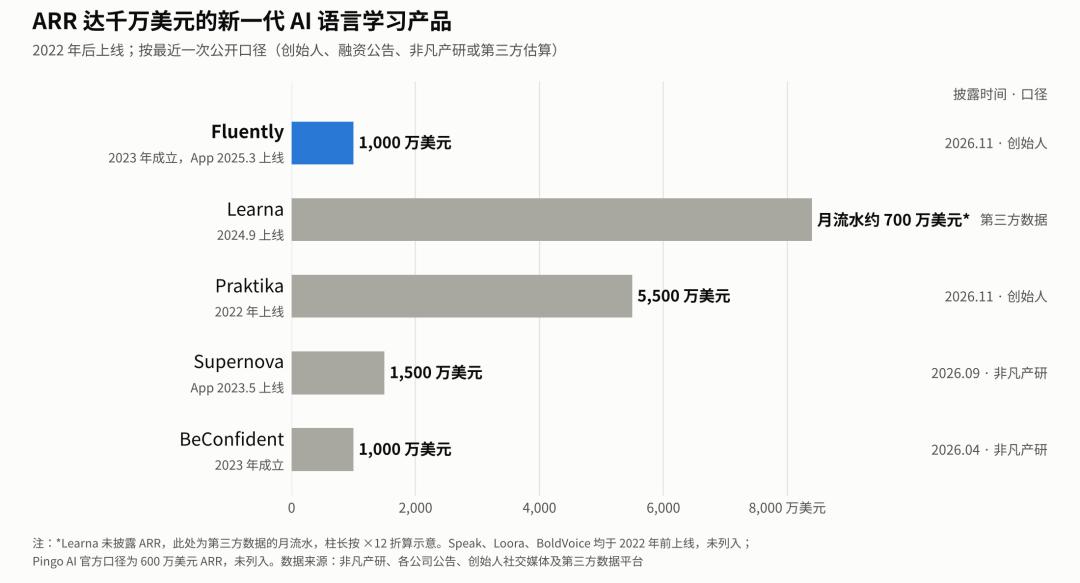
In his post, founder Yurii Rebryk said that Fluently mainly gets new customers through social media. Over the past year, its accounts across all platforms have gained a total of 12 million followers and 3 billion views. However, many products that grow through viral social media videos follow the same pattern: a video becomes popular, downloads rise quickly, and then both downloads and revenue fall when the excitement fades.
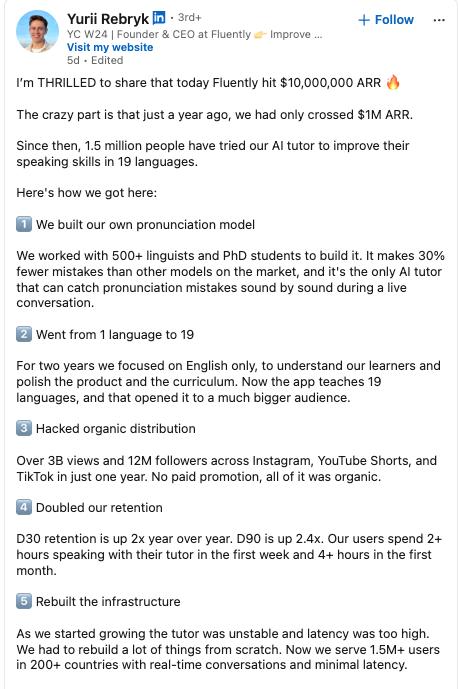
The founder's LinkedIn post | Image source: LinkedIn
Pingo is a recent example. This AI-powered English speaking practice app became popular on TikTok through short, emotional videos showing people being "scolded to tears by AI." However, its in-app revenue reached its highest point in May this year and then started falling. It has dropped by more than 50% from that peak.
Fluently appears to have followed a different path. Its founder said that the company's ARR grew tenfold in about a year and a half. More importantly, as the business grew, its D30 retention rate doubled compared with the previous year, while its D90 retention rate rose to 2.4 times its earlier level.

It is worth noting that Fluently accepts subscriptions through both app stores and its website, where it uses Stripe. According to data from Diandian, its average monthly revenue from app stores is only about $100,000, far below the amount reported by the founder. Most of the difference likely comes from payments made through its website.
Both products used viral social media videos to enter the market. But while one began to decline, the other continued to grow faster. How did Fluently turn short-lived online popularity into a subscription business that keeps growing?
I. From Videos About "Crying Over English Learning Frustration" to Pronunciation Teaching
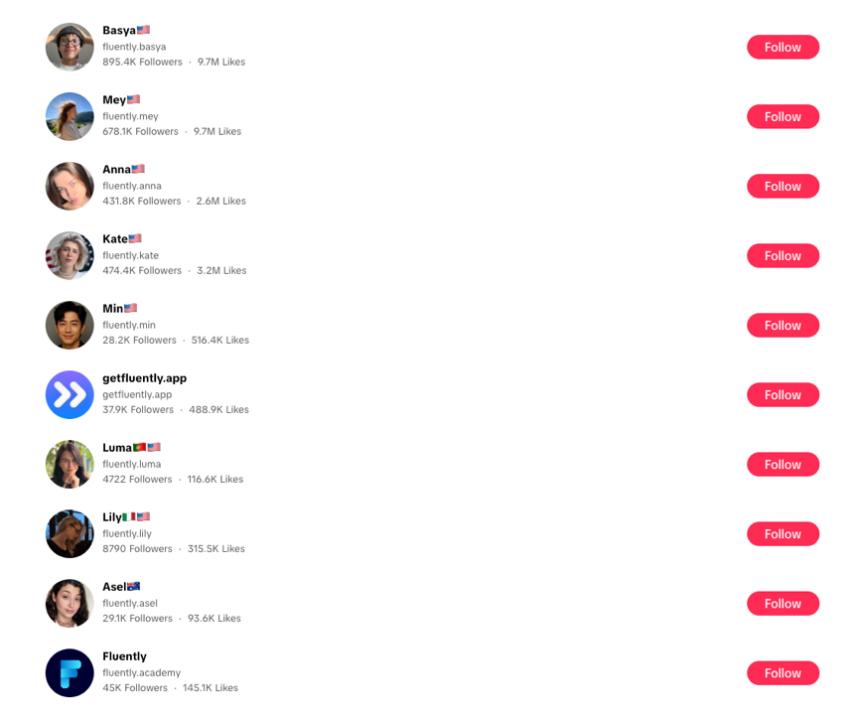
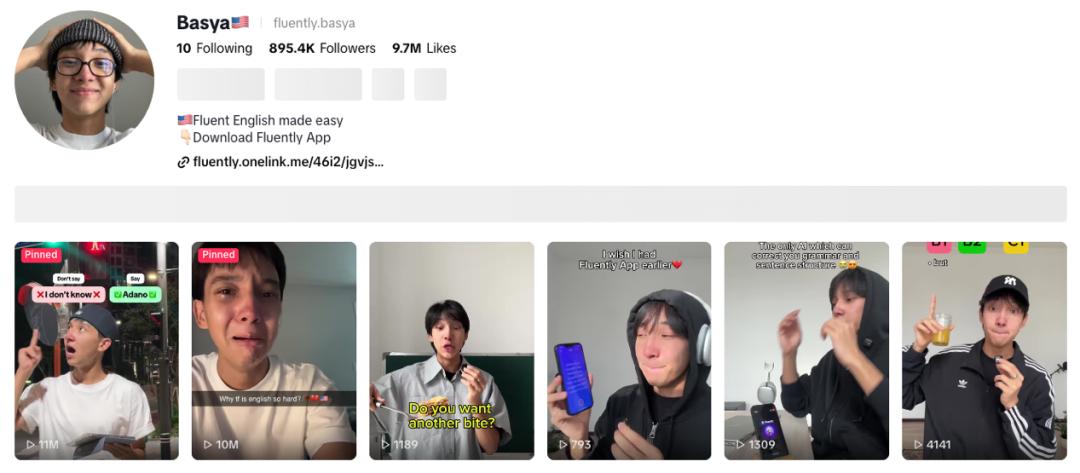
Fluently's network of TikTok accounts (top), including one of its accounts with many followers (bottom)
When looking back at the company's growth, founder Yurii once said: "It is almost impossible to predict which content will go viral, so we need to spread our bets across many accounts. Even if only 10% of the content performs well, that is more than enough." To put this idea into practice, Fluently uses two main social media strategies: running many accounts and working with small creators.
If you search for "Fluently" on TikTok, you will find many accounts that appear to belong to real people. They have personal profile pictures and names in the format "Fluently.XX". Together, these accounts have more than 2 million followers. To post often and increase the chances of creating viral videos, each account publishes one or two videos every day. Across all these accounts and platforms, the team publishes more than 100 pieces of content. After posting, the team keeps testing and changing the scripts, actors and opening lines. When a video becomes popular, they reuse it on several platforms. To support this high-volume approach, Fluently works with small creators who have fewer than 5,000 followers. The founder explained: "Big creators charge high prices and work slowly, so they cannot support frequent updates."
At the same time, Fluently has changed how it measures creator marketing. It now focuses on actual results, not just views. The team checks not only whether a creator can make popular videos, but also whether those videos lead to downloads and payments. It tracks this through special links. If a video gets many views but does not bring in enough downloads or revenue, the team stops working with that creator.
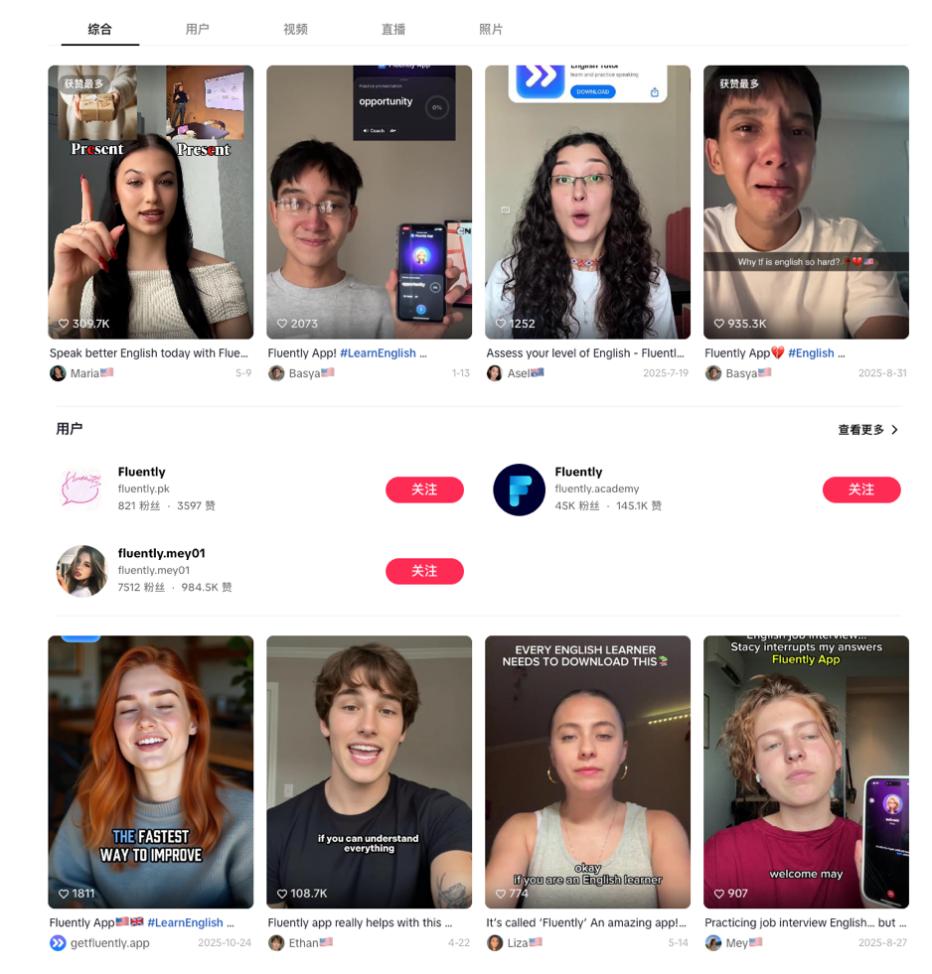
Popular Fluently content on TikTok | Image source: TikTok
This way of measuring results is likely one of the main reasons why Fluently's downloads and revenue followed a different path from Pingo's after both gained many customers through social media.
Like Pingo, Fluently first became popular with emotional videos. Its most-liked TikTok video so far is about someone crying because learning English is frustrating. It has received 935,000 likes. But when you visit the creator's profile, you will see that this kind of emotional content has almost disappeared this year. It has been replaced by three new types of videos.
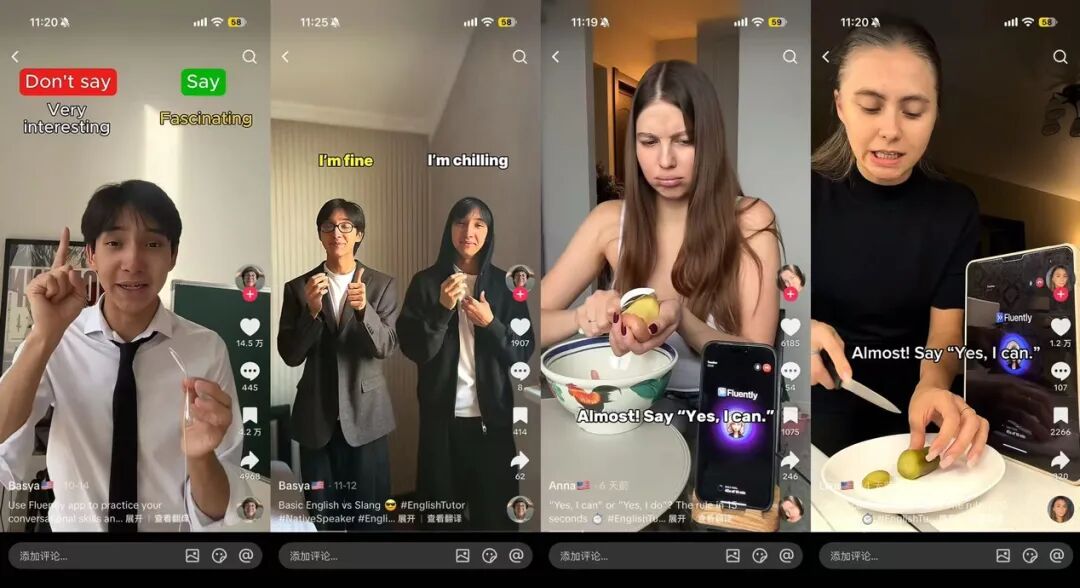
Videos showing better ways to express something through "Don't say / Say" (Figures 1 and 2), and videos correcting mistakes in everyday situations (Figures 3 and 4) | Image source: TikTok
The first type shows people how to replace common expressions with better ones using a "Don't say / Say" format (Figures 1 and 2 above). For example, it suggests saying "fascinating" instead of "very interesting." The second type shows AI correcting English mistakes in everyday situations (Figures 3 and 4). One example teaches users when to say "Yes, I can," "Yes, I do" or "Yes, I am" while cooking. The third type directly shows how Fluently corrects pronunciation, as seen in the following image.
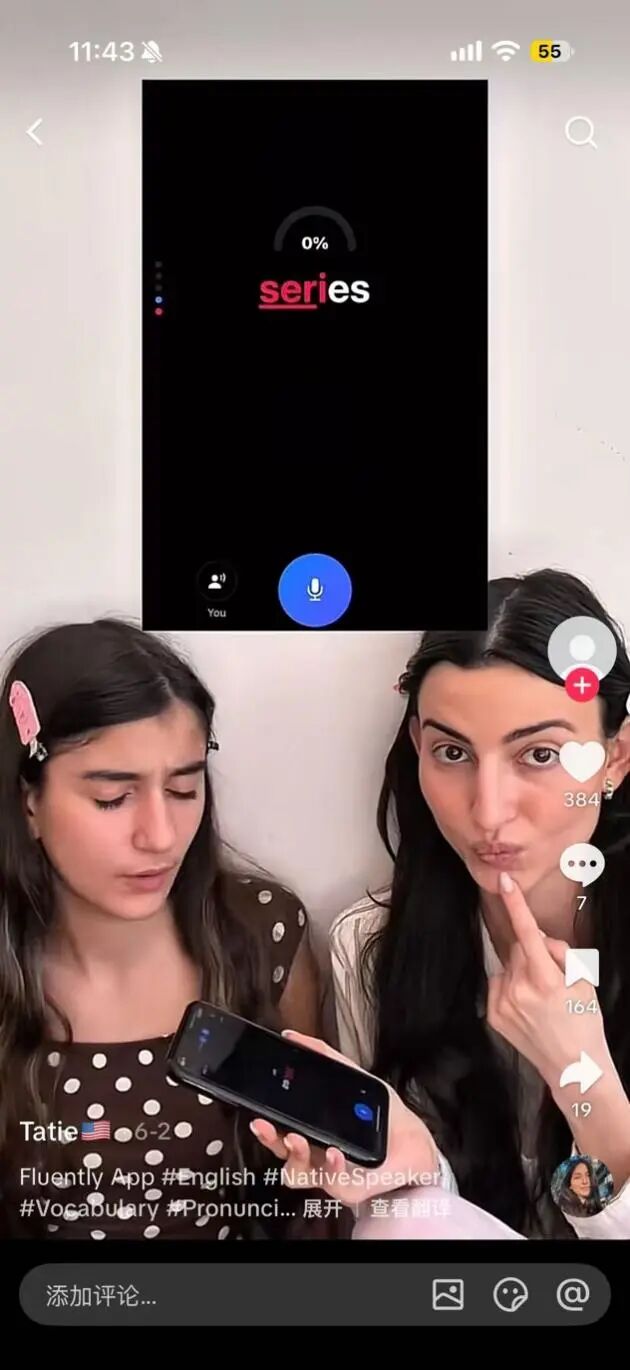
Videos showing Fluently's pronunciation correction features | Image source: TikTok
Changing from videos about "crying over English learning frustration" to "Don't say / Say" videos may look like a simple change in video style. But the two types of content work in very different ways to attract customers. Videos showing people being "scolded to tears by AI" create strong emotions. People may laugh or feel shocked, then download the app because they are curious. Short educational videos, on the other hand, teach specific English tips and make viewers think, "If I use this app, I can learn more." People who watch these videos until the end are more likely to want to improve their spoken English. This means the videos both reach potential customers and filter out people who are more likely to need the product. If you only look at how many views a video gets and ignore what viewers do afterward, it is hard to escape the problem of relying on short-lived attention from emotional content.
Another reason Fluently and Pingo followed different paths after attracting users through social media is the difference in what happens after people open their apps.
II. AI Makes Users Speak for 10 Minutes Every Day
After opening the app, users answer dozens of questions during setup. Fluently then matches them with a suitable AI Tutor based on their English level, preferences and other details. The main learning happens through conversations with the AI Tutor. New learning points and vocabulary are included in these conversations. This is different from apps such as Speak and Learna, where users first learn sentences and then practice them in conversations.
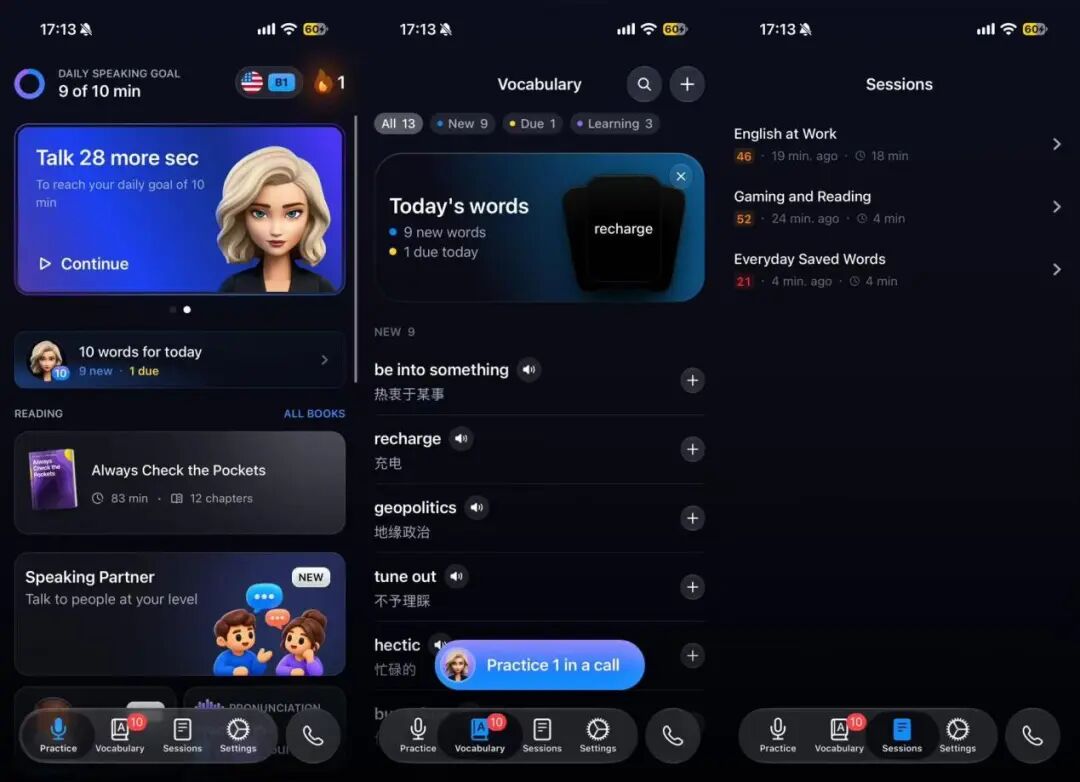
Fluently's three main tabs: "Practice," "Vocabulary" and "Sessions"
One important feature of Fluently's conversation-based learning system is that users are expected to speak for a full 10 minutes every day. According to a test by another colleague, users can also choose daily targets of 2, 4 or 8 minutes. The daily target is always shown in the most noticeable place on the screen. Users can tap the blue box in the middle of the screen to start a conversation. Even more interestingly, if users give permission, the AI Tutor will "call" them at the same time every day if they have not started a session themselves. Many users say these regular reminders are very helpful when they feel tired or do not feel like studying.
This design follows the ideas behind research into how people build habits. Speaking English takes effort, and people need to overcome their natural tendency to put things off. If learning depends entirely on self-discipline, many people will eventually give up. A scheduled call from the AI changes the question from "Should I study today?" to "Should I answer this incoming call?" This makes it easier to get started because users only need to respond instead of making a fresh decision. According to the founder, users speak for more than two hours during their first week and more than four hours during their first month.
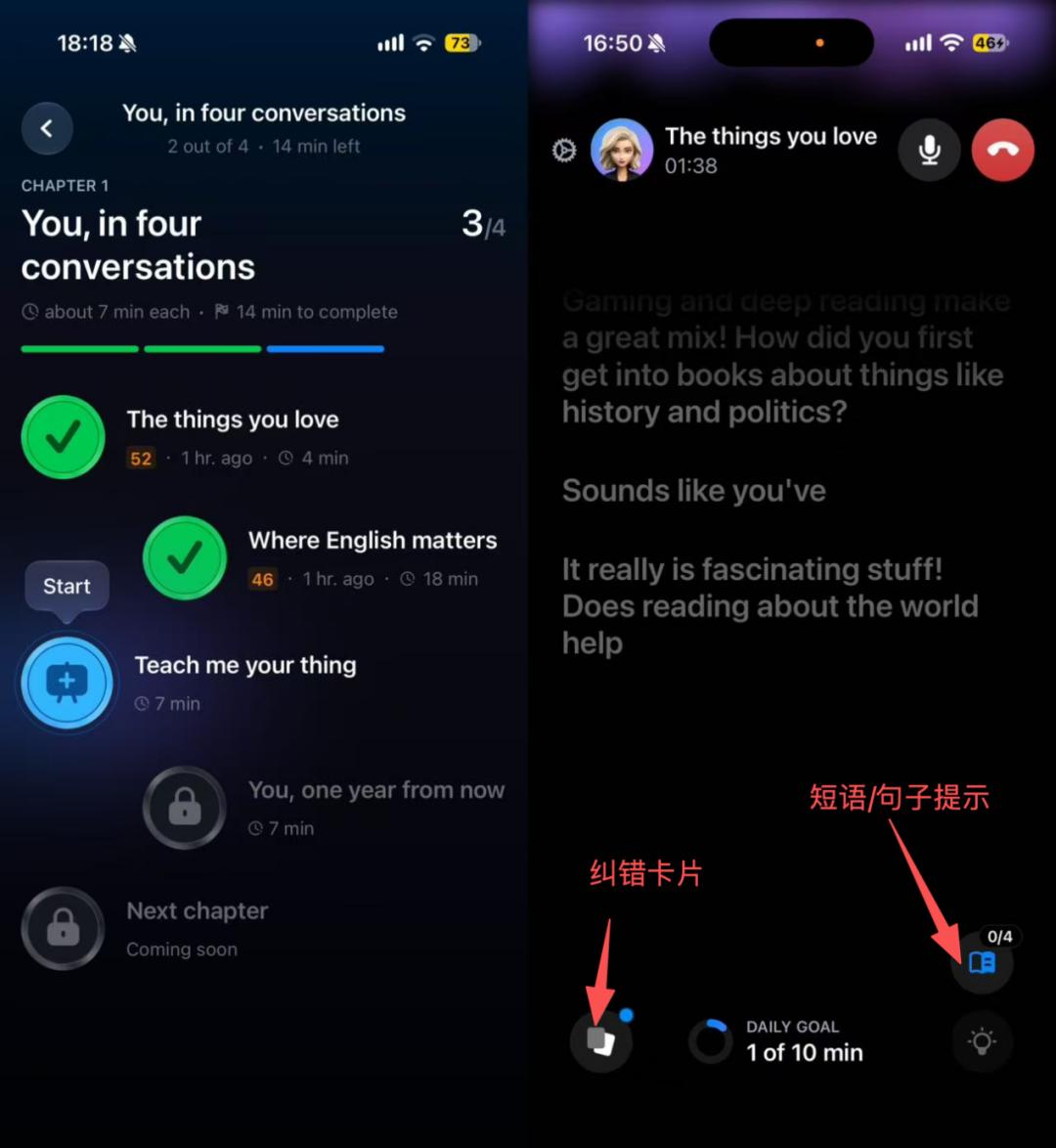
Fluently's course page (left) and practice page (right)
Once a call starts, users can speak to the AI just as they would on a phone call. They do not need to press a button to talk, and they can interrupt the AI at any time. The AI waits for users to finish speaking before continuing with follow-up questions based on what they said. Conversation topics cover many subjects, including "The things you love" and "Where English matters." The AI also adjusts the difficulty to match each user's level. Based on my own experience, the AI responds fairly consistently and handles interruptions naturally. However, it sometimes reacts too quickly. If you pause in the middle of a sentence to think of a word, or even just take a breath, the AI may think you have finished and start speaking. Some users have complained about this, saying, "The AI does not leave time for thinking."
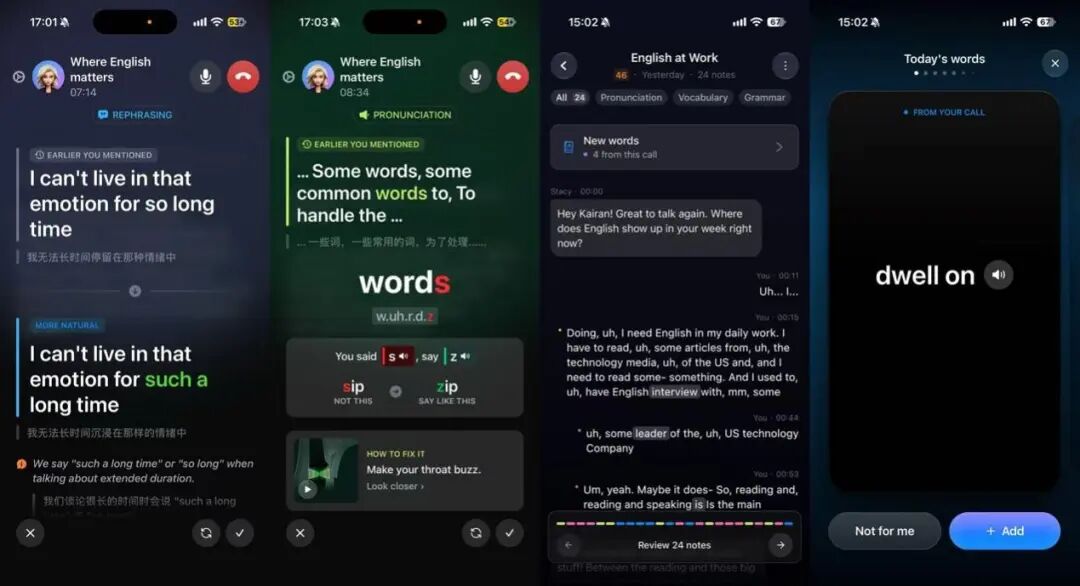
Error correction cards: Grammar and pronunciation mistakes, along with better ways to express ideas, are shown in different colors (the first and second images from the left). Users can review incorrect vocabulary and correction cards in the "Vocabulary" and "Sessions" tabs.
Fluently has also built the two features it promotes on social media, pronunciation correction and better English expressions, directly into its conversations. After users finish speaking, the AI shows any pronunciation mistakes, grammar mistakes and expressions that could be improved in an error correction card at the bottom left of the screen. The AI encourages users to tap the card and review the feedback. After studying it, users can go back and review incorrect words and correction cards in the second and third main tabs, "Vocabulary" and "Sessions."
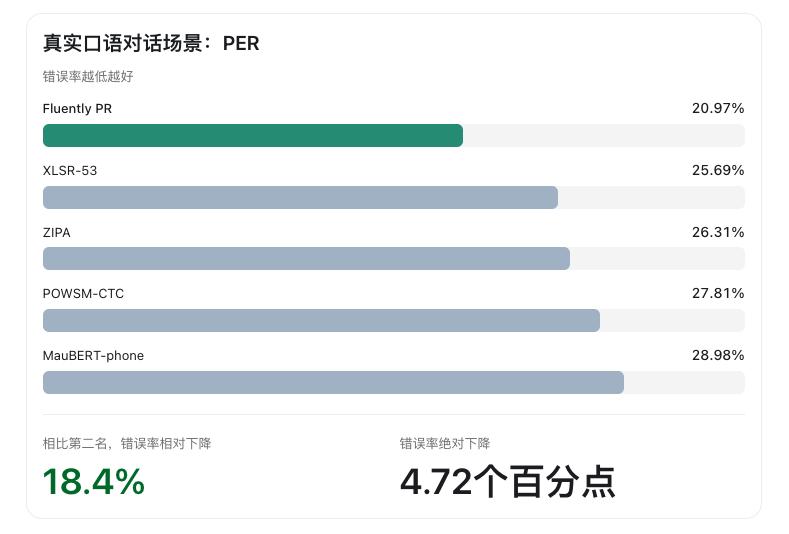
A comparison of Fluently PR and other speech recognition models, published on Fluently's official website | Data source: Fluently's official website
Based on my own experience, Fluently does a good job of correcting pronunciation. Founder Yurii Rebryk has said several times that the team trained a speech recognition model called Fluently PR using real users' voice recordings. According to the explanation on the company's official website, ordinary speech recognition models use the surrounding words to guess what a person is trying to say when turning speech into text. This can cause them to recognize words incorrectly. Fluently PR, however, was trained using recordings of real conversations. Experts also checked and labeled each recording one by one. This helps the model spot common pronunciation mistakes, such as saying the /s/ sound instead of the /θ/ sound.
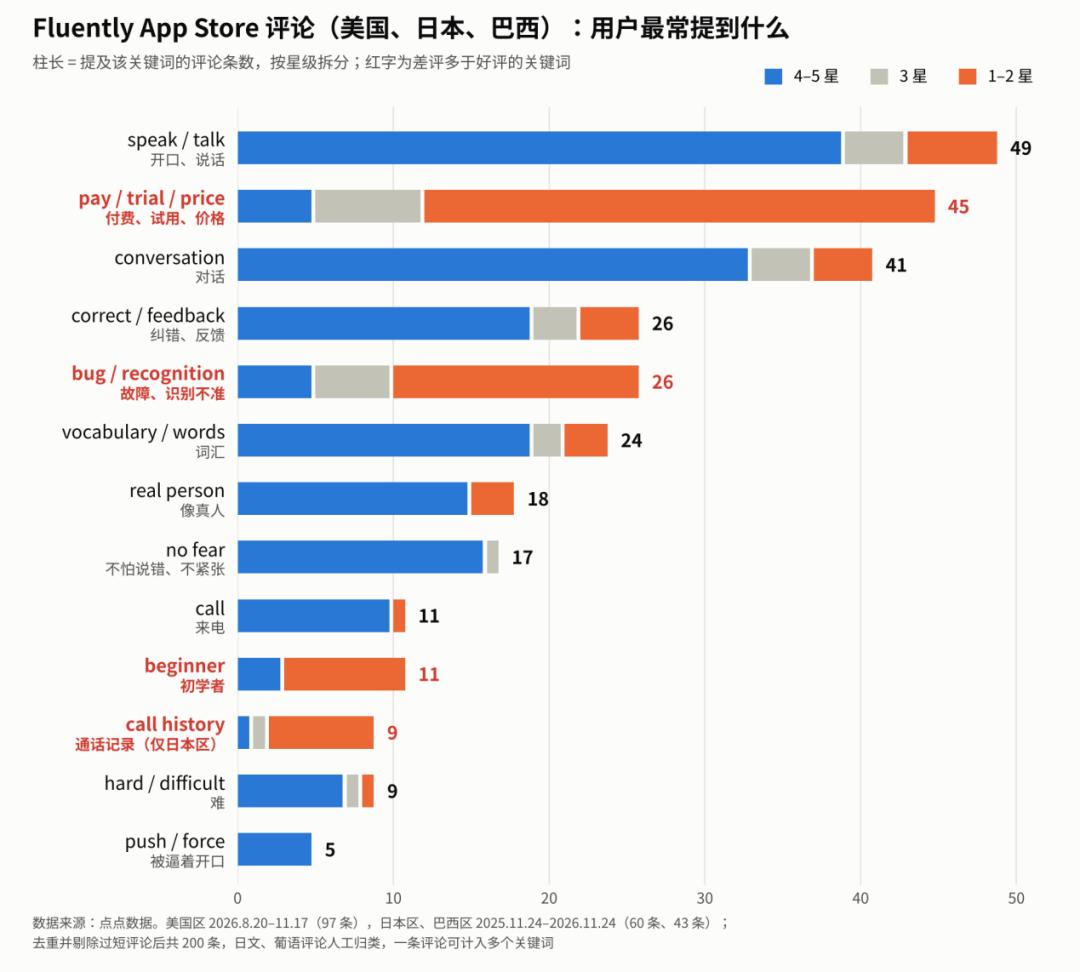
Negative reviews mainly focus on three areas: payment problems, technical issues and difficulties for new users | Chart created by Baijingchuhai using Diandian data
Overall, after users try the app, pronunciation correction and grammar correction become part of their conversations. Because users are pushed to speak regularly, they also get a stronger feeling of progress and achievement than they might get from other spoken English learning apps.