AI Advances Toward Fully Autonomous Life Science Labs
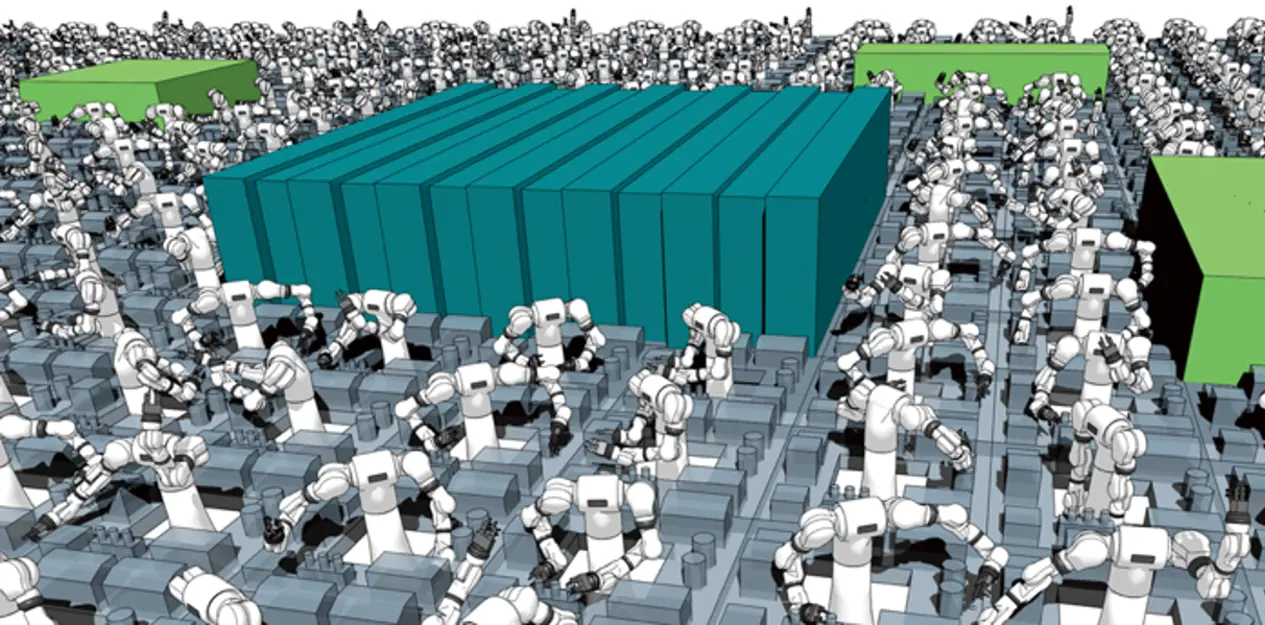
The future this project hopes to create
Imagine a laboratory with no people inside. Even so, new scientific research is still happening.
Artificial intelligence (AI) comes up with a question by itself and makes a possible explanation, called a hypothesis. Robots then do an experiment to test it. If the results are not what the AI expected, it tries to understand why and tests the idea again. In the end, the results are written into a scientific paper. Those results lead to new questions, and another experiment begins.
This is the future that Professor Genki N. Kanda and his team at the Institute of Science Tokyo (Science Tokyo) want to make possible. They hope to build a laboratory that can keep making new discoveries without people needing to help. It might even discover things humans have never imagined. By 2040, Kanda and his team picture a large research center with about 2,000 laboratory robots working completely on their own. Scientists from around the world would be able to have experiments done there.
The problems the team needs to solve
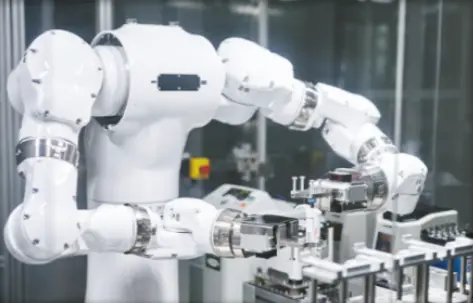
This work started in 2007, when researchers began developing a laboratory robot called Maholo LabDroid. Maholo has two arms and can use the same laboratory tools that people use. It can also repeat very careful movements with a level of accuracy that is hard for human hands to keep up. This has helped make tasks such as growing cells automatic.
Researchers have also combined Maholo with AI. Together, they found efficient ways to turn induced pluripotent stem (iPS) cells into retinal cells, which are cells found in the eye. iPS cells are special because they can develop into many different kinds of cells.
But even if robots can do individual experiments, people are still needed for other jobs. Someone must replace chemicals used in experiments, move samples, and fix problems when machines stop working. If several experiments need the same machine, someone also has to decide which experiment uses it first. Experiments with living cells are especially tricky because the cells keep changing while they wait. So the laboratory must think about both when equipment is free and when each experiment needs to happen.
In other words, teaching robots to do one laboratory task at a time is not enough to run a whole research center without people. The next big challenge is to make every part of the research process work without human help, not just the individual experiments.
What this project could make possible
To solve this problem, Kanda and his team have suggested a big project together with RIKEN and Epistra Inc. The plan is to connect laboratory centers that use robots for life science experiments and are now being developed in Tokyo and Kobe. They want to create a system that can run these centers on its own.
At Science Tokyo, the Robotics Innovation Center will be the main center for the project. Scientists from many different fields will work with companies to create new technologies. They will also test robots by using them in real scientific research. The project has been chosen for the AI to Redesign Scientific Exploration (ARiSE) program, run by the Japan Science and Technology Agency (JST). This program supports scientific research that uses AI.
In the planned research center, AI will decide how to do experiments, study what the results mean, and choose what to try next. It will also decide how to get experiments ready and what to do when something goes wrong. Robots will do the hands-on work. As the team learns from running the center, it will keep improving the system. The goal is to build a laboratory that can handle the whole research process without people: coming up with ideas and possible explanations, doing experiments, studying the results, and writing about what it finds.
By March 2029, Kanda's team plans to run experiments in areas such as cancer and regenerative medicine. Regenerative medicine focuses on repairing or replacing damaged cells and tissues. These experiments will test whether several studies can keep going without people constantly watching over them. The technology developed during this work will then help the team build a large research center that can run completely on its own by 2040.
Scientists only have a limited amount of time. They must keep deciding which questions to study and which ones they cannot explore. But what if AI and robots could test ideas that people do not have time to investigate? What if they could ask questions nobody has thought of before? How much more could science discover? They might even find completely new ways to study diseases that currently have no treatment. The team wants to increase the number and kinds of questions that science can investigate.
For a long time, scientific research has been based on the idea that people must be the ones doing it. This project wants to create another way, where AI and robots can do research by themselves. The work to greatly expand what science can explore has already begun.
A comment from the researcher
Every university is good at different things, and each one is especially suited to solving certain research problems. Building a future where AI and robots can do research by themselves is exactly the kind of challenge that fits Science Tokyo's strengths. Science Tokyo is a place where people who want to make this dream happen can work together. If this idea makes you think, even a little, "I'd like to try that," why not think about adding Science Tokyo to your list of universities you might want to attend?
(Genki N. Kanda, Professor, Department of Robotic Science, Medical Research Laboratory, Institute of Science Tokyo)