
From AI data centers to energy storage, Posco bets on steel's next frontier
Artificial Transformation, which means using AI to change how businesses work, is changing every industry. As AI data centers (AIDC), power grids and energy storage systems (ESS) grow, companies need more kinds of advanced steel. This steel must resist rust and damage, block electromagnetic interference (EMI), help save energy and be made in ways that produce less carbon pollution.

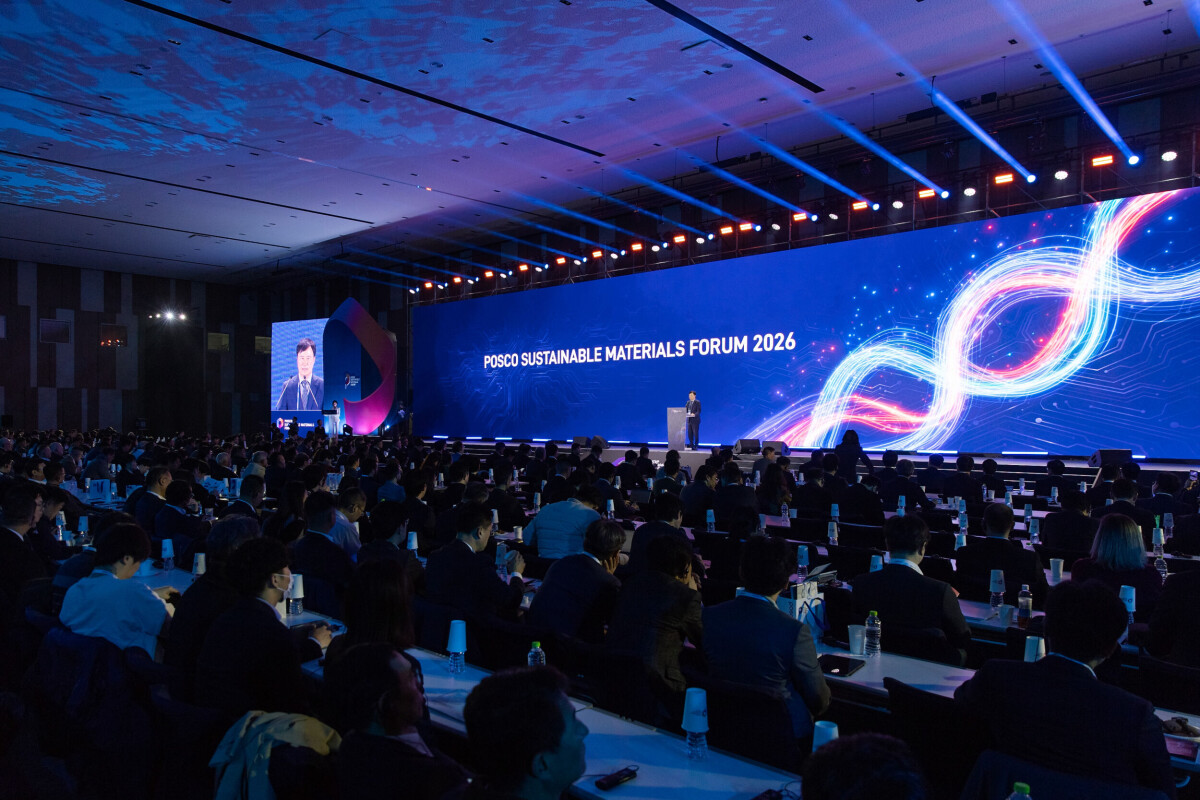
To meet these changing needs, Posco held its 2026 Sustainable Forum in Incheon from Nov. 16 to 18. The theme was “The Path to AI and Green Transformation (AX & GX) — Sustainable Materials Leading New Growth.” At the event, the steel company shared its plan to work with other companies to grow in a way that can last and achieve real business results. About 1,000 people attended, including 450 representatives from partner companies in South Korea and other countries.
The forum included a main speech by futurist Jonathan Brill, who studies what the future may look like. Leaders from companies such as Google Cloud and UBTECH Robotics also gave presentations. There were 31 sessions about how AI and environmentally friendly changes are creating new ways to make products and changing how industries work.
Posco also signed more than 26 memorandums of understanding (MOUs) with partner companies working in AI data centers, shipbuilding and materials made with lower carbon emissions. An MOU is an agreement showing that organizations plan to work together. Instead of only selling steel in the usual way, Posco wants to work more closely with partners to develop products together, make supply chains more dependable and move toward lower-carbon production.
AI data centers need strong cooling systems, sturdy structures, safe energy storage systems and protection from electromagnetic interference. To meet these needs, Posco uses an approach called Early Vendor Involvement. This means Posco helps decide what kind of steel should be used from the very beginning of a project, when the design is first being planned. This helps make sure the steel matches the needs of the building and equipment and can be delivered when it is needed.
On Nov. 11, Posco signed an MOU with GS Group to work together on AI data centers. Under the agreement, Posco will provide special steel materials and solutions designed for specific needs. GS Group will handle building and running the infrastructure, including business planning, electricity supply, engineering and liquid cooling systems. The companies expect their partnership to make construction more dependable and data centers more efficient to operate by improving the supply of steel.
One of Posco's special products is PosMAC SHIELD, a type of steel designed to block electromagnetic interference and resist rust and damage. It does this using a structure made of three bonded layers. In tests using electromagnetic shielding measurement standards developed together with Korea Electric Power Corporation, PosMAC SHIELD blocked 79 percent of electromagnetic interference. By comparison, ordinary galvanized steel blocked 24 percent, nickel-alloy steel blocked 67 percent and aluminum blocked 70 percent. Posco is also using its own PosMAC coating technology in data centers and electricity infrastructure to make materials last longer and lower the cost of keeping them in good condition.
Posco also plans to make and sell more POCEL, a special material used to make battery cases for electric vehicles and electronic devices. Demand for batteries is growing in the electric vehicle (EV) and energy storage system (ESS) markets. Worldwide demand for EV batteries is expected to reach about 3 terawatt-hours (TWh) by 2030, a measure of how much energy batteries can store. Because of this growth, Posco plans to make its supply of POCEL more dependable. The goal is to support battery makers and help AI infrastructure have a steady supply of electricity.
More broadly, Posco is building a connected system for developing, making and selling the materials needed in the AI era. It plans to connect predictions about future demand and the work of its AI data center and energy storage teams with sales, research, product development and manufacturing across the Posco group.
BY LEE SO-YOUN [[email protected]]