
Southeast Asia’s AI data center bets turning into stranded assets
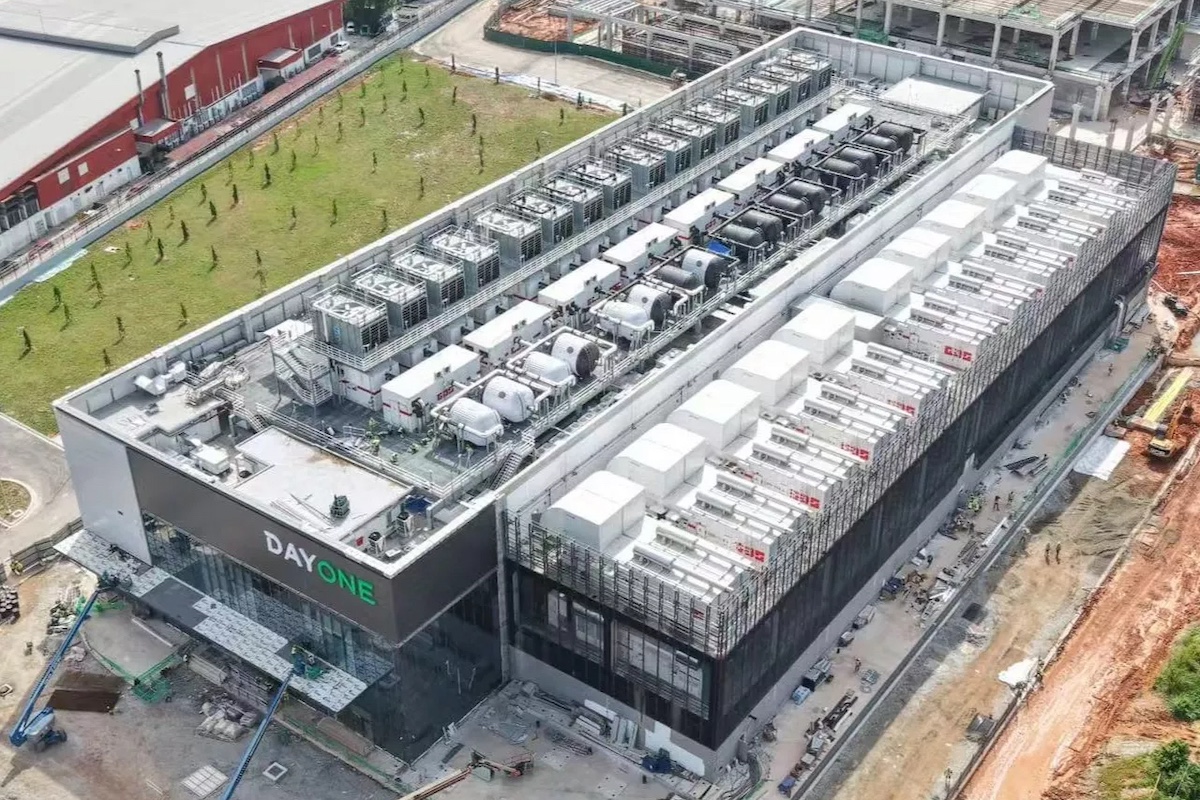
This week, Wall Street celebrated Jensen Huang's return to Nvidia. Investors saw it as a sign that the company was strong and that the White House was taking a practical approach. Nvidia's stock price rose in New York. But in Southeast Asia, the money and equipment needed to build artificial intelligence (AI) data centers have become stuck.
On Thursday, the Financial Times reported that Nvidia had told major manufacturing partners, including Dell and Supermicro, to stop sending servers to customers in Malaysia, Singapore, Thailand and Indonesia.
That report was based on a single source. It came one day after Bloomberg reported on Wednesday that major international banks had also frozen billions of dollars in loans for Asian data centers connected to ByteDance, Alibaba and Tencent.
Together, these two developments show that the industry is being squeezed from both sides. Banks have stopped providing money for projects, while equipment suppliers have stopped shipping servers. People following Southeast Asia's growing data-center industry have seen this problem developing for months.
Southeast Asia based its plans for a multi-trillion-dollar AI industry on the belief that it could remain a neutral place where companies from around the world could access computing power. Governments from Kuala Lumpur to Jakarta spent billions of dollars on land, water supplies and electricity networks to attract both large American cloud companies and Chinese technology giants.
But on November 19, the US Commerce Department's Bureau of Industry and Security (BIS) changed that situation almost overnight. It introduced temporary final rules that close a loophole allowing restricted customers to rent computing power remotely through cloud services. The rules also set a strict 90-day deadline for companies to meet the requirements, with enforcement beginning on December 1.
For data-center operators in the Association of Southeast Asian Nations (ASEAN), the immediate problem is not just political. Their businesses are becoming unable to move forward. Under Washington's rules controlling where advanced computing technology can be used, facilities connected digitally and serving customers in mainland China or Macau face a combined processing limit over 12 months. Regional cloud companies must also get licenses from the US government and prove that their customers are not on restricted lists.
Another important problem is that the reported shipment freeze remains unclear. Nvidia, Dell, Supermicro and BIS have not publicly confirmed or explained the reported decision to stop shipments. This leaves investors and developers unsure what rules they must follow, especially because the report came from only one source. But people watching the region are not surprised by the companies' silence, given that US authorities are also investigating and prosecuting chip-smuggling cases involving Singapore and Malaysia.
"They are forced to when the Justice Department is involved," says James Chin, an ASEAN political and economic analyst and Professor of Asian studies at the University of Tasmania.
Huang has returned to Nvidia at a time when the company faces closer political attention, ahead of his December 1 testimony to Congress. US federal prosecutors are also actively investigating networks that move restricted technology to other buyers. Because of this, server manufacturers do not want to risk criminal charges or penalties under US laws that can reach beyond American borders.
Instead of testing how strictly Washington will enforce its rules, the manufacturers have chosen to stop shipments.
However, industry executives warn that BIS has given companies a 90-day deadline without clearly explaining how to get the necessary approvals. Companies also do not know how to check customers who use cloud services through several layers of other businesses, or what technical monitoring data US export officials will accept as proof that the rules are being followed.
Server manufacturers do not want to risk penalties from US authorities for activities outside the United States. This is especially true because Nvidia is now more closely tied than ever to US government policy, ahead of Huang's December 1 congressional testimony. As a result, server makers have chosen to stop shipments broadly rather than take the risk.
This lack of clear instructions creates growing financial, physical and diplomatic risks for Southeast Asia's digital infrastructure during the 90-day period.
Financial markets are already treating parts of Asia's US$49 billion AI debt market as investments that could permanently lose value. Lenders have put a planned, expanded $6.6 billion loan package for Bain Capital's Bridge Data Centres in Malaysia on hold. Meanwhile, private lending funds have pulled back from a $300 million financing deal for GMI Cloud in Thailand.
At the same time, ByteDance-backed DayOne Data Centers has put aside its plans to list on a US stock exchange. A group of investors led by BlackRock is also considering offering a lower price for data-center assets in the region. Without clear licensing rules, investors who buy existing loans do not want to take on data centers that depend on major Chinese customers.
Even if BIS eventually explains how companies can get licenses, physical infrastructure cannot simply sit unused for three months while the rules remain unclear. Electricity and water authorities in Johor, Malaysia, and Thailand were already examining data-center applications closely because these facilities put heavy pressure on power and water supplies.
Some partly built data centers have already reserved electricity capacity and water supplies but have not received their server equipment. These projects now face high costs just to keep them going, possible penalties for failing to meet contracts, and new reviews by local regulators. These problems could force companies to merge or sell their projects.
Meanwhile, Washington's rules make an exception for customers whose headquarters are in the United States. This largely protects big American cloud companies operating in Singapore and Johor. But Southeast Asian cloud operators must deal with difficult Know-Your-Customer (KYC) checks, which verify who their customers are, as well as licensing requirements.
Instead of giving everyone the same chance to compete, the 90-day process puts local cloud companies at a disadvantage and helps large American technology companies. The shipment freeze is also happening just as ASEAN countries are preparing for closer digital trade and economic ties with China through the updated China-ASEAN Free Trade Area agreement, known as CAFTA 3.0. This puts Southeast Asian governments in a difficult position. Washington can block hardware shipments through rules that affect companies outside the United States, while Beijing wants digital trade to treat all sides fairly. Regional governments have almost no diplomatic power to change BIS deadlines.
For months, Southeast Asian officials hoped that getting technology and equipment from more places would protect them from the worst effects of the US-China technology conflict. These plans included working with Japanese industrial companies and building regional facilities to package computer chips. But Nvidia's server freeze shows that this hope was badly mistaken.
Washington no longer needs to place direct sanctions on Southeast Asian companies to control how quickly their digital industries grow. It can achieve this by using export rules that make Silicon Valley hardware suppliers and Wall Street lenders stop providing equipment and money because they fear breaking US laws.
In the end, the crisis shows a basic problem with how developing economies have judged the risks of building major infrastructure. Governments and developers believed that having land, clean electricity and rights to use water would be enough to make data centers profitable and attractive to lenders. They assumed that advanced computer chips would always be available to whoever was willing to pay the most.
Until BIS makes clear whether local operators can legally meet the licensing requirements within the 90-day period, Southeast Asia's data-center boom is facing more than a temporary delay. Millions of square feet of buildings, electrical wiring and cooling equipment are quickly becoming stranded assets: expensive investments that may no longer be useful or earn enough money. The situation shows again that, in the global political struggle over AI, a country's control over its own technology development can end when it depends on servers and chips controlled by others.
Albert Cleisthenes Wong is a geopolitical and policy analyst who studies technology policy and digital infrastructure.