
Harvard Graduate School of Education Launches Initiative To Guide AI Use in Learning | The Harvard Crimson
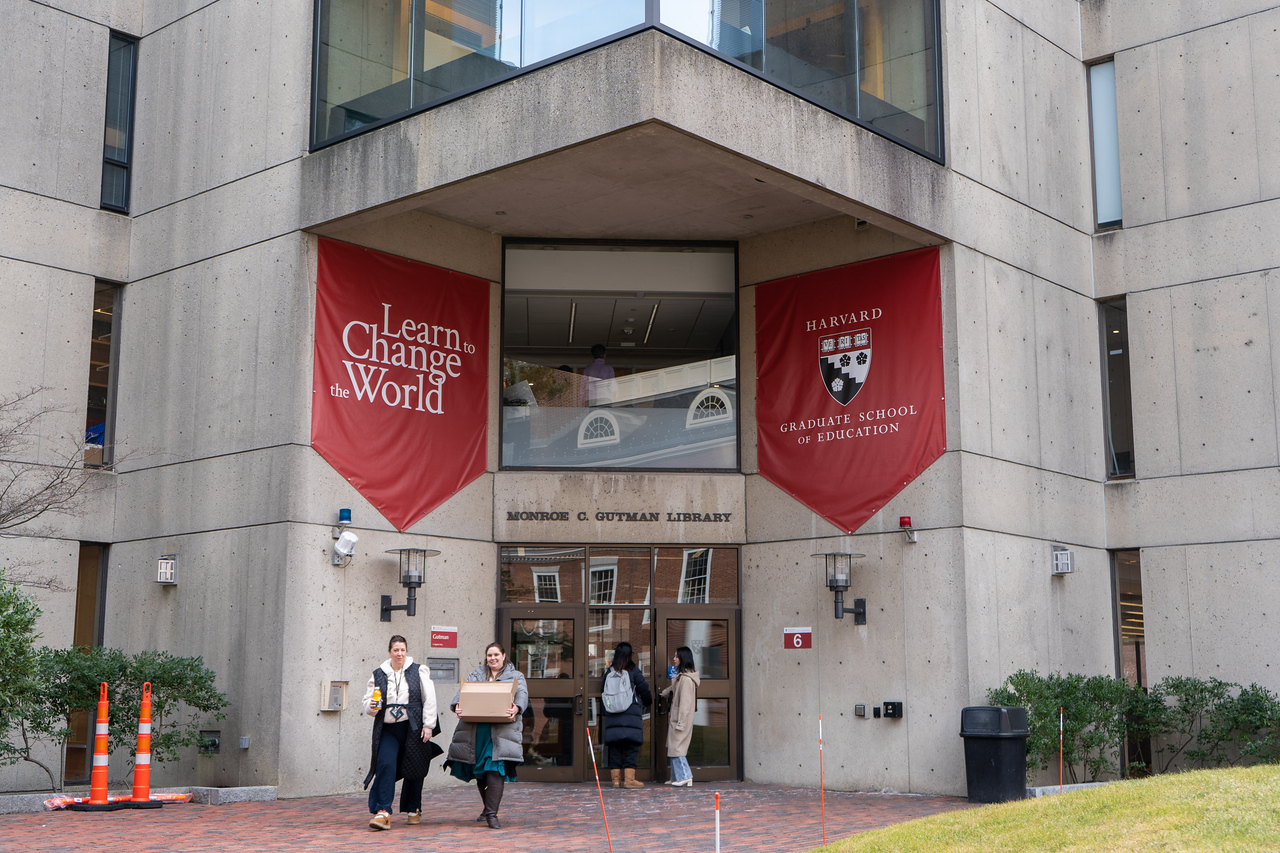
The Harvard Graduate School of Education launched Compass Collaborative earlier this month. This new project aims to use decades of research on human development to guide decisions about how artificial intelligence is created and used in learning environments.
The project was created to make research about how AI affects human development and learning available to teachers, policymakers, families, and technology developers.
HGSE Dean Nonie K. Lesaux said the project was started in response to how common AI has become. She argued that “the world is reorganizing around generative AI.”
“That means schools, families, policymakers, and technology developers are all making decisions about AI right now, and they’re having to make them faster than the evidence about whether AI is helping or harming can keep up,” she wrote in a press release.
Lesaux added that HGSE is in a good position to help close this gap because it has a large amount of research and a long history of working with schools and teachers around the world. She said Compass Collaborative would connect scientific research about learning with decisions about AI in classrooms and homes.
“Given the rapid pace of change, we launched Compass as a startup inside HGSE, built to move at the pace the field needs,” Lesaux said.
The Collaborative currently offers three main resources: “Developmental by Design,” a 12-week online certificate program, and two written guides. “Visible and Invisible AI” looks at the different ways AI appears in learning environments. “AI Guidance by Age” uses more than 5,000 research studies to create advice based on age.
According to Lesaux, these resources are meant to provide research-based information for many different people, including “an educator choosing whether to use a tool, a parent setting a boundary, a district leader writing a policy, and a developer making a design choice.”
Get The Crimson in your inbox.
Jeffrey J. “Jeff” Curley, HGSE’s chief of strategic initiatives and a co-director of Compass, wrote that Compass is not meant to give people a fixed set of rules. Instead, it provides information based on the situation users describe, helping them make their own decisions.
“We start with the learners themselves: What are they trying to learn? What capacities are they trying to build? Where are they in their development? Then, we ask what role AI should or shouldn’t play in helping them get there,” he wrote.
For example, the AI Guidance by Age resource creates advice after a user enters their role, the area of child development they want to learn about, and the child's age range.
Tessa Forshaw, a cognitive scientist and a co-director of Compass, said the project also aims to find areas where more research is needed, rather than simply explain what researchers already know.
“As AI continues to evolve,” Forshaw wrote, “there are significant gaps in our understanding of how different uses of this technology affect learning and development over time.”
“Our hope is to encourage other scholars to help close those gaps and come together as a scientific community to support the moment,” she wrote.
Lesaux wrote that she hopes to expand Compass Collaborative by holding more events, bringing in affiliated fellows, and building partnerships with organizations such as Teach For America. The project will also be updated as new research becomes available.
She also hopes technology developers and partner organizations will use research on human development when making decisions about how to design their products.
“I’d want to see Compass seen as a place the field trusts when it needs a trusted answer,” Lesaux wrote. “We’ll hold ourselves to the same standard we ask of others: be clear about what we know, what we don’t, and what we’re learning.”
—Staff writer Mahpara Faatin can be reached at [email protected]. Follow her on X @mahparafaatin.
Want to keep up with breaking news? Subscribe to our email newsletter
Have a tip for The Crimson? Share it confidentially