
If the AI Stock Crash Is Just Beginning, Warren Buffett Says This Is the Warning Investors Should Remember
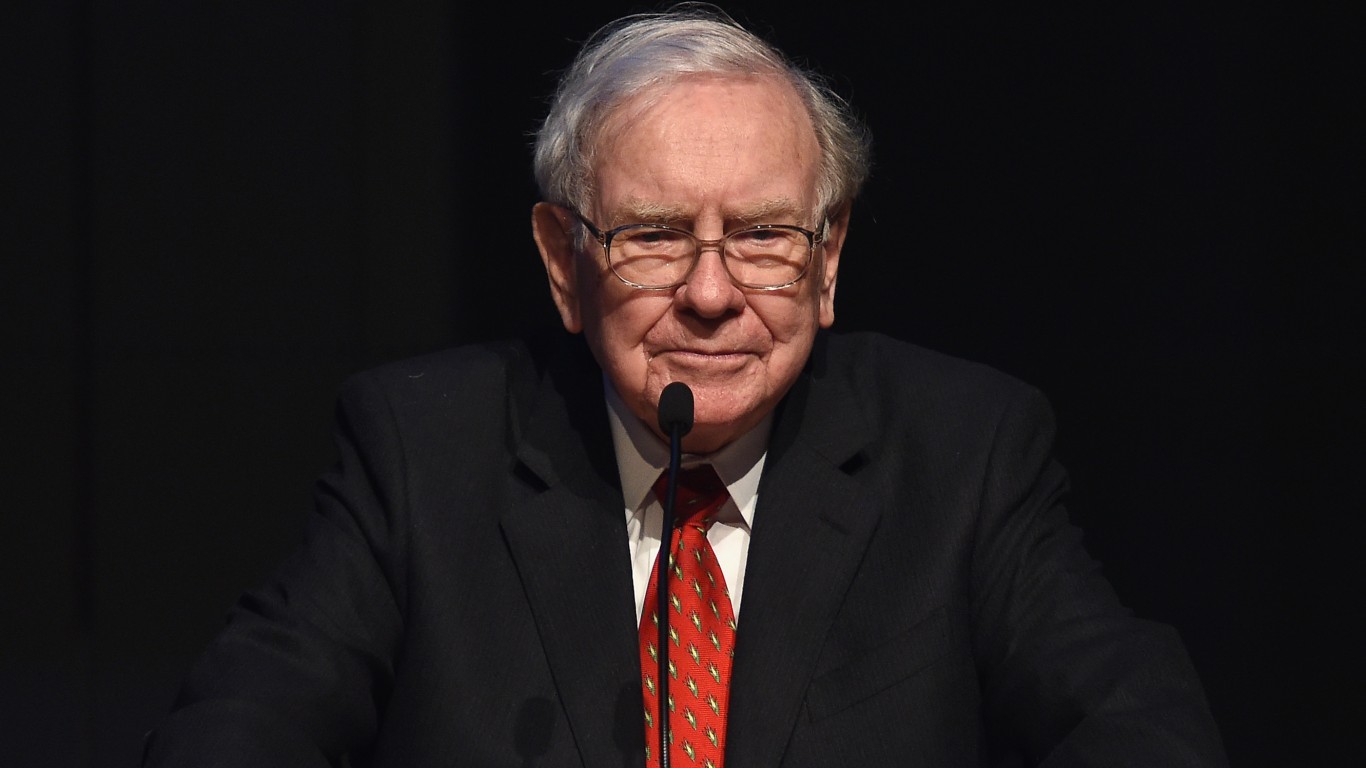
In 2005, Warren Buffett gave investors a clear warning: "excitement and expenses are their enemies." If the AI stock crash is only beginning and the bubble is starting to burst, his words point to two mistakes investors can still make with their retirement savings.
Consider a 59-year-old investor who is six years away from retirement. On October 6, when the stock market reached a record high, this person had $1.4 million in a 401(k). The money was split between a Nasdaq-100 index fund and an S&P 500 index fund. The account has now lost about $146,000 in value. The Nasdaq-100, which includes many of the biggest AI companies, fell another 4% during the five trading days ending Wednesday, November 25. It closed 17% below its October 6 record. The S&P 500 closed 8% below its record.
Looking at the past seven weeks, Buffett's warning points to two dangers. First, excitement pushed AI stocks to record prices in October. Second, investors who are now afraid may make costly trades. But there is an important limit to applying his words today: he wrote them 21 years ago about investors in general. On March 31, he told CNBC, "I don’t have any ability to predict what stocks will do next week or next month."
What Buffett wrote the last time a tech bubble burst
Buffett, now 96, led Berkshire Hathaway during the internet stock boom of the late 1990s but did not join the rush to buy technology stocks. In his shareholder letter dated March 1, 2000, he wrote, "we don’t own stocks of tech companies, even though we share the general view that our society will be transformed by their products and services."
Nine days later, the Nasdaq reached its highest point. In his February 28, 2001, letter, Buffett shared a lesson that still matters today: "speculation is most dangerous when it looks easiest."
By the time Buffett wrote that letter, a fund that follows the Nasdaq-100 had already lost 60% of its value from its highest point, including dividends. It did not reach its lowest point until October 2002, when it had fallen 83%. The fund did not return to its previous high until February 2015, about 15 years after the decline began.
At the time, nobody knew which week would mark the beginning of the crash. Buffett explained this one year later: "The Great Bubble ended on March 10, 2000 (though we didn’t realize that fact until some months later)." This is the honest answer to the question of whether the AI bubble is bursting now. We may not know for months.
Buffett also shared another detail about that day. Berkshire Hathaway shares traded at $40,800, "their lowest price since mid-1997." From the closing price of $41,300 that day until the Nasdaq-100 reached its lowest point two and a half years later, Berkshire shares gained 65%.
The first enemy is excitement
Buffett explained that bubbles often begin with an idea that is actually correct. In an article for Fortune in December 2001, he described how a good reason to own stocks in the 1920s eventually led to a market crash: "What the few bought for the right reason in 1925, the many bought for the wrong reason in 1929."
AI could follow the same pattern. This technology may change the economy, but that does not mean the price investors paid for AI stocks in October was fair. The internet really did change the economy. Still, anyone who bought the Nasdaq-100 at its highest point had to wait until 2015 just to get their money back.
The second enemy is expenses
Buffett explained what he meant by expenses in his 2005 letter. Looking back over the previous 35 years, he wrote, "An index fund that they never touched would have done the job." Many investors earned much less than they could have. One major reason, he said, was "high costs, usually because investors traded excessively or spent far too much on investment management."
He also pointed to "untimely entries (after an advance has been long underway) and exits (after periods of stagnation or decline)." In other words, investors often buy after prices have already risen a lot and sell after prices have fallen.
Let's return to the 59-year-old investor. On October 6, the 401(k) held $400,000 in a Nasdaq-100 index fund and $1 million in an S&P 500 index fund. By Wednesday's market close, the first investment was worth about $334,000, while the second was worth about $920,000.
If today's situation turns out to be like the year 2000, the historical numbers show how much money investors could lose. The same $400,000 invested in the Nasdaq-100 fund at its peak would have fallen to about $160,000 by the time Buffett wrote about the bubble and to about $68,000 at the market's lowest point. In the S&P 500 fund, $1 million would have fallen to about $525,000 at its lowest point. It had recovered to its original value by October 2006.
An investor who sold at the lowest point would have been left with just $68,000. That person would then have had to decide when to buy back into the market. This is the kind of badly timed sale Buffett warned about.
Now consider an investor who chose a simple, steady plan instead. This person put $1,000 into the same Nasdaq-100 fund on the first trading day of every month, starting in April 2000. When the market reached its lowest point, the investor had put in $31,000 but owned investments worth less than $15,000.
The investment first returned to its original total cost in January 2004. Its value then fell below that level several more times, most recently during the 2008 financial crisis. Since July 2009, it has remained above the amount invested. By February 2015, when the person who bought at the market's peak had finally recovered their money, the monthly investor had put in $179,000 and owned investments worth about $464,000.
Buffett continued his warning in the 2005 letter: "if they insist on trying to time their participation in equities, they should try to be fearful when others are greedy and greedy only when others are fearful." For someone who is still working, one simple way to follow this advice is to keep making 401(k) contributions. Those payments continue buying investments even when prices are lower.
The bottom line
If the AI stock crash is only beginning, Buffett's warning gives investors two things to think about. First, look at how much excitement has influenced your own investment choices. On the day the market reached its record, 29% of the 59-year-old investor's 401(k) was in the Nasdaq-100 fund. You should know what percentage of your own retirement account is invested in similar stocks.
Second, do not let fear increase your investment costs. Selling an index fund after it has fallen 17% is a decision to trade. It also means you will have to make another decision later about when to buy back in.
At Berkshire Hathaway's annual meeting in April 2000, seven weeks after the market peak, Buffett explained an important idea he had learned from his teacher: "Ben Graham was right when he said that in the short run it’s a voting machine, and the long run it’s a weighing machine." In the short term, stock prices reflect what investors think and feel. Over the long term, prices depend on the actual value of businesses. The past seven weeks showed how investors were voting. What matters over the next 10 years is how much money AI companies actually earn. Nobody knows that answer yet, including Buffett.
The dot-com crash is the worst decline in this index's history, but that does not mean the same thing will happen again. It is not a prediction of what comes next. If you plan to spend your retirement savings within the next few years, you have less time to wait for the market to recover than investors who had a longer time horizon. That is a good reason to review how your investments are divided this week.