
AI and Digital Assets to Redefine Banking in 2027
Artificial intelligence (AI) and digital assets will change how banks work and make money in 2027, according to a new report from Deloitte.
These technologies will change how banks organize their work and make decisions. They will also change how money and other financial assets move through the financial system.
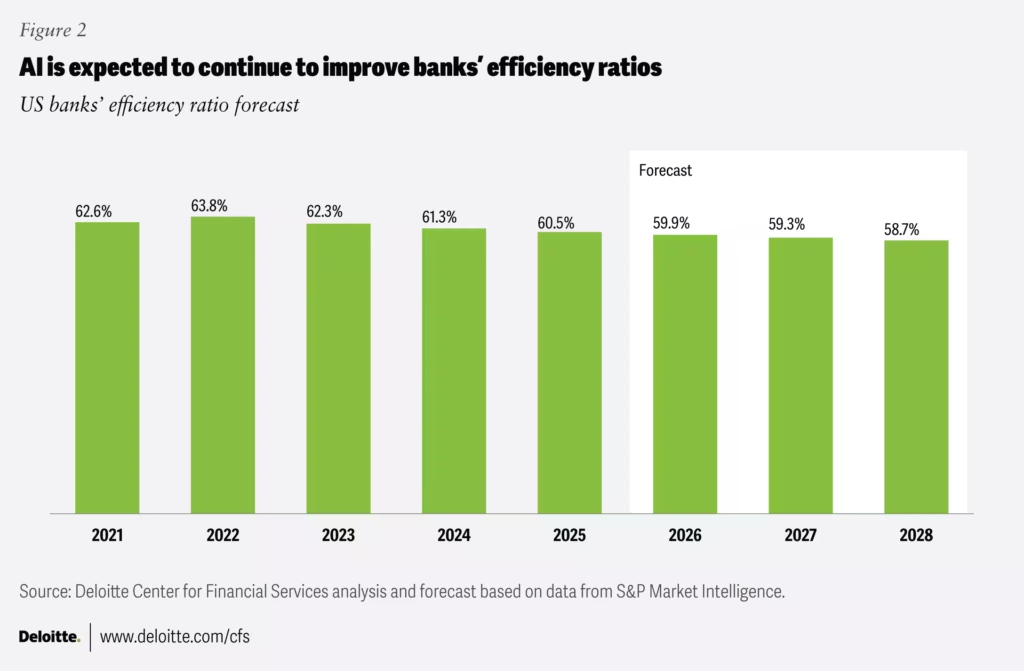
One big question for US banks in 2027 is how AI will affect the economy. Deloitte predicts that if companies slow down their spending on AI, banks may make fewer new loans, borrowers may have more trouble paying back loans, and the wider economy may grow more slowly. At the same time, banks that use AI widely could spend less money compared with what they earn and make more profit from their operations.
By 2028, US banks are expected to become more efficient. Their efficiency ratio is expected to fall from 60.5% in 2025 to 58.7% in 2028. This ratio measures how much money a bank spends to earn money. A ratio of 58.7% means that banks would spend about US$0.59 for every US$1 they earn in 2028. This would mean banks are working more efficiently.
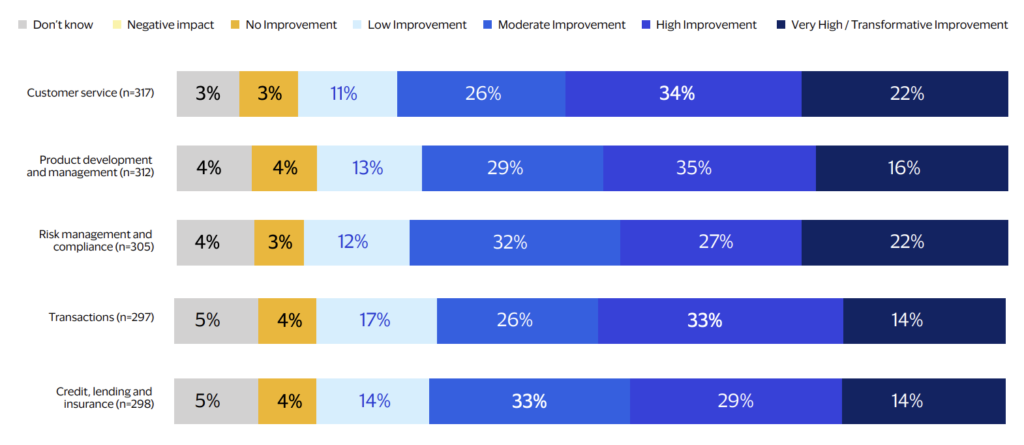
In Europe, banks are already using AI in many parts of their businesses. A 2026 study by Visa found that more than 90% of the European banks surveyed use some form of AI in their main business activities. More than 70% of the banks surveyed said AI had brought improvements ranging from moderate to major changes in important areas such as customer service, creating and managing products, and lending money.
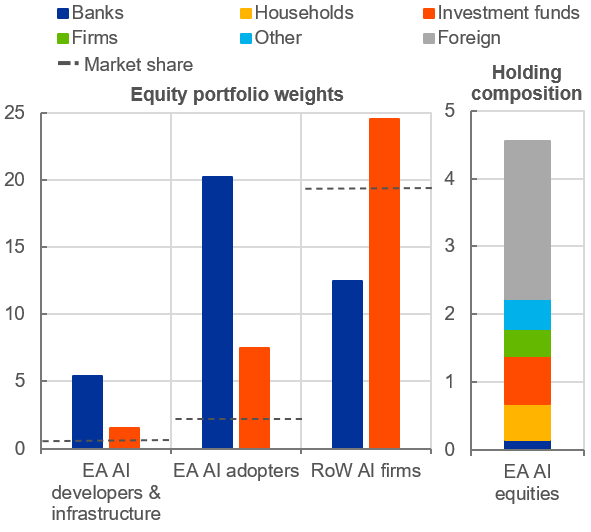
European banks are also increasing their lending to AI companies faster than their lending to companies in other industries, according to the European Central Bank (ECB). However, the total amount lent to AI companies is still fairly small, at just under EUR 200 billion.
The research found that European banks put more money into European AI companies than into AI companies in other parts of the world. This shows that they prefer companies in their own region. Banks in the euro area also have relatively little money invested in AI companies through debt securities, such as bonds. Most of these investments are in bonds issued by non-financial companies in the euro area.
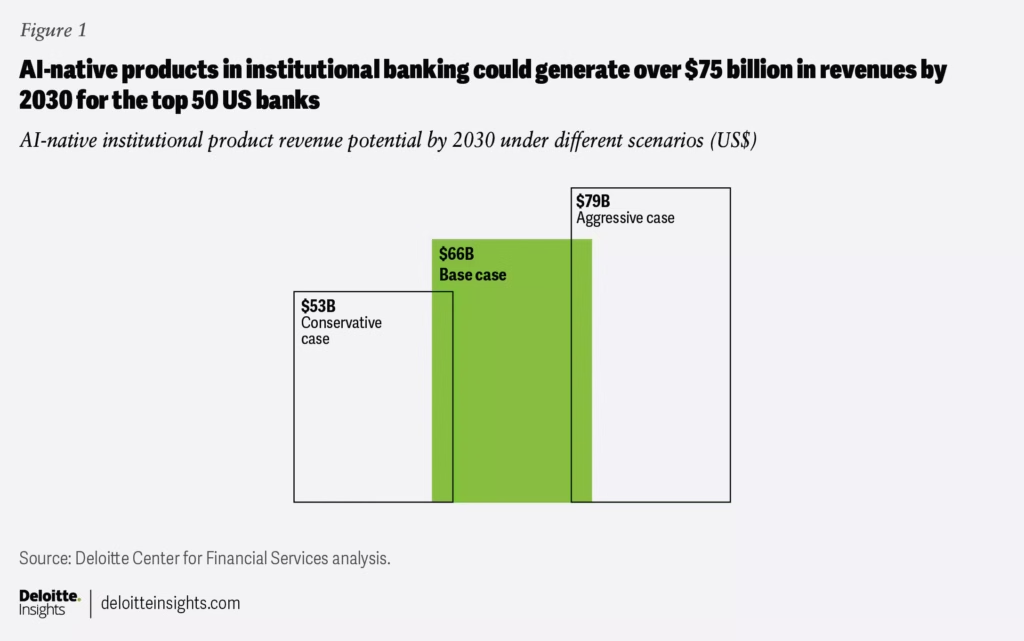
Banks are not only using AI to save money and work more efficiently. They are also using it to develop new ideas, products, and services more quickly. Deloitte estimates that products built around AI from the beginning could play a major role in helping institutional banking earn more than US$75 billion in revenue by 2030. Institutional banking provides financial services to large organizations.
Digital assets are becoming more popular
Deloitte says digital assets will be another important trend in 2027. Their use is expected to grow, especially in three areas: bank deposits turned into digital tokens, more stablecoins offered by banks, and company shares represented by digital tokens.
Tokenized deposits are digital tokens created by regulated banks. Each token represents a claim to the same amount of money held in a normal bank deposit. For example, a token worth US$1 represents a claim to US$1 in a bank account. These tokens are recorded on a blockchain or another type of shared digital record system called a distributed ledger. In recent years, tokenized deposits have moved from being just an idea to being tested in real projects. Some are now being used in actual banking operations.
For example, JPMorgan Chase offers tokenized deposit services for large organizations through its Kinexys platform and its JPMD deposit token. These services allow payments and transfers to be completed at any time, 24 hours a day, seven days a week. They also allow different financial systems to work together when money moves between countries, including through partnerships with banks such as DBS.
HSBC also offers tokenized deposit services using distributed ledger technology. These services help companies manage their money and support several traditional currencies, including the US dollar (USD), euro (EUR), British pound (GBP), Hong Kong dollar (HKD), Singapore dollar (SGD), and UAE dirham (AED). HSBC also supports transfers between countries and has tested whether its system can work with other systems, including tests with Standard Chartered.
Stablecoins are also becoming a more common part of banking. Stablecoins are digital tokens designed to keep a steady value, often by being linked to a traditional currency. Several banks now create their own stablecoins, safely hold stablecoins issued by other companies, or let customers trade them. Other banks are joining groups of banks to develop digital tokens that follow financial regulations.
For example, France's Société Générale issues digital tokens backed by euros and US dollars. These tokens follow the European Union's (EU) Markets in Crypto-Assets Regulation (MiCA), which sets rules for crypto-assets.
In Switzerland, AMINA Bank offers services for large organizations that include safely holding, trading, and providing access to buying and selling major stablecoins linked to the US dollar and euro. The bank also has an EU MiCA license through its European business.
In April 2026, several major Swiss financial institutions started a joint testing project, called a sandbox, to explore how stablecoins linked to the Swiss franc (CHF) could be used. The participants included UBS, PostFinance, Sygnum, Raiffeisen, Zurcher Kantonalbank (ZKB), Banque Cantonale Vaudoise (BCV), and Swiss Stablecoin.
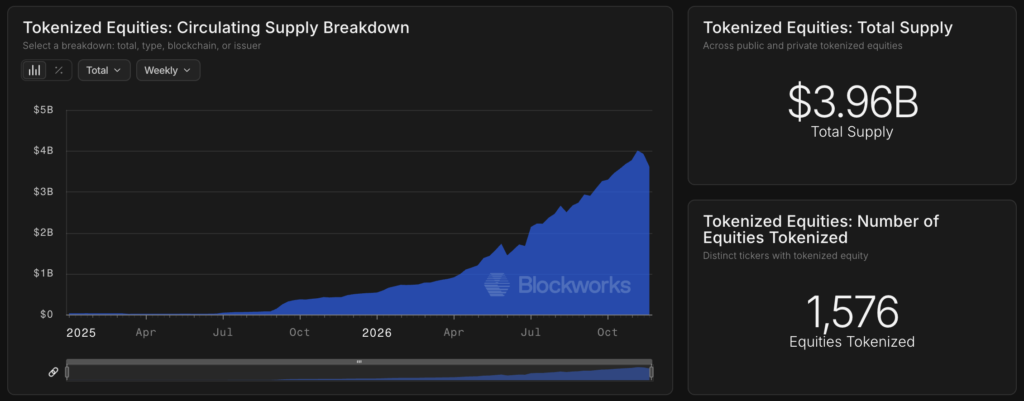
Finally, the market for tokenized company shares has grown a lot since the beginning of 2026. According to Blockworks, a company that provides data, research, and news about cryptocurrency and financial markets that use blockchains, the total value of tokenized shares in circulation is now about US$4 billion. This includes more than 1,500 different shares from public and private companies. The figure is more than seven times the US$539 million recorded at the start of 2026.
Tokenized equities are digital tokens that represent ownership of company shares or give their holders financial exposure to those shares, meaning their value is connected to how the shares perform.
Featured image: Edited by Fintech News Switzerland using an image by rawpixel.com through Magnific.