
AI needs a business case, not a bigger GPU


Even when computers are better than people at some tasks, people can still learn from the methods machines discover.
Before buying another GPU or upgrading to a more powerful AI model, businesses should first ask a basic question: What do they want the technology to achieve?
This question is not meant to be a joke about NVIDIA.
Jay Jenkins, Akamai's Chief Technology Officer of Cloud Computing, said some organisations are rushing into AI projects because they are afraid of falling behind. They do this without first working out how the projects will help their business.
"AI is a tool, not the goal," he said.
This difference matters more as businesses move from testing AI to using it in everyday operations. Projects that started in 2025 are now facing the real costs of running AI on a large scale. These include the cost of tokens, computing power, infrastructure and network use.
Jenkins said the answer is not always to use a bigger AI model or a faster GPU. For some jobs, a CPU, a smaller model or even a traditional API may cost less and work just as well.
He expects businesses to start focusing more on building products and services that use AI in 2027. To do this well, they first need to understand how much their current systems cost to run.
The cost of AI goes beyond tokens
Businesses looking at AI costs need to consider the whole technology system. This includes the AI model, computing power, storage, moving data and sending data out across networks. Paying less for tokens does not always mean the full application will cost less.
Jenkins gave GoVeda, a patent research company based in Singapore, as an example. He said Akamai helped the company move its AI work from GPUs to CPUs because CPUs were cheaper for the tasks it currently needed to do. This could change as the company's workload grows and it makes better use of GPUs.
A separate customer story published by Akamai reports that the wider move and system improvements cut costs by 20 percent and improved vector database performance by 20 to 30 percent. These results relate to the overall change in infrastructure. They do not show that switching from GPUs to CPUs alone caused all the savings.
Another customer, DeepSolver, a company that works with game theory, shows why network costs matter too. Jenkins said Akamai helped improve the company's GPU systems, but some of its biggest savings came from reducing the cost of sending data out over the network.
"Hyperscaler egress costs begin at $USD 0.05 per GB. Akamai's egress is $0.005 per GB. That, along with smarter caching of data and output reduction, allows for a 10-15x reduction in cost," he claimed.
This shows that running an AI application costs more than just paying for the AI model to do its work. Akamai has traditionally focused on delivering online content closer to users. It sees reducing the cost of moving data as another way to grow its business in AI computing.
Not every task needs the most powerful AI model
Choosing the right AI model is another way to control costs. Jenkins said open-weight models, including DeepSeek, are putting more pressure on companies that make large AI models. He expects businesses to become more careful about when they use expensive, top-level models.
A customer in India's media industry built an AI system to help with software development inside the company. This system sends each task to a different AI model based on what the task needs and how much it costs.
Jenkins gave an example of how this could work. A powerful Claude model could plan the software and design its structure. Sonnet could do the coding. An open-weight model could write the documentation and unit tests.
"The illustrative architecture is known as \"Hybrid AI\". It can use a mix of proprietary models and open weight models to address cost, redundancy, and sovereignty concerns," Jenkins explained. "Put another way: you could hire only PhDs, but that would be inefficient. You select people with different specialties for different jobs. AI can work the same way."
This means businesses need to plan how different AI models work together. The best model for each job depends on how accurate it needs to be, how quickly it must respond, how much it costs and what other practical limits apply.
Jenkins also believes businesses could run open-weight models themselves and adapt them using a method called Low-Rank Adaptation (LoRA). This method fine-tunes an AI model by adding a relatively small number of extra training parameters. Possible uses include legal work, private company information, and local languages or dialects. This could be especially useful in countries such as India, where many languages are spoken.
Akamai is also offering services for this market. Its AI inference service gives customers access to open-weight models through an API that works with the OpenAI API format. Customers can pay for each token through a serverless service or choose dedicated GPUs. Akamai manages the models and the systems needed to run them. Customers with the right skills can also reserve their own GPU capacity.
There is a choice between making things easier to manage and having more control. A managed AI service means less work managing infrastructure. Running models yourself gives more freedom, but requires skills to manage capacity, growth and maintenance.
Agent-based AI is growing at different speeds across APAC
Across Asia-Pacific, Jenkins believes many businesses are still using AI mainly to help their own employees work faster. Fewer are building AI products for customers.
At a meeting with 20 business leaders, he said about 18 were using large language models or other AI tools to help develop software inside their companies. Only two were putting AI into their own products: one technology company and one manufacturer. Jenkins said this was a small group and should not be treated as a picture of the whole market.
However, he is seeing more advanced AI agents being developed. In Malaysia, AITG built a system for digital workers that can work on goals over a longer period without needing a person to guide every step. One use is making videos and marketing content. A user gives the system a goal, some example images and a message. An AI agent then creates video footage, edits it, sends it to a person for review and makes changes based on their feedback.
The agent manages several steps in the production process instead of simply creating one video clip.
Jenkins also described uses of physical AI in Japan, including factory equipment, cranes and industrial robots. He also mentioned an Australian customer using AI to help robots find their paths. These systems need to make decisions close to the machines they control. This makes response speed and the location of computing power important.
This is an area where Akamai sees room to grow its infrastructure. After buying Linode, which added cloud computing services such as virtual machines and Kubernetes, Akamai invested in GPU capacity through its partnership with NVIDIA.
Jenkins described the company's work with NVIDIA AI Grid, a design for running AI tasks across different locations. Akamai wants to connect its main data centres with more than 4,350 edge locations.
This plan builds on Akamai's content delivery network. That network stores and delivers digital content closer to the people who need it. Jenkins calls the company's AI plan an inference delivery network. The idea is to use the same spread-out network of computing locations to run AI tasks.
The software used to manage these systems is also important. Akamai bought Fermyon, a company that specialises in WebAssembly, which helps software run quickly and efficiently across different computing locations. Akamai's Agent Sandbox service gives AI agents a separate, protected space to run the code they create. It includes controls that limit which systems and data the agents can access.
As AI agents start writing and running more of their own code, these safety controls become an important part of the technology needed to use them.
People still need to stay involved
Although Jenkins is positive about AI agents that can work on their own, he believes AI should help people do their jobs rather than replace their skills.
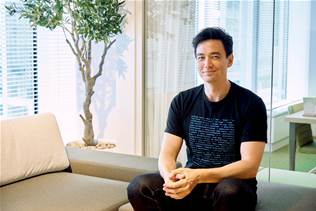
You're the pilot; AI is there to support you. People should define the objectives and understand the technology well enough to direct its use.
- Jay Jenkins, Akamai's CTO of Cloud Computing
Jenkins said businesses should train their employees while they develop AI systems. He compared this to chess and Go. Even when computers are better than people at these games, people can still learn from the strategies that computers discover.
The long-term effects of AI on jobs and industries are still unclear. But Jenkins has some clear advice for businesses right now: work out the value AI will bring, understand the cost of the technology, train employees and keep different ways of using and running AI available.
He predicts that in 2027, businesses will be judged more by the products and services they build with AI than by how much AI they use. In the end, the real test is whether customers want and value what those products and services offer.