
NEURA Robotics Plans Aragón Physical AI Gym and Model Zone
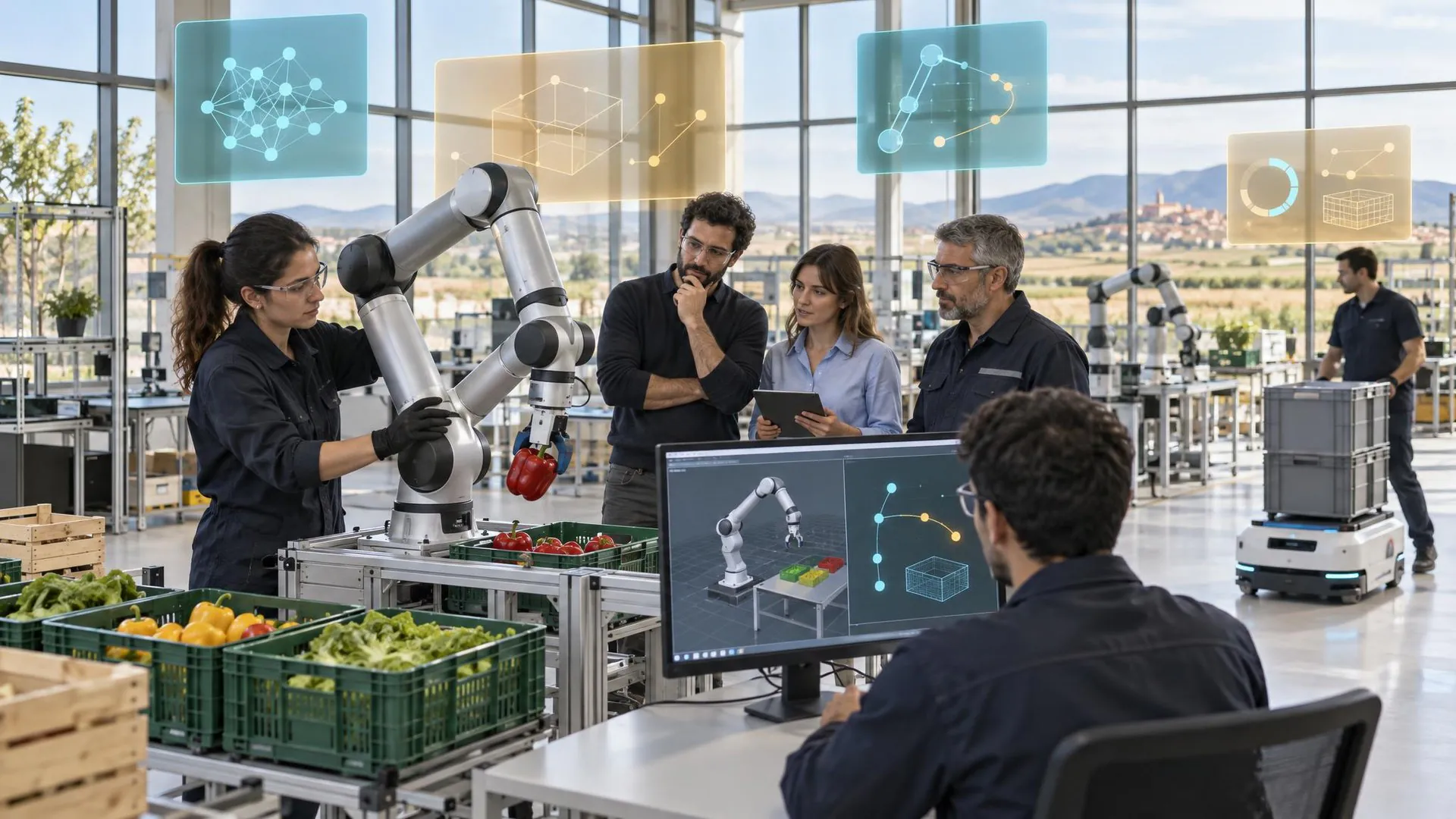 AI-generated illustration
- NEURA will build and run the Gym. Its partners will provide real tasks and knowledge about their work to help train robotic applications.
- Companies taking part can keep their robotic skills private or allow others to use them through Neuraverse under agreed business terms.
- The Physical AI Model Zone will test applications in conditions that are similar to real workplaces before they are used more widely.
NEURA Robotics announced on November 27, 2026, that it has signed an agreement with the Government of Aragón and Costa Group. The agreement is a memorandum of understanding, which sets out plans for the partners to create NEURA Gym Aragón and a nearby Physical AI Model Zone. They plan to invest tens of millions of euros in the project.
The partners hope to open the facilities in the middle of 2027. NEURA Robotics will provide most of the investment. The project aims to help companies in farming, food production, logistics, car manufacturing and other industries develop robotic applications. It also aims to make Physical AI a new source of economic growth for Aragón and Spain. Physical AI allows robots to understand what they see and use what they have learned to carry out physical tasks.
Training and Licensing Industrial Expertise
NEURA will build and run the Gym. It will provide technology and tools that bring together robots, AI models, computer simulations and its Neuraverse platform. Partner companies will bring real tasks and knowledge about their work. They will be able to train and test applications using different types of robots and check how well they work before putting them into use.
The shared facilities will be available to small and medium-sized businesses, large industrial companies, universities and technology centres. NEURA believes that reliable Physical AI applications must be trained using real materials, tools and work processes. The Gym is designed to make this kind of training available to the employees who know these jobs best.
Companies taking part will keep control of their own business knowledge and robotic skills through Neuraverse. They can choose to keep a skill private or let others use it under agreed business terms. This means companies can decide how their industrial knowledge is shared and used. NEURA founder and CEO David Reger explained the idea: “A company that develops a valuable skill should benefit when others use it.”
Testing Under Representative Conditions
The Physical AI Model Zone will take this work further. It will provide special areas where partners can test applications in conditions similar to those found in real workplaces. These areas may include industrial sites and selected service settings. The goal is to find out how well an application works outside a training area before it is used more widely.
The partners and relevant authorities have not yet decided exactly what the Zone will include or where its locations will be. They also still need to decide whether other types of autonomous systems will take part. Any testing in places that are open to the public will need the right permissions and safety measures. These rules will affect how much testing can take place in shared public spaces.
Partner Roles and Regional Development
Costa Group, an agri-food company based in Fraga, Aragón, will be the main industrial partner. Its farming and industrial businesses will provide real problems to solve, practical examples and knowledge of daily operations. This will help partners develop and test robotic applications. Costa Group will also use its regional connections to bring local businesses and workers into the project. At first, the partners will look at applications that can improve productivity and reduce physically difficult or repetitive work.
The Government of Aragón will help develop skills, work with the relevant authorities and connect the project with regional companies, universities, research institutes and business groups. Universities in Aragón, including the University of Zaragoza, will provide research knowledge and methods. They will also create opportunities for students and researchers and help train skilled workers through joint projects and activities.
The partners expect the project to create skilled jobs in running the Gym, training and supporting users, and developing applications. It may also create business opportunities for local suppliers and technical service companies. Aragón will become part of NEURA's growing network of Gyms, connecting local teams and companies with other sites in Europe and around the world.
The network is designed to help companies sell or use their local expertise in other places through robot deployment, technical services and skill licensing. The main question for Aragón is whether shared training and testing in realistic conditions can turn local knowledge of industrial processes into robotic skills that can be used and licensed elsewhere. This could give smaller companies access to the tools and facilities they need to develop robotic applications while allowing them to keep control of their own expertise.