
How Akashi Data Center is preparing for the AI era

The plan focuses on direct liquid cooling, Astana’s very cold and hot weather, and a modular data center campus with a total planned capacity of 100MW.
The trend toward more computing power in each server rack continues. This is shown in the latest survey by the Uptime Institute, published in July 2026. For the first time, the most common rack power level in the survey was above 11kW. One year earlier, it was 9kW.
This change is happening because companies are slowly adopting more powerful servers. New data centers are also appearing where most racks use more than 30kW of power.
These high-power systems are usually used for AI computing. They need very different buildings and equipment. For example, they need liquid cooling instead of the air cooling traditionally used for normal computing tasks. They also need stronger raised floors to hold heavier server racks and much more powerful electrical systems.

These changes require so much work that upgrading older data centers is often too expensive to make sense. Many older facilities were built for standard business computing, not for AI systems or the next generation of powerful computers.
At the same time, getting a connection to the electricity grid for new data centers in the FLAP-D markets (Frankfurt, London, Amsterdam, Paris, and Dublin) is becoming harder. Waiting times are being pushed beyond 2030. Some large projects are even being cancelled completely because local communities oppose them. As a result, more developing economies are trying to benefit from the worldwide growth of AI.
Central Asian countries have large energy resources and are creating plans to guide their national AI policies. Kazakhstan, the region's largest economy, is clearly leading these efforts. Its government has created and is putting into action its Concept for the Development of Artificial Intelligence, the Digital Qazaqstan Strategy, and the Digital Code. The country has also introduced a system that lets data center operators buy electricity directly from power generation companies.
Kazakhstan is also developing a plan called Data Embassy. Under this approach, data could be stored inside the country while some computing work could be done using cloud infrastructure in other countries. The country's Ministry of Digital Development expects this model to attract international technology companies.
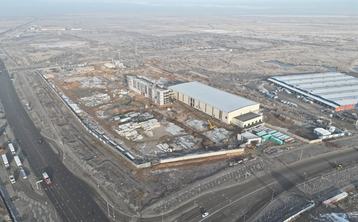
Private companies are also investing in new data centers. AKASHI Data Center PLC is building a modular data center campus in Astana with a planned total capacity of 100MW. It is expected to become the first Tier IV data center in Central Asia. Tier IV is the highest level in the Uptime Institute's system for measuring how reliable a data center is and how well it can keep working when equipment fails.
The Akashi campus will be built and opened in four stages. Each section will be designed for a different type of computing work. The first stage, called DC-1, is scheduled to begin operating in the second quarter of 2027. It will have 5.3MW of power for IT equipment. The company says: “If required, we can support rack power densities of 10 or 15kW for specialized systems.” The second and third sections, DC-2 and DC-3, will support racks using between 15 and 30kW of power. Each will provide 12MW of power for IT equipment.
The fourth section, DC-4, is being designed for a capacity of 45–50MW. It will be built especially for AI and other computing tasks that need a lot of processing power. Unlike the first three sections, DC-4 will use liquid cooling. This system will remove the large amount of heat produced by powerful GPU chips.
The data center's cooling systems are designed to make use of Astana's extreme continental climate. Temperatures in the city can range from −41.8°C to +40°C.
Akashi's engineers explain: “This means that, in principle, we can use free cooling for seven to eight months of the year. In other words, the chillers responsible for cooling the equipment can operate without engaging their compressors, relying instead on low outdoor air temperatures.”
In the first three sections, air cooling will remove the heat produced by the equipment. The system will use warm air at 20–30°C and chilled water cooled to 7°C by the chillers. DC-4 will work differently. Its liquid coolant will become heated to around 60°C. This hot liquid will pass through a heat recovery system, which will use the heat to warm all the buildings across the campus.
From the beginning, AKASHI Data Center PLC has planned its project to serve customers from around the world who need computing power.
“Kazakhstan’s colocation market currently comprises around 4,000 racks, and our project will effectively double that capacity. There simply isn’t enough demand from domestic customers alone to fill a facility of this scale,” says Vladislav Minkevich, CEO of Akashi.
The project has already built a group of international partners and customers. They include US-based Fortinet, which develops cybersecurity products; Switzerland's Virtuozzo, which makes software for virtualization, containerization, and storing data across different systems; and Hong Kong-based technology company LiasaiL, which focuses on cloud infrastructure, computing power, and AI-powered solutions.
Akashi has also recently signed an agreement with Türk Telekom International. This will give the data center a direct connection to a major network that crosses continents. It will also allow fast connections, with very little delay, to major internet exchange points in Europe.
The region's political and security situation also makes Kazakhstan an attractive location. Data center infrastructure in Eastern Europe has faced attacks. Meanwhile, Russia has very little spare data center capacity left. According to Kommersant, almost 90 percent of its data center capacity is already in use. In this situation, Kazakhstan is becoming a reliable alternative for companies that need backup data center facilities. Kazakhstan is also included among the jurisdictions recognized as providing an adequate level of personal data protection. This further strengthens its position as a safe place for international companies to store data and run computing operations.
Learn more about Akashi Data Center and its plans for digital infrastructure in Central Asia at https://akashi.cloud