
'King is back': Nvidia boss's return sparks fresh AI deepfake deluge
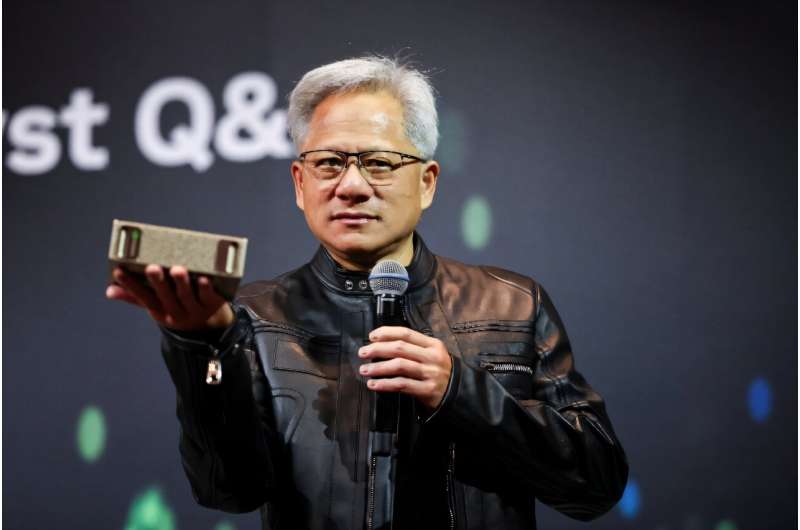
Jensen Huang, the head of U.S. chipmaker Nvidia, has returned to his job after a scandal. His return has led to a new flood of AI-made parody videos. The videos show how his story about sex and spying has become a popular subject for very realistic-looking deepfakes.
Huang had suddenly stepped down after reports of affairs outside his marriage came to light. One of the women involved was suspected of being a Chinese spy. AI-made videos showing Huang in made-up situations quickly became popular on social media and received millions of views.
The viral videos showed Huang in Bollywood-style gangster stories, singing and dancing, and other made-up scenes with the woman said to be a spy.
Huang's return as head of the chipmaker followed an unusual intervention by President Donald Trump. This led to another wave of parody videos on social media, including Elon Musk's platform X.
One video showed Huang taking the place of the late Iraqi dictator Saddam Hussein in a famous video of a real-life killing of people accused of betrayal. Huang was shown smoking a cigar and calling out the names of people he claimed were traitors in a crowded hall.
"It's time to take revenge," said the caption of one post on X. It showed a fake video of Huang suddenly coming to life and rising from a coffin.
"The king is back," said another post. It showed Huang wearing his usual black leather jacket and jumping onto a stage. Firecrackers went off, and a crowd that included other real-world technology bosses went wild with excitement.
Huang's return has led to criticism of Nvidia, including from U.S. lawmakers. Some people have also called for the company's board to resign.
Nvidia said it had brought Huang back after the U.S. government gave it information saying that he was not a threat to national security.
'Attention market'
The wave of deepfake videos mostly made people laugh rather than worry about false information. It showed how creative AI tools allow ordinary people to bring almost anything they imagine to life. They can use these videos to get more attention online or simply have fun.
"Clearly, deepfakes are being used to spread misinformation, and some of this misinformation is politically relevant," Joshua Tucker, co-director of New York University's Center for Social Media, AI and Politics, told AFP.
"But what also seems to be going on is that AI is simultaneously being used ... in creative ways where the goal is not to deceive.
"A politician in a cape flying is not intended to convince people that the politician can really fly—but it is intended to break through the attention market and reach constituents."
As more AI-made memes and parody videos appeared, some observers pointed out the irony that one of the main people behind the AI revolution had become a popular subject for AI-made content.
"It's ironic that without Nvidia, generating millions of these AI memes ... would not be possible," said one comment filled with emojis on an AI deepfake posted on Instagram.
"In some sense, Jensen is making Nvidia richer by his own scandal."
However, not all the fake content made with AI was meant to be funny.
Some social media users falsely claimed that Colette Kress, Nvidia's former temporary chief executive, had called for a boycott of the company led by women after Huang returned to his job.
According to misinformation watchdog NewsGuard, the false claim first appeared in a post on X from an account based in Nigeria.