
AI vs. Riemann hypothesis: How AI went from fluffing simple sums to cracking the hardest math problems
AI once struggled to get simple sums right. But now it is taking on difficult math problems, such as the Riemann hypothesis. How did AI make this amazing leap? And why should mathematicians be 'deeply worried'?
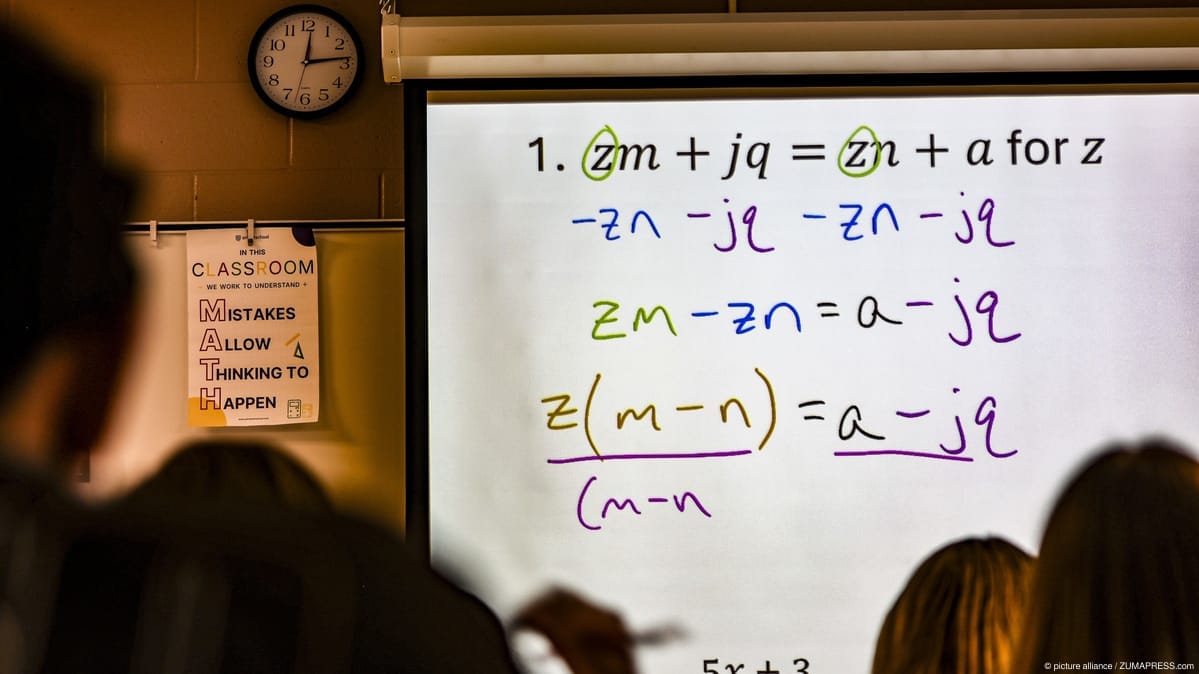
Last year, I asked ChatGPT to add up the money I had paid into the UK's state pension system. Luckily, I checked the answer. The total was wrong by a few pounds.
A friend who teaches math was not surprised. He told me that chatbots often make mistakes even with simple calculations.
Now jump ahead to November 2026. Levent Alpöge, a mathematician working at the AI company Anthropic, says he has solved one of the hardest problems in the history of mathematics with help from the company's chatbot, Claude.
The problem is the Riemann hypothesis. It is about how prime numbers are spread out. Mathematicians have struggled to solve it since 1859.
How did AI go from making mistakes with simple sums to reaching such great heights in mathematics?
Why was AI so bad at math?
The reason has to do with how AI handles information, said Andrea Asperti, a computer scientist at the University of Bologna in Italy.
Unlike ordinary calculators, early chatbots were trained to predict language. They learned to produce answers that sound right, but they were not necessarily doing the math.
Strangely, they could perform millions of calculations and still get the final answer wrong.
"In a way, asking why a chatbot makes arithmetic mistakes even though it has enormous computing power is like asking why people make mistakes when doing mental math, even though their brains have billions of neurons," Asperti told DW.
Ken Ono, a math professor at the University of Virginia in the United States, remembered a time when Google's Gemini decided that 9.11 was greater than 9.8.
"But make no mistake, those errors are very rare today," Ono told DW.
How AI got so much better at math
Asperti said AI improved because its models became larger, its training data got better, and its training methods improved over time. There was no single big breakthrough.
AI can now try different ways to solve a problem, check its work, fix mistakes and use special computer tools.
"What is remarkable is that these fairly small improvements in technology have led to major changes in what AI can do intellectually," Asperti said.
Perhaps the biggest surprise was that AI could solve problems that no one had solved before. Many people had doubted that it could do this.
"Solving math problems that are still open requires a lot of creativity. It is not just about finding information that already exists or repeating arguments that are already known," Asperti said.
Kevin Buzzard, a mathematician at Imperial College London in the UK, was excited but not surprised by the suggested proof of the Riemann hypothesis.
He had already seen AI solve a problem in algebraic geometry by finding a counterexample.
"I had thought about the problem myself and could see what made it difficult. AI got past those difficulties," Buzzard told DW.
What makes AI so good at math
Ono compares AI to a chess player. People find it hard to think many moves ahead, but AI can explore countless possible moves. In advanced mathematics, there are far more possibilities to consider.
"In pure mathematics, there are tens of thousands of research papers. Each one offers possible moves that AI can use. We are seeing the power of its ability to explore them," Ono said.
Another advantage is that AI can spot connections between different areas of mathematics.
"Most of us become experts in certain areas. We build on the theories we learn over time. It is difficult to become good at more than a few different areas," Ono said.
The suggested proof of the Riemann hypothesis shows how useful this wide knowledge can be. "You might need 30 or 40 mathematicians in one room to bring together everything needed for this proof," he said.
And AI knows much more than mathematics.
Ono suggested that the mathematician who worked on the proof with Claude could have stopped working and asked the chatbot: "Hey, by the way, next week I'm going to Hawaii. Come up with a beautiful plan for a long weekend in Hawaii."
He and Claude could then have gone straight back to advanced mathematics.
"The point I am making is that Claude seems to know everything at a fairly deep level, while humans do not," Ono said.
A 'superhuman' achievement
Ono believes that people could understand each of the individual ideas used in the suggested proof.
"But what is extraordinary is the huge amount of work involved and the ability to bring together ideas that had never been put together before," he said.
Ono described the achievement as "superhuman."
Asperti believes AI could develop a completely different kind of mathematical intuition.
Mathematicians study abstract spaces with hundreds or thousands of dimensions. But humans live in a world with three dimensions, so it is hard for us to picture these spaces.
AI might find its own ways to understand these structures and "discover relationships that are difficult for us even to imagine," Asperti said.
'Deep worry' for mathematicians' future
Ono is excited about what AI could mean for mathematics, but he is worried about what it could mean for mathematicians.
Until recently, he would have advised young mathematicians not to spend their time on problems like the Riemann hypothesis. They might work on them for 20 years without making any progress.
"But now we live in a time when you should aim for the biggest goals. The standard has become so high that if you are mainly interested in the questions themselves, this is a great time," he said.
"But there is another side to this. If you are a mathematician whose identity depends on being the person who comes up with the ideas, you may have lost much of that role."
Ono has guided 35 students through their PhDs. He said he is "deeply worried" about their future.
"Make no mistake. In 2026, the foundations of the entire world of human mathematical research have shifted," he said.
Ono believes future mathematicians will have a role "much more like that of a conductor leading an extraordinary orchestra."
How mathematicians can rethink their role
In the past, mathematicians were trained by learning how to prove mathematical theorems.
"Now you can prove a theorem by pressing a button," Buzzard said. "So we need new ways to train people."
Buzzard is setting up a lab that will focus on understanding, explaining and defending difficult mathematical arguments.
"The best team for doing mathematics is a computer working with a human. It is still fairly easy to take ideas and understanding from what machines do," he said.
But he warned that mathematical research could "end up being completely controlled by machines. They could do things that humans simply cannot understand anymore, very cheaply and at the touch of a button."
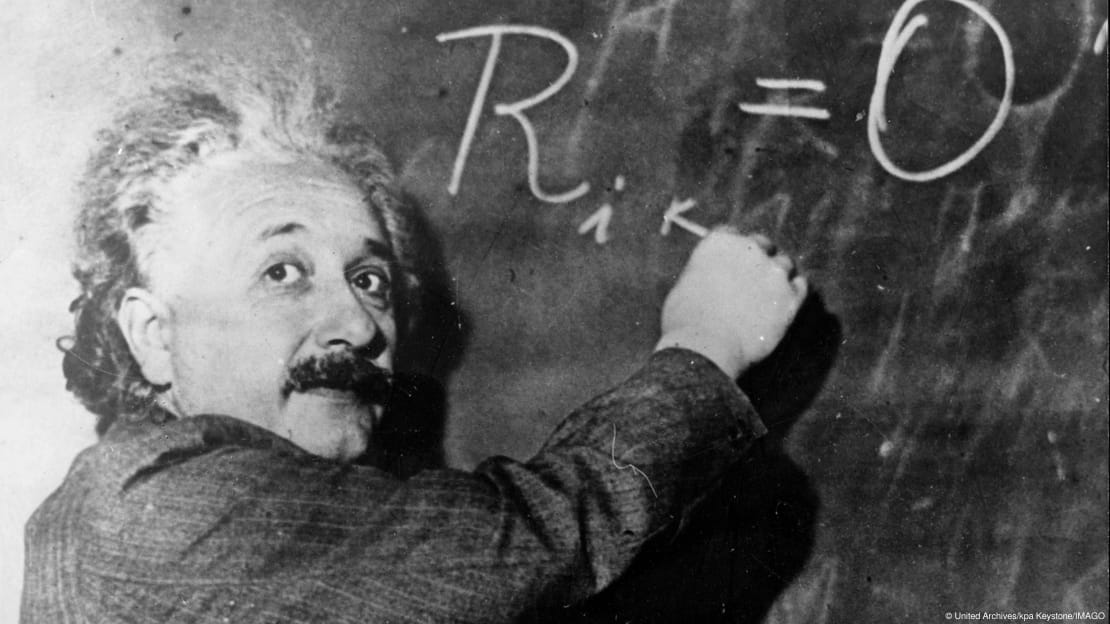
That is the question of how AI solves math problems. But can it also come up with new mathematical problems and ideas, as Albert Einstein did?
Ono said: "Imagine training a large language model on all the mathematics and physics known by the end of the 19th century. Would that model come up with Einstein's theory of relativity by itself? I don't think we have seen that kind of creative spark or ability yet."