
Jining's AI cultural creativity center retells Grand Canal stories
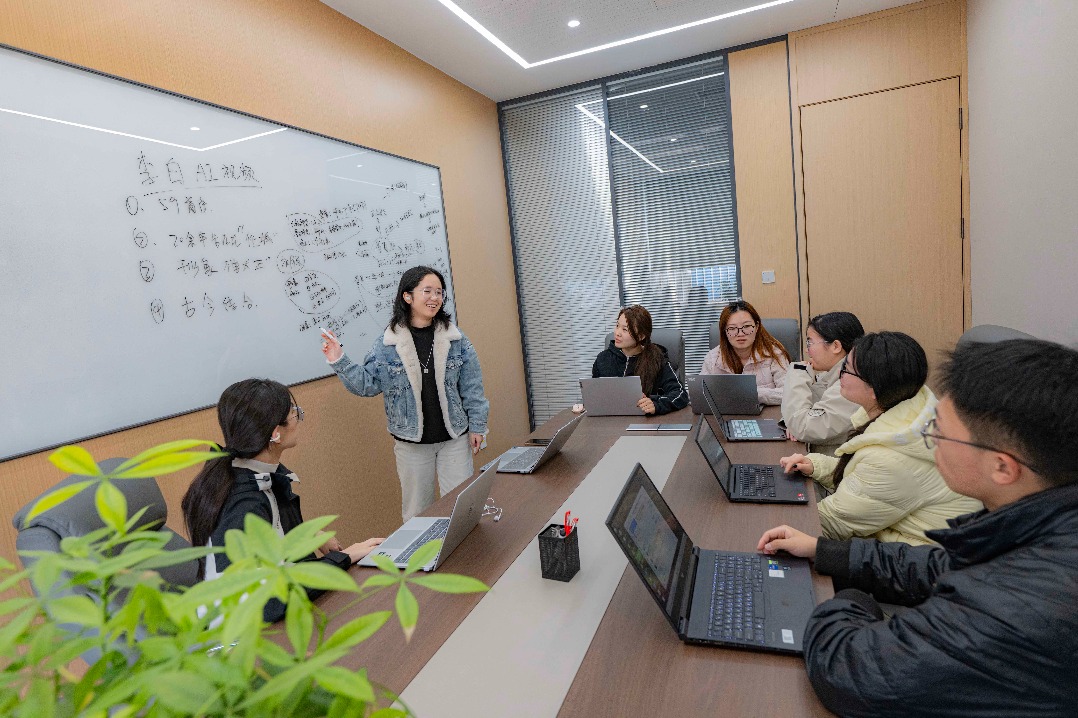

In a bright, open office in Jining, Shandong province, young creators sit at their computers, looking closely at their screens. Video images move quickly across them. Using artificial intelligence (AI), they are rebuilding scenes of a canal that has carried water for hundreds of years, one small piece at a time.
This is the city's AI cultural creativity center. Here, stories about the Beijing-Hangzhou Grand Canal, which has shaped Jining for centuries, are being told again in ways that people in the 21st century can enjoy.
"In the past, when I wanted to film the canal, I had to sit by the river and wait for the light to be just right. This could take days," said Wang Xin, one of the creators. "Now, AI can create the material in just a few minutes. This gives me more time to focus on the story itself."
Stories from the canal's long history are being turned into short videos. Old stories are now being shared in new ways.
But starting a cultural business also brings practical problems, such as paperwork, business registration, finding a place to work, and getting enough computing power. Jining decided to help solve these problems.
In Rencheng district, local authorities introduced 14 support measures. They cover business registration, workspaces, funding, and computing resources. The district's one-stop registration service, which takes "half a day," helps people spend less time filling out forms and more time working.
"The model can be copied, but the culture cannot," said Zhao Yanzhe, video operations director at the Canal AI Cultural Creativity Center.
Jining has a special advantage. It is the birthplace of Confucius and Mencius, and the Beijing-Hangzhou Grand Canal runs through the city. Tang Dynasty (618-907) poet Li Bai also wrote poems here. These cultural treasures are deeply connected to the city and cannot simply be moved or copied somewhere else.
"We explore local culture in depth," Zhao said. "We use tools like AI to show traditional cultural heritage that cannot be touched or seen in everyday life in more visual ways that work well on the internet."
This work is part of a wider effort in Jining to bring its cultural resources, including Confucian traditions, canal history, and poetry, into modern life.
Inside the AI center, old traditions and new technology work side by side. One screen shows a computer-made picture of the canal at sunset. Another displays a draft of an animated short video about Li Bai. By bringing modern tools and ancient stories together, the city hopes to share its culture with more people.
An Xianglin in Jining contributed to the story.