
Artificial Intelligence Helps UGA Researchers Transform Agriculture in Georgia
Developing new ideas from peanuts to eggs
By Gary Goettling, UGA
PUBLISHED ON
ATHENS, Ga. — At the University of Georgia College of Agricultural and Environmental Sciences, farmers are using more tools to manage their fields carefully. These include GPS, drones, cameras that can recognize things, sensors and robots. Artificial intelligence, or AI, is now helping these tools turn large amounts of data into useful information. UGA’s Institute for Integrative Precision Agriculture (IIPA) works with university researchers, businesses and UGA Cooperative Extension to improve research, education and technology for Georgia farmers.
Giving farmers more tools
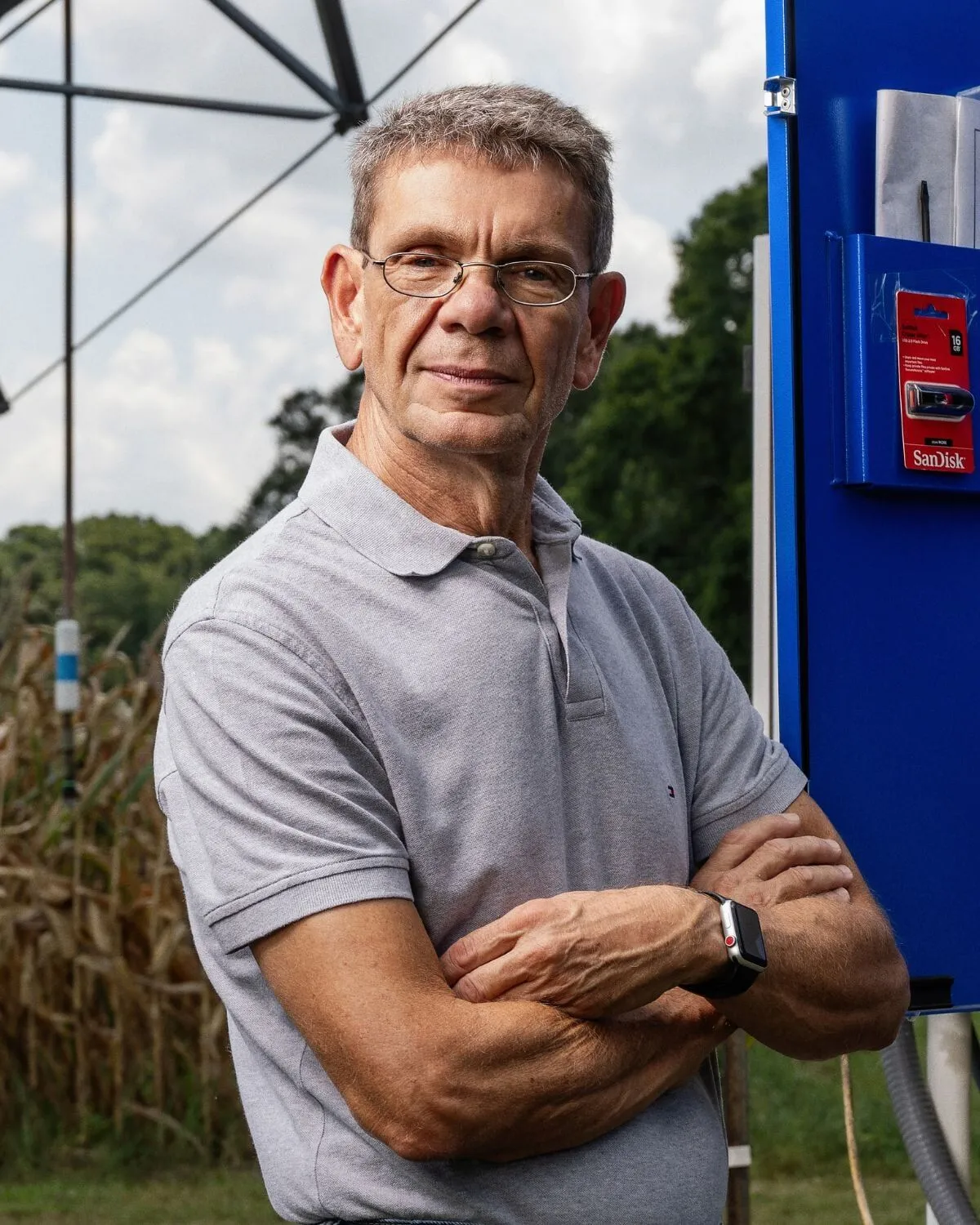
AI can help Georgia farmers use resources more wisely and earn more money. It can find answers to specific farming problems through generative AI chatbots and special computer programs made for agriculture, said George Vellidis, director of IIPA and a professor in the Department of Crop and Soil Sciences.
“If you ask an online AI tool a question about growing crops in Georgia, it will most likely use information from UGA Extension materials available online,” said Vellidis, who uses AI models licensed by the university for his research.
For certain jobs, farmers can use special AI software. For example, a peanut breeder who manages 10,000 peanut plots to find plants that resist disease or produce high yields can use software trained to study drone pictures of fields. These programs use databases containing huge amounts of information, sometimes measured in terabytes. Their advanced algorithms can recognize objects, find patterns and trends, make decisions, predict results and suggest actions in real time.
People carefully label the information by plant type and signs of disease to build the database used by the AI software. These databases may contain millions of images. When new pictures are added, the software compares them with the labeled images. This helps it quickly check the health of each plant and suggest ways to address problems when needed.
Building these databases is expensive and takes thousands of hours of careful work. But it is important because AI results depend on how much information the system learns from and how detailed that information is. “We fly drones over a field and take pictures of plants at a very small scale, down to centimeters. Each leaf picture may contain dozens of pixels,” Vellidis said. “We use AI tools to find which of these 10,000 plots need people to check them more closely. We train these special AI tools with labeled pictures so they can recognize the plants in real time.”
Investing in new AI ideas
This year, UGA’s Institute for Artificial Intelligence (IAI) gave early-stage research grants to eight projects involving researchers from different fields across the university. The goal is to support new work in artificial intelligence.
The grants are paid for by the Office of the Senior Vice President for Academic Affairs and Provost and the Office of Research, with extra support from CAES. The money gives faculty members important resources to start major research projects that may attract more outside funding in the future.
“We have CAES faculty working with us on interesting projects in precision agriculture, poultry science, livestock, food systems and other areas,” said Prashant Doshi, executive director of the IAI and UGA Foundation Distinguished Professor of Artificial Intelligence.
Testing the technology
Agricultural engineer Luan Oliveira leads the Precision Horticulture Team at the UGA Tifton campus. There, researchers test machines used to plant, spray and harvest vegetables and other specialty crops in real fields.
Oliveira explained how smart machines can make farm work more efficient. He compared a precision weed sprayer with 156 nozzles placed half an inch apart to a regular sprayer that has one nozzle every 20 to 30 inches.
“Each of the 156 nozzles can open and close on its own,” Oliveira said. “As the sprayer moves across a field, its AI-powered camera system spots weeds. The nozzle then opens and sprays herbicide only on the weed. This saves money and prevents chemicals from damaging crops.”
In a test using onions, Oliveira’s team found that the spot sprayer greatly reduced damage to the plants. It also used 60% less herbicide than regular sprayers that spray large areas at once.
Another field test used a tool called Smart Apply®. It uses LiDAR, a technology that sends out laser pulses to create very accurate 3D digital maps. The system uses these maps to find pecan tree canopies in orchards. AI software quickly studies the LiDAR sensor data, and the spray nozzles open only when they are aimed at the tree canopies. This means chemicals are not sprayed on the spaces between the trees or on the rows.
“We finished a trial last year using that tool, and the savings on fungicide chemicals were around 60%,” Oliveira said.
Improving peanut flavor with precision
The IIPA also brings researchers from different parts of UGA together through competitive early-stage research grants. These grants support promising new technology ideas that could help solve farming problems in Georgia.
This research uses only chemical information to measure the flavor quality of roasted peanuts. This could help peanut breeders quickly and reliably choose peanut varieties with flavors people like.
One grant supports a project involving several fields of research. The team is trying to breed peanuts with better roasted flavor. The project is led by Joonhyuk Suh, an assistant professor in the Department of Food Science and Technology. The other researchers are Nino Brown, a peanut breeder, and food scientists Koushik Adhikari and Abhinav Mishra.
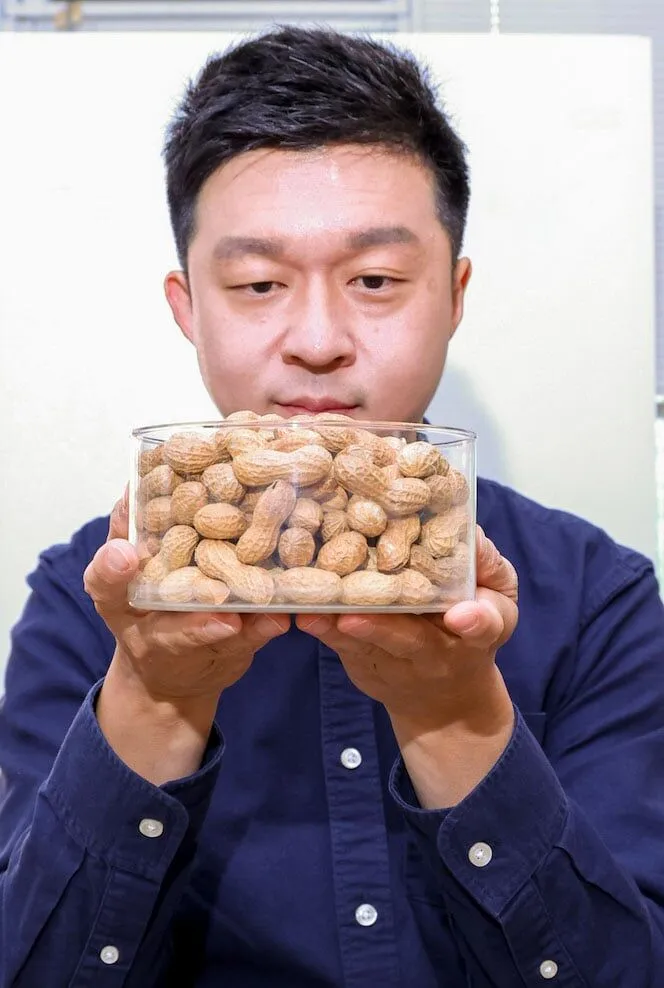
The team studied three types of peanuts that had already been tested by people for their flavor. They used AI-assisted statistical analysis to find important chemical factors linked to the flavors people preferred. Then they used machine-learning methods, including artificial neural networks and decision trees, to predict which chemicals were linked to positive reactions from people who tasted the peanuts.
“We know many of the chemicals involved in the flavor of roasted peanuts, but we do not yet know exactly which chemicals, or what amounts of them, create the ideal flavor,” Suh said. “We want to identify those chemicals and use chemical tests to predict flavor quality. This will be useful early in the breeding process, when there are too few peanuts available for people to taste and judge.”
The researchers expect this method to help build future models that use large amounts of data. It could also support a research network that brings together food science, crop and soil sciences, and other related fields to study AI.
Separating infertile eggs from fertile ones
Every year, millions of infertile eggs are wasted in poultry industry incubators. The usual way to separate infertile eggs from fertile ones depends on people looking at them and making a judgment. This method can be inaccurate because different people may see things differently.
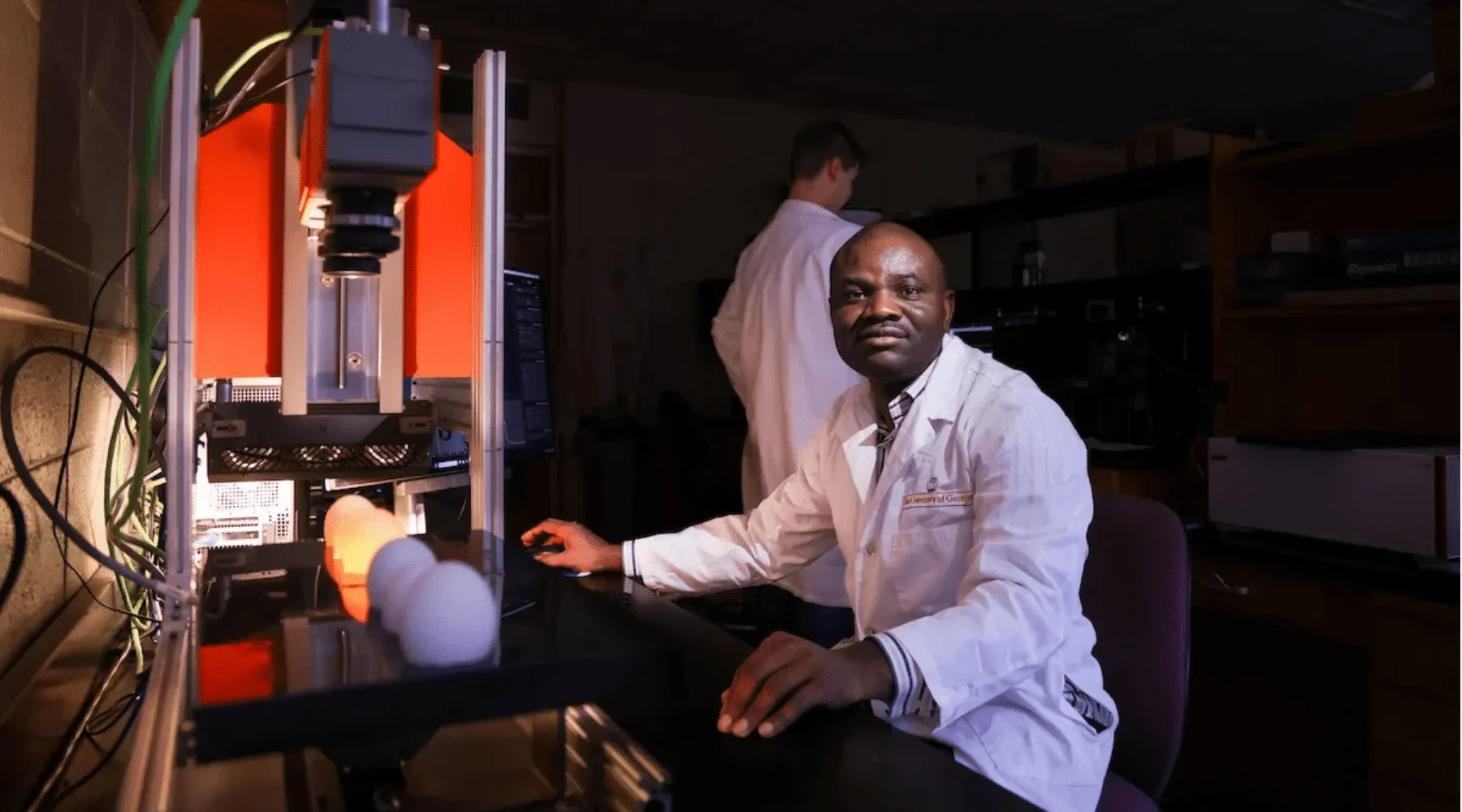
In the Department of Food Science and Technology, Assistant Professor Christopher Kucha has developed an AI-powered camera that does more than simply take pictures. It studies complex information from the eggs.
The device is called PrecisionDetect. It uses spectral imaging, a method that scans light beyond the range people can see. These scans reveal chemical signs inside an egg that can show whether it is fertile. Kucha developed the technology with Doshi.
The scans produce huge amounts of very detailed information, including tiny differences that people cannot see with their eyes. AI uses deep learning to study this spectral data and find small patterns that show whether an egg is fertile or infertile. This could allow eggs to be checked quickly without damaging them, at a speed suitable for large poultry operations. It could also help make the food system smarter and more sustainable.
Christopher Kucha
A “living lab” for new AI technology
Last year, field tests began soon after construction started on the 250-acre UGA Grand Farm near Perry, Georgia. This began a partnership between CAES and the original Grand Farm in Fargo, North Dakota.
Grand Farm is a group of farmers, companies, new businesses, teachers, researchers, government agencies and investors. They work together to solve farming problems using technology and new ideas. The Grand Farm in North Dakota inspired UGA to create its own facility.
UGA Grand Farm gives agricultural technology companies a place to develop and test their products under Georgia's growing conditions. The site holds field days, technology demonstrations and workshops. These events allow farmers, researchers and students to see AI and new farming tools at work and share what they learn.
“Grand Farm is designed to be Georgia’s leading place for precision agriculture technology, research and education,” said Kaytlyn Cobb, regional assistant director. “One of our goals is to work with groups that use AI to study field data in real time. We also want to explore self-operating equipment and computer predictions that can improve productivity and sustainability.”
The groundbreaking event gave people a preview of the technologies that the site will offer. These included solar-powered robots that remove weeds on their own; kits that can be added to tractors to make them operate without drivers in row-crop fields; and self-driving, solar-powered robots that spray herbicide only where needed and check fields to collect real-time information about plant health and the number of plants growing.
Cobb works with the IIPA to help students across UGA's campuses learn about new technology at UGA Grand Farm. “We look forward to creating more of these opportunities and making this site a place where students can get hands-on experience with precision agriculture technology,” she said.