
Anthropic downloaded Korean books illegally, then bought up to 300,000 more
Anthropic illegally downloaded digital copies of Korean books, including by Nobel laureate Han Kang
At least 22 books by Korean authors are eligible for compensation after Anthropic’s unauthorized downloads, and records show the company later bought hundreds of thousands of physical Korean books to train its AI.
Anthropic illegally downloaded at least 22 books by 15 Korean authors, including Nobel laureate Han Kang, then went on to buy more than 300,000 Korean-language books from a Korean distributor last year.
At least 22 books by Korean authors were among the 482,460 works eligible for compensation, according to a review of Anthropic's copyright settlement website on Thursday.
Three books by Han were included: “Human Acts” (2014), “The Vegetarian” (2007) and “The White Book” (2016). Four books by author Kim Young-ha, including “Your Republic Is Calling You” (2006), and three by Shin Kyung-sook, including “Please Look After Mom” (2008), were also on the list. At least 15 Korean authors were named.
The list was determined because of the Bartz v. Anthropic lawsuit.
Three authors, including Andrea Bartz, sued Anthropic in 2024 over the company’s unauthorized use of pirated digital books. The lawsuit revealed that Anthropic downloaded about 4 million digital books between 2021 and 2022.
A U.S. court ruled that Anthropic must compensate rights holders for roughly 500,000 works. To qualify, a work had to be registered with the U.S. Copyright Office within five years of publication, among other requirements.
Court documents show that compensation claims had been filed for 440,490 of the 482,460 eligible works, or 91.3 percent, as of April 16.
Anthropic agreed to pay $3,000 for each work.
It remains unclear whether Han and the other Korean authors directly received compensation offers.
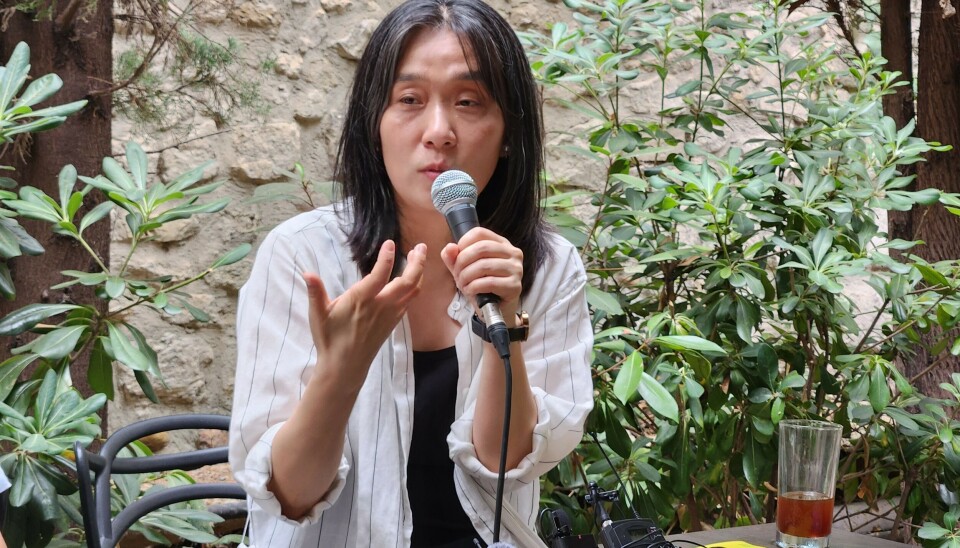
Anthropic’s copyright settlement website lists Deborah Smith, the British translator of Han Kang’s “The Vegetarian,” as a registered copyright holder. That raises the possibility that Anthropic’s compensation offer could have been made to Smith or to the agency representing the book’s rights.
The lawsuit also revealed that Anthropic bought physical books in bulk, scanned them to train AI and then shredded and discarded them, in an initiative they named “Project Panama.”
Anthropic switched to buying physical books after its downloading of pirated digital copies became controversial. The company submitted internal meeting records on its physical book purchases to the court during the trial.
The records show the status of a contract between Anthropic and Korean book distributor Woongjin Booxen — Korea’s largest wholesale book distributor — as of Nov. 27, 2024.
Anthropic had internally approved the terms of the deal and had reached an agreement with Woongjin Booxen on a discount rate, according to the records. The AI company had also received a revised contract from the book distributor.
The price per book and the total size of the purchase were not disclosed. The purchase volume, however, was listed as “0.Xm,” or 0.X million, which indicates that hundreds of thousands of books were involved.
“We did export books to Anthropic last year,” Woongjin Booxen told JoongAng Ilbo on Thursday. “We contracted directly with Anthropic without another company acting as an intermediary.”
The book distributor denied prior knowledge.
“At the time, we understood it to be an ordinary book supply transaction,” the company said. “Since the recent controversy over books being scanned and shredded, we have stopped all transactions with AI companies and companies suspected of being connected to AI.”
Woongjin Booxen declined to disclose the exact number of books exported.
The approximate size of Anthropic’s purchase can be estimated from Woongjin Booxen’s financial disclosures.
Figures disclosed by Woongjin through the Financial Supervisory Service’s electronic disclosure system show that Woongjin Booxen recorded 3.3 billion won ($2.46 million) in overseas sales last year.
The figure became available after Woongjin was newly designated as a business group subject to disclosure requirements. Overseas sales before 2024 are therefore not publicly available but clues to hint the figure is available.
“Our overseas sales before 2024 accounted for less than 0.2 percent of total revenue,” Woongjin Booxen said.
The company recorded 196.9 billion won in revenue in 2024, and 0.2 percent of that would be about 400 million won.
The figure suggests the distributor’s sales to Anthropic could have increased overseas revenue by roughly 2.8 billion won. Estimates based on that increase and book discount rates put the purchase at about 250,000 to 300,000 books.
Anthropic’s internal meeting records also show that the company sought to buy Korean, Chinese and Japanese books.
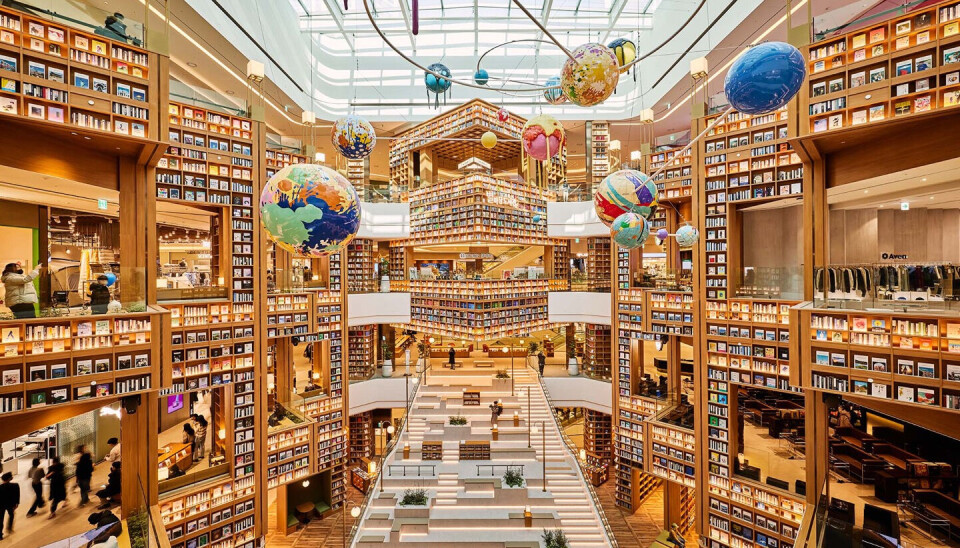
The AI company had completed a book supply agreement with major Japanese distributor Nippon Shuppan Hanbai, or Nippan, as of Nov. 27, 2024.
The tech company was also in talks with a Taiwanese book distributor and sought to import books written in simplified Chinese characters from mainland China through UDC.
Anthropic appears to have sought to buy Chinese books through Taiwan because of tense U.S.-China relations.
Evidence has also emerged that other U.S. AI companies have sought to buy used books in Korea and elsewhere around the world.
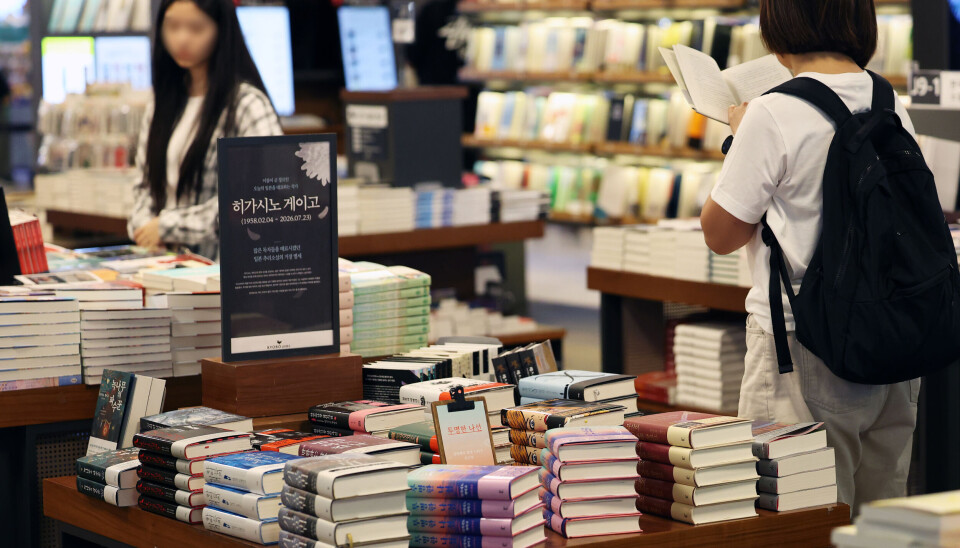
Notably, another major Korean book distributor, Kyobo Book Centre, also received inquiries in August about bulk book purchases suspected of being intended for AI training.
Concerns are growing over U.S. AI companies’ efforts to acquire large quantities of books.
One professor went so far as to call the phenomenon “AI model imperialism.”
Colonial trade during the age of imperialism involved taking cheap raw materials from colonies, processing them in imperial powers and selling the finished products back to the colonies at higher prices, Prof. Seo Yong-seok of KAIST Moon Soul Graduate School of Future Strategy, said.
He sees a similar structure emerging in the AI era. Knowledge accumulated by Korean society over the past century is being exported cheaply in the form of used books, processed into AI models by foreign companies and returned as AI services that Koreans then pay to use.
“Korea is effectively shifting from a producer of knowledge to a supplier of raw knowledge and a consumer of AI services,” Prof. Seo said.
BY YOON SUNG-MIN [[email protected]]