OpenAI outlines AI-era cybersecurity strategy for South Korea corporations - CHOSUNBIZ
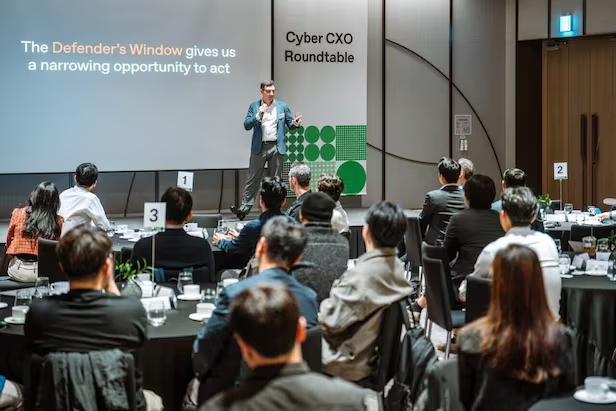
OpenAI, the developer of ChatGPT, presented cybersecurity defense strategies for the AI era and on-site application plans for corporations' security to domestic corporate leadership.
OpenAI held the "OpenAI Cyber CXO Roundtable" on Oct. 16 at the Westin Seoul Josun in Samseong-dong, Seoul. At the event, which was attended by more than 60 domestic corporate executives including chief information security officers (CISO), OpenAI introduced trends in cyber threats changing with AI and shared ways for corporations to boost their security response capabilities.
Dominic Grillo, head of technical success and a cybersecurity expert at OpenAI, and Wana Tun, a security specialist engineer, gave presentations.
As AI rapidly improves its ability to find software vulnerabilities and analyze attack paths, the time corporations have to prepare for cyberattacks is shrinking. OpenAI emphasized that, because defenders can leverage AI to provide code and operational context of the systems they manage, it is important—based on this characteristic—to find and fix issues before attackers exploit vulnerabilities.
The presentation also introduced how "Daybreak" supports corporations' security operations. Daybreak is an integrated cyber defense solution that links OpenAI's AI models, the coding tool Codex, Codex Security, and security workflows. According to OpenAI, a significant number of major domestic corporations have already adopted Daybreak or are considering adoption.
The company explained that Daybreak integrates AI into the security tools and workflows corporations already use to find vulnerabilities, verify the possibility of real-world exploitation in a controlled environment, then prepare fixes and confirm their effectiveness. Security personnel and developers review the verification basis and test results to decide whether to apply the fixes.
It can be used for code security reviews, threat investigations and approved security testing. A key feature is that it supports the establishment of a continuous cyber defense system based on human oversight, access controls and safeguards.
OpenAI also shared its experience building its "Defense Factory." The Defense Factory is an operating framework that connects AI agents, repeatable workflows and isolated execution environments with existing security and development tools to continuously inspect and remediate vulnerabilities. It passes identified issues to the responsible teams, and security and development teams work together through fixes and verification.
The presenters also emphasized the importance of human oversight and clear authorization settings in this process. Corporations should define the data and systems AI can access and the scope of tasks it can perform, and establish procedures for people to review critical decisions and changes.
They argued that security performance should be evaluated based on evidence that shows actual risk reduction, such as how quickly major security risks were resolved and whether the effectiveness of remediation was verified.
OpenAI Korea country head Kim Kyung-hoon said, "For corporations to quickly identify and respond to major security risks in the AI era, they must treat cybersecurity as a core management priority," and added, "We will help domestic corporations integrate AI into their existing security systems, verify effectiveness in the field and develop it into sustained defensive capabilities."