An OpenAI bug misclassified ChatGPT referral traffic as direct from Oct 8 to 15
If between October 8 and 15 you noticed a significant drop in web traffic coming from ChatGPT in your Google Analytics 4 or Adobe Analytics dashboards, while also seeing direct traffic experience unusual growth, do not panic: this was an internal OpenAI issue, not a problem with your content.
This technical glitch, which coincided with the global rollout of ChatGPT-6, has already been resolved by OpenAI. However, it is worth keeping in mind when analyzing your data for those dates so you do not fall into attribution errors.
ChatGPT removed its UTMs, creating a traffic attribution problem
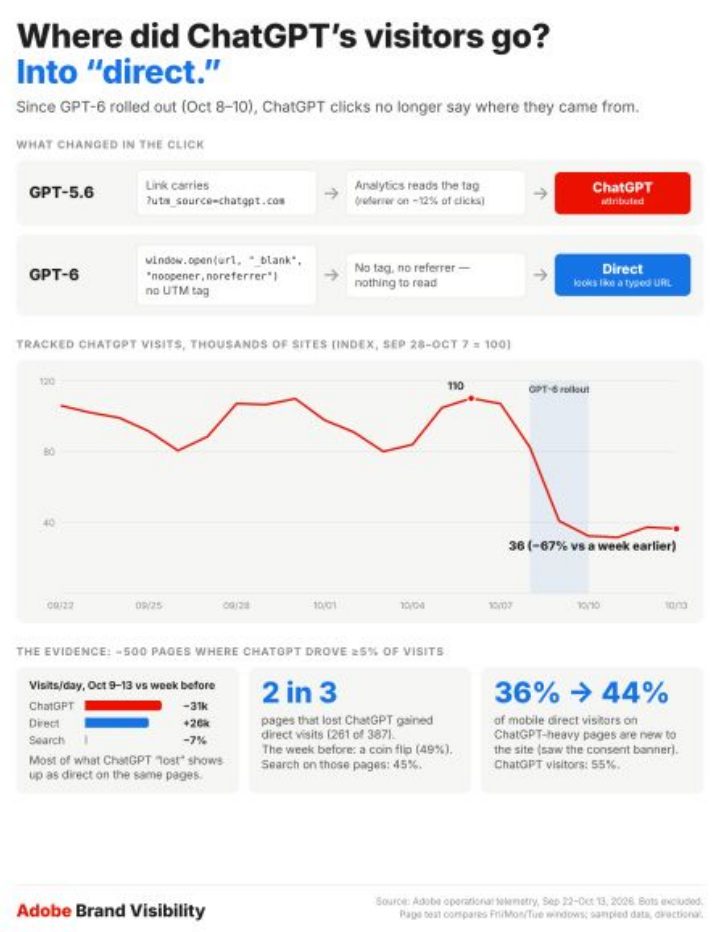
During the second week of October, ChatGPT stopped automatically adding the “utm_source=chatgpt.com” parameter to the URLs of its outbound links. Combined with the fact that the AI also does not usually pass along the HTTP referrer header, this left measurement tools completely in the dark. Unable to attribute where the visit came from, platforms logged that traffic as unattributed direct traffic.
The anomaly was analyzed by Cedric Huesler, Sr. Director of Product Management at Adobe, in a LinkedIn post. Huesler studied a panel of more than 500 web pages where ChatGPT had previously accounted for at least 5% of visits, and found that while reported traffic from ChatGPT had fallen by approximately 31,000 daily visits, direct traffic had increased by around 26,000 visits per day across those same sites.
He also observed that search traffic had decreased by 7%, and that two out of every three pages that had lost ChatGPT traffic had seen direct traffic increase.
Finally, OpenAI confirmed on October 14 that this was a technical error in the process of being resolved. Just 24 hours later, the company completed the rollout of the fix, bringing tagged links back to between 95% and 100% of their usual levels.
How to handle this unstable period in your web analytics
Knowing about this incident will be key for any SEO professional or website owner, because it makes it possible to review web traffic data for the period between October 8 and 15 with the understanding that any anomalies it may show were not caused by your content, user behavior, or ChatGPT deciding to stop paying attention to you.
Had it not been identified, this issue could have caused more than a few headaches. Now, at the very least, we can take into account that we do not have precise information on what share of traffic came from ChatGPT and what share was truly direct traffic during those dates.
To properly manage this measurement gap in your performance reports, it will be important to keep these three guidelines in mind:
- Note the October 8–15 period in your analytics tools: when analyzing your traffic in GA4 or Adobe Analytics, keep in mind that the changes in ChatGPT and direct traffic charts were caused by a one-off technical incident, not by a real loss of audience.
- Do not restructure your attribution model: avoid making hasty decisions or changing channel rules, since conversions and effective traffic had not vanished.
- Keep trusting UTM parameters: despite this temporary issue, UTM tagging remains a reliable way to audit traffic coming from AI, since the standard referrer is still absent in most of its clicks.
Photo: generated with ChatGPT Images 2.5
Published by

Content Manager in Marketing4eCommerce
Content Manager in Marketing4eCommerce, which translates to: writer, editor, and absolute fan of generating images with AI.
Stay up to date!