
Lee Kwang-soo’s Bubble even beats ChatGPT... Fans now “subscribe” too [Stech]
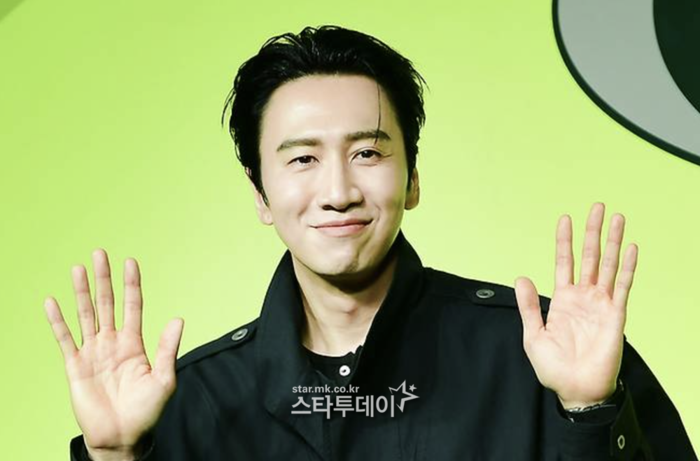 사진 확대
“Guys, wake up. It’s time for Bubble.”
The person behind the message that arrives before the morning alarm is actor Lee Kwang-soo. When a fan says, “Let me get some sleep,” he replies, “No. You’ve slept plenty. Time to do Bubble.”
He launched on the fan communication platform Bubble on the 1st, waking fans early in the morning and, at night, keeping those heading to bed around with messages like, “Please, stay just a little longer.” The old dynamic, in which fans simply waited for updates from stars, has been turned on its head. Now stars reach out first, and fans keep checking their phones so they don’t miss the conversation.
The response was immediate. Keywords related to Lee Kwang-soo’s Bubble account rose to the top of X’s (formerly Twitter’s) trending topics shortly after launch, and on the 7th, Bubble for Starship, where Lee is available, ranked No. 1 among all free apps on Apple’s App Store. It even beat global AI apps such as ChatGPT and Gemini.
A star who used to be on the other side of the TV screen has now entered my chatroom. But it isn’t free. The price of getting a little closer to Lee Kwang-soo is 5,000 won a month.
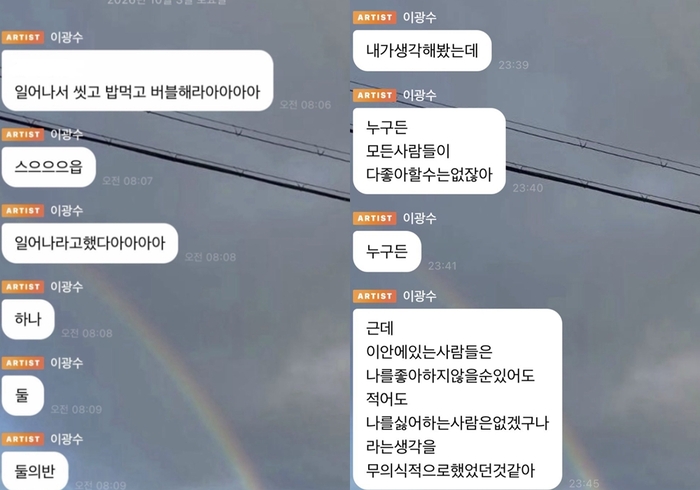 사진 확대
Lee Kwang-soo stood out from the very first day of his Bubble debut. At first, he learned how to use it by asking fans about each feature one by one, but soon he began pouring out messages. He even admitted he was “addicted to Bubble,” saying, “Wow, damn, I think I’m addicted to this,” and “I keep opening and closing the Bubble app.”
His conversations with fans also played out like an extension of a variety show. When one fan said, “Oppa, I have my sports day today,” he replied, “Hurry up, finish sports day and come on Bubble.” It was a short exchange, but his signature personality came through loud and clear. As screenshots spread across social media, even people who hadn’t subscribed began checking out Lee Kwang-soo’s Bubble.
Fellow stars reacted, too. His close friend Kim Woo-bin showed interest, asking, “Kwang-soo’s started Bubble? Where can I see it?” Liz of IVE subscribed herself and said, “I didn’t check my alarm in the morning, and there were 56 messages piled up.” Rapper Lee Young-ji urged fans to subscribe, saying, “The early days after launch are always the best.” His longtime friend Doh Kyung-soo was amazed by Lee Kwang-soo’s “Bubble frenzy,” calling him “the least talkative person I know.”
What’s interesting is that Lee Kwang-soo has drawn in users from beyond the traditional idol fandom. Bubble had long been seen as a service centered on K-pop idol fans, but in Lee’s case, the messages themselves were consumed online like variety-show content. That’s why people said, “I downloaded Bubble for the first time because of Lee Kwang-soo.”
Ultimately, what Lee Kwang-soo has demonstrated is the potential for something beyond simple fan service: even outside of their work or performances, a star’s way of speaking, reactions and personality can become paid content—and that content can draw new users to a platform.
 사진 확대
The buzz naturally turned to the subscription fee.
When Lee Kwang-soo’s Bubble came up on Pinggyego, a web variety show on the YouTube channel TteunTteun, Yoo Jae-suk asked, “You don’t have to pay for that, do you?” When he was told it costs 5,000 won per person, he bluntly replied, “I can’t spend 5,000 won on Kwang-soo,” drawing laughs.
The twist was that it was the production team. When someone said, “Four people on our team signed up,” Yoo Jae-suk reacted with surprise: “That’s 20,000 won?”
The exchange was made in jest, but it laid bare Bubble’s business model: getting a little closer to one star comes with a monthly price tag.
Bubble is a monthly subscription fan communication service that charges by artist. Subscribers can receive the stars’ text, photo, audio and video messages in a personal chatroom, and fans can also send replies in a set format.
Of course, it isn’t structured like a regular messaging app, where one star and one fan have an independent, one-on-one conversation. Messages sent by an artist are delivered to each subscriber’s chatroom, and fans reply to them. Even so, users can have the experience of a star speaking directly to them.
That “experience” comes at a price, too. For purchases through the App Store, the individual subscription rose 11%, from 4,500 won to 5,000 won, in July last year. The price remains 4,500 won on the web store, so fans share tips like, “Pay for Bubble on the web.”
One subscription costs 5,000 won a month. The more favorite stars you have, the more money goes out of your account each month. In the past, people spent money on albums and concert tickets; now, it’s become an era in which they also pay a monthly subscription fee for the feeling of being connected to a star in their everyday lives.
 사진 확대
Bubble wasn’t the first fan communication service of its kind. From the late 2000s, idol fans used text-based services such as UFO Town. Fans paid 300 won per message to send texts, and stars replied to some of them.
But the format has changed. In the past, fans sent the first message and waited for a reply. With Bubble, stars send everyday messages first, which fans receive in personal chatrooms. Payment has shifted from per-message charges to monthly subscriptions, and communication has expanded beyond text to include photos, audio, video and live streams.
Paid communication itself isn’t new, but Bubble stands apart because it has turned it into an everyday subscription service and grown it into a platform industry.
The numbers show this, too. Dear U, the company that operates Bubble, has steadily grown since going public. Last year, consolidated revenue was 83.8 billion won and operating profit was 31.4 billion won, up 12% and 23.5%, respectively, from the previous year. Compared with 2021, the year it went public, revenue rose about 110% and operating profit increased by more than 130%.
What stands out is its profitability. Its operating margin, which was around 33% in 2021, rose to 37.5% last year. In the first half of this year, revenue was 46.8 billion won and operating profit was 19.1 billion won, pushing the margin above 40%. Even as the number of domestic subscribers has declined, the margin has risen, thanks to subscription fee increases and the expansion of web payments.
However, analysts’ expectations have come down. In August, Kiwoom Securities lowered its target price from 50,000 won to 30,000 won, citing factors including a decline in subscribers. Last month, LS Securities forecast revenue of 94.3 billion won and operating profit of 38.6 billion won for this year. Revenue forecasts, which had topped 100 billion won at the start of the year, have fallen to the 90-billion-won range, but the expected operating margin remains around 40%.
The market is also expanding. Around 720 artists and groups in Korea and overseas are currently available on Bubble, which is expanding into actors and sports stars. Subscribers to the Japanese service Bubble Japan reached 108,000 at the end of the second quarter, up 71% in a year. In China, the company is also expanding its local artist lineup in partnership with QQ Music.
That the biggest draw is ultimately the “star” is clearly an advantage, but also a major weakness. The average number of domestic Bubble subscribers fell from 2.04 million in the fourth quarter of last year to 2.01 million in the first quarter of this year and 1.97 million in the second quarter. Popular stars joining the platform can attract users, but subscribers may also leave when stars enlist in the military, take a break from activities or end their service.
The Lee Kwang-soo effect, too, is still at the buzz stage. His Bubble drew a great deal of online attention, and the Bubble for Starship app rose to No. 1 on the App Store, but the extent to which it has actually affected subscriber growth and earnings will have to be confirmed by future figures.
Even so, the change is clear. Fans used to spend money on albums and tickets. Now they pay every month for the “feeling of being connected,” too. That’s how a message costing 5,000 won a month has grown into a platform industry worth tens of billions of won.
This article has been translated by GripLabs Mingo AI.