
Proposed AI competency framework for students in agriculture, forestry, and fisheries.
On the afternoon of October 16th, at Hue University, the Ministry of Education and Training (MOET) organized a scientific conference titled "Application of Artificial Intelligence in the Agriculture, Forestry, and Fisheries Sectors." Deputy Minister Le Quan chaired the conference.
Training human resources to master AI.
Speaking at the conference, Deputy Minister Le Quan noted that artificial intelligence (AI) is profoundly changing the way knowledge is created, processed, and exploited. In agriculture, forestry, and fisheries, this technology can support pest and disease identification, yield forecasting, water resource optimization, forest resource monitoring, aquaculture environment tracking, and supply chain management.
According to the Deputy Minister, AI opens up opportunities to shift from production heavily reliant on experience to a model based on data and scientific knowledge. However, the effectiveness of its application depends on reliable data, appropriate infrastructure, human resource capabilities, and clear, practical problems.
The Deputy Minister requested that training institutions identify new competencies demanded by the labor market, recognize the gap between current programs and professional requirements, and thereby innovate learning outcomes, teaching methods, practical training, and student assessment.
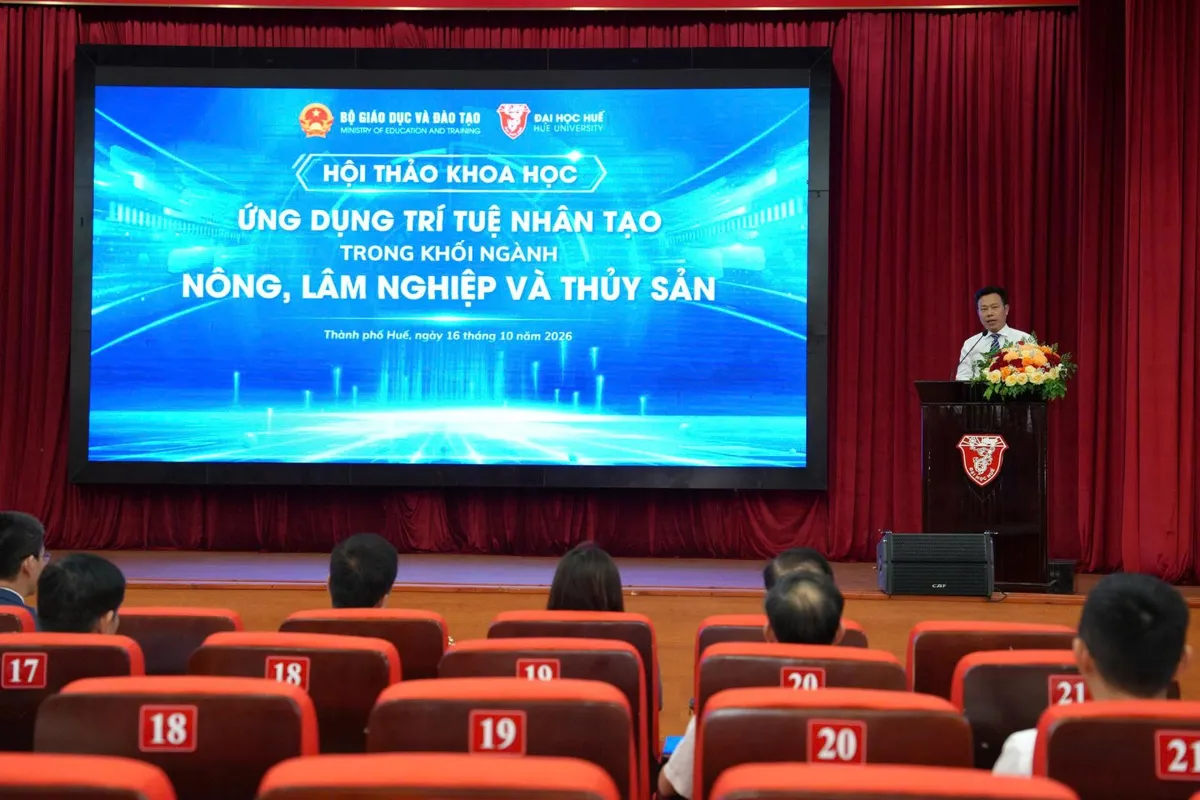
A view of the workshop. Photo: MOET
Developing an AI competency framework for students should include understanding AI and data, using tools, critical thinking, verifying results, professional ethics, and the ability to solve specialized problems. The framework should be tiered by discipline and level, assessable, and flexibly applicable across educational institutions.
For faculty members, the requirements extend beyond simply using AI tools; they also include assessing reliability, protecting data, selecting appropriate methods, and translating research findings into practical solutions.
The Deputy Minister noted that AI integration does not necessarily require the creation of separate courses, but can be achieved through updating existing subjects, developing interdisciplinary courses, organizing practical projects, or collaborating with businesses.
Integrating AI applications with production needs.
At the workshop, Dr. Ma Truong Thanh, Deputy Head of the Computer Science Department, Can Tho University, proposed six core AI competency groups for students, including AI awareness, data literacy, AI tool utilization, professional application, evaluation and validation, and ethics and responsibility.
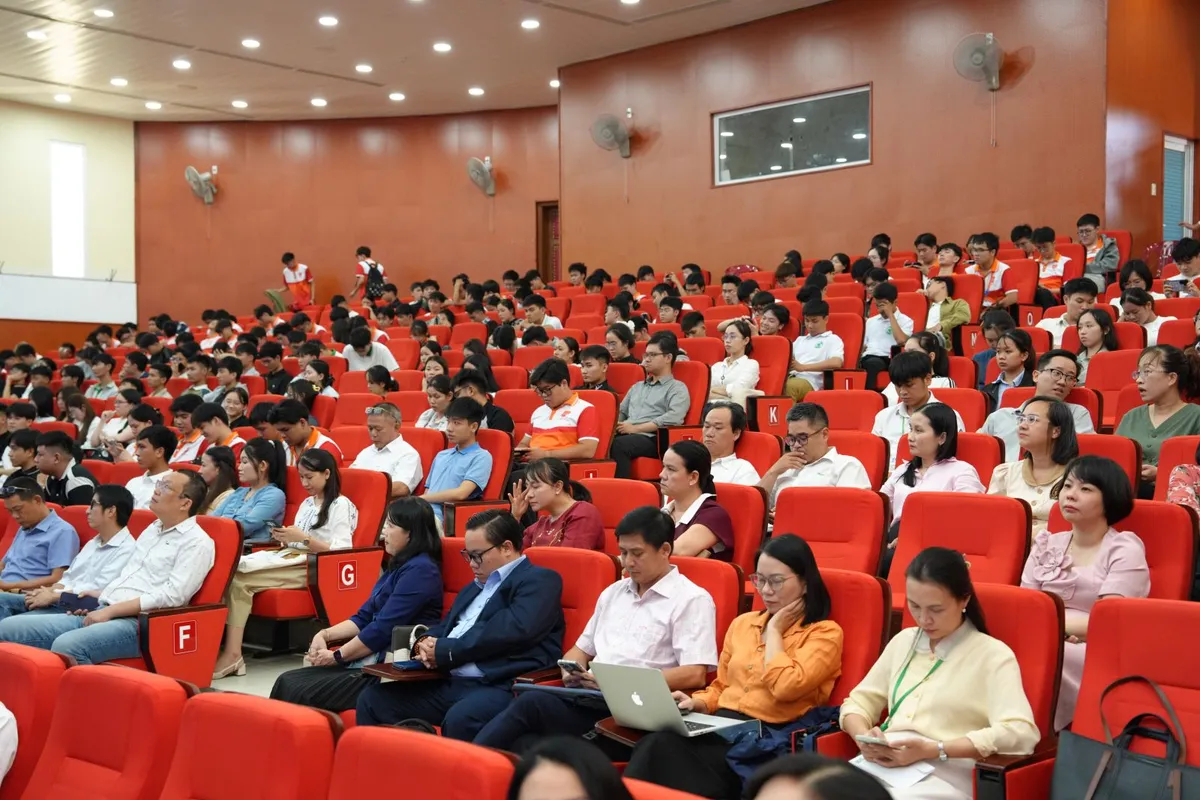
Delegates attending the workshop. Photo: MOET
Competencies are developed at three levels: understanding and use; professional application; and development and innovation. Students need to know how to identify problems, select data, verify results, and take responsibility for professional decisions.
The discussion also proposed a roadmap for integrating AI from foundational knowledge to applications in specialized courses, followed by practical application through projects, internships, and dissertations. Evaluation could be based on specific products such as verification reports, data logs, and AI usage declarations.
Business representatives attending the workshop introduced various applications of AI in idea development, data analysis, report generation, and transforming research results into practical solutions. In agriculture , AI can assist in pest and disease identification, growth monitoring, yield forecasting, crop scheduling, and water resource management.
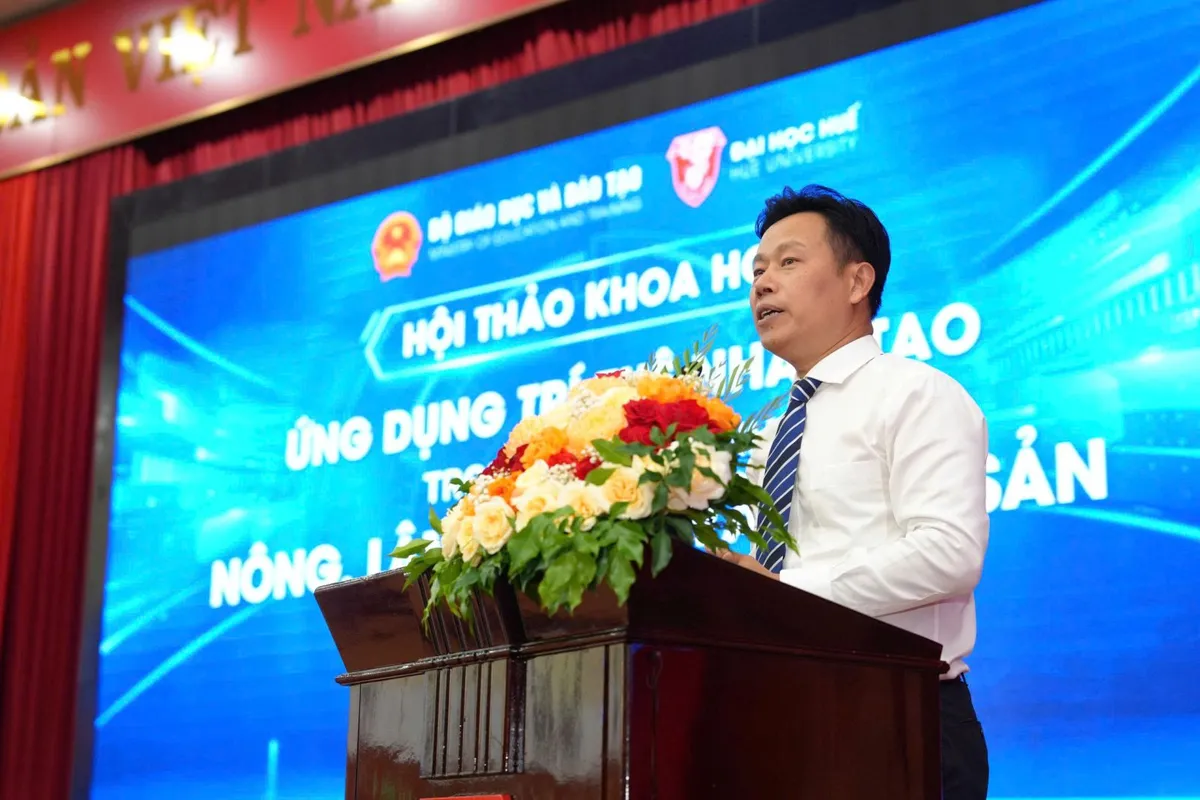
Deputy Minister of Education and Training Le Quan speaks at the workshop. Photo: MOET
Deputy Minister Le Quan suggested that training institutions coordinate with businesses, cooperatives, and localities to select pressing problems with legitimate data and specific evaluation criteria. Effectiveness should be considered in terms of accuracy, cost, usability, environmental impact, and benefits for producers.
Emphasizing the need for responsible use of AI, the Deputy Minister affirmed that technology should help enhance professional capacity, not replace scientific thinking and professional responsibility. The organizing committee was requested to compile proposals on an AI competency framework, integrating technology into training programs, and establishing mechanisms for collaboration with businesses to continue its practical implementation.