Courts convict AI investment scammers in South Korea, complicate fund recovery - CHOSUNBIZ
A group that raised money from investors with this pitch was convicted of fraud in court. They promoted that AI automated trading could produce high returns, but the actual investment funds were used not for bitcoin transactions but for so-called "borrowing from Peter to pay Paul," paying other investors' allowances and refunds.
Cases of stealing money by promising guaranteed high returns from AI-driven investments are being adjudicated one after another. The courts determine whether the crime is established by examining whether the investment program was actually operated and whether there was intent to defraud at the time the funds were received. However, even if fraud is recognized, whether victims can recover their investment is a separate matter.
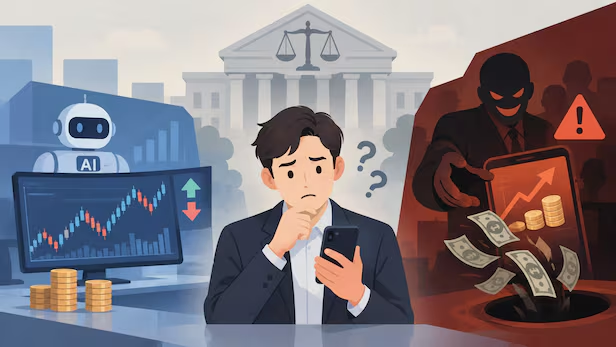
◇ "AI makes transactions so there's no loss"… but they plugged holes with new funds
According to legal sources on the 18th, the Pohang branch of the Daegu District Court in June sentenced a person surnamed A to six months in prison, suspended for one year, for deceiving investors by saying they would generate revenue through AI-based bitcoin transactions and taking the investment money.
A and others advertised that the AI program could produce high returns without loss of principal and that recruiting lower-tier salespeople would earn separate allowances. However, the investment money was not used for bitcoin transactions but to pay existing investors' allowances and refunds. The court found them guilty of stealing 10.4 million won.
In July, the Daegu District Court also handed down a guilty verdict in a similar case. B was indicted on charges including stealing 167 million won from investors by touting a cryptocurrency with no real value and an AI futures trading program with unclear origins. The court sentenced B to one year in prison for fraud and six months in prison for violating the Act on Similar Receiving of Money, among other offenses.
Not every loss from AI investing constitutes fraud. If the program was actually operated and losses occurred due to market conditions, it may amount to an investment failure. In contrast, if there was no intention or ability to generate revenue from the outset and money was taken by touting false rates of return, fraud may be established.
Goo Tae-eon, an attorney at Law Firm Lin, said, "Do not be swayed by claims of using AI; verify whether they are a duly registered financial investment business," and noted, "Be wary of unregistered firms touting high returns."
◇ Lending your account is punishable… recovering losses is another matter
Even if investors were not deceived directly, anyone who aided the fraud can be punished. The Seoul Central District Court in Aug. last year sentenced a person surnamed C to four months in prison for aiding and abetting fraud after providing a bankbook to an AI automated investment fraud ring.
C handed over an account number and password and a one-time password generator (OTP) in exchange for financial support. The ring used the account to deceive a victim by promising revenue through AI stock investing and collected 790,000 won. The court found that C knew the account could be used for crime yet provided it, thereby aiding the offense.
Program developers can also be punished as accomplices if they participated in development knowing the fraud. Attorney Kim Jeong-cheol of Law Firm Woori explained, "If you created a program knowing it would be used for fraud, you can be an aider and abettor."
Recovery of losses is another issue. Even if the fraudster is convicted, the investment is not automatically returned. Depending on the requirements, victims can apply for a compensation order in the criminal trial or file a separate civil lawsuit. Civil liability can also be sought from the account provider or program developer depending on the degree of involvement in the crime and the causal relationship to the loss.
However, even with a compensation judgment, if the perpetrator has no assets or the investment has already been depleted, actual recovery may be difficult. This is why criminal punishment and the return of losses must be distinguished in AI investment fraud.