
Musk's Rare Reflection on White House Tenure: Only AI and Robots Can Solve the US Debt Crisis
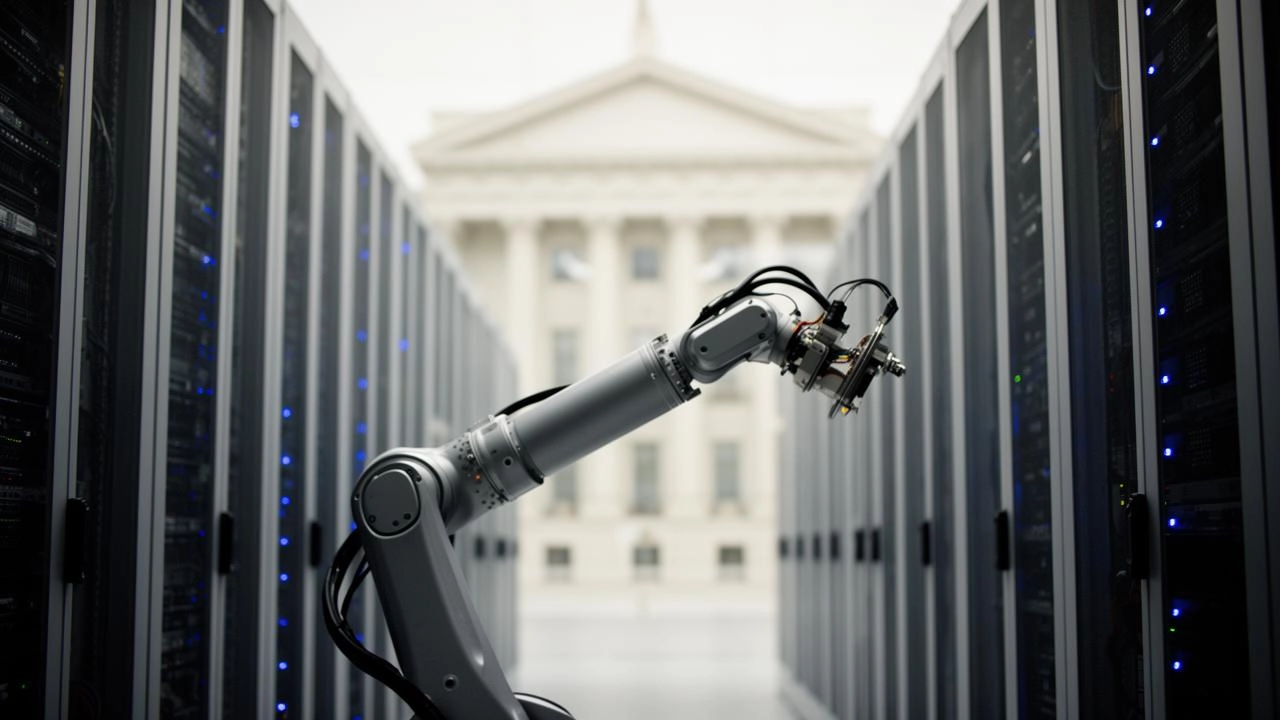
Tesla and SpaceX CEO Elon Musk offered a rare, systematic reflection on his experience entering the Trump administration and leading the Department of Government Efficiency (DOGE) in an upcoming podcast, stating bluntly that the path of cutting spending from within the government to resolve the US debt crisis has failed, and asserting that the only way out is artificial intelligence and robotics.
Musk made the remarks in a conversation with biographer Walter Isaacson. The new podcast, titled The Builders, is expected to launch next week. According to Axios, Musk told Isaacson in the interview that the DOGE experiment has failed. "It turned out that trying to solve the budget deficit from inside the government system simply doesn't work."
"The only way to solve the US debt problem is through AI and robots. The old approach cannot solve this problem," Musk said. He added: "We cannot solve this simply by cutting spending."
The US national debt has now climbed to roughly $41 trillion. Musk's remarks effectively amount to an admission that DOGE's efforts to cut spending and curb waste from within the federal government fell short of expectations.
Sharp Criticism of Washington's Political Ecosystem
In the interview, Musk expressed near-total disillusionment with the willingness to cut spending within the American political system. He argued that from the president to both chambers of Congress to the judiciary, there is a lack of genuine will to reduce government spending.
"The president, the House, the Senate, the courts—none of them have this intention," Musk said bluntly. "To put it plainly, almost no one in government genuinely wants to cut spending. There are only a handful of exceptions in the entire world, like Republican Senator Rand Paul of Kentucky."
When it came to President Trump, Musk's analysis was more nuanced. "Maybe if the president made this his top priority, we could do it," he said. "If you try to solve the deficit and eliminate wasteful spending, you make countless enemies. President Trump wants to be liked. He doesn't like people criticizing him or being upset with him because certain funding was cut."
This observation reveals Musk's deeper understanding of White House decision-making logic: cutting spending politically means creating adversaries, which structurally conflicts with Trump's own inclination to seek political popularity.
"Stayed in the White House Too Long"
Beyond his criticism of fiscal matters, Musk's reflection on his own political experience over the past year is equally striking. He admitted he "got a bit sucked in" and spent too long away from his companies.
"I should have gone back sooner and focused on AI," Musk said. He stated that if he could do it over, he would have stayed more in the background and limited his formal government role to just one or two months, rather than the four months he actually served.
When Isaacson asked whether working in the West Wing was somewhat intoxicating, Musk did not shy away from the feeling. "A little bit, yes. Because being in the Oval Office and witnessing major decisions being made is actually pretty cool," he replied.
However, reflecting on his Washington tenure does not mean Musk is exiting American politics. According to campaign finance disclosures and statements from a spokesperson for Musk's political action committee, his political spending in this US election cycle totals approximately $366 million, with at least $276 million flowing to Republican-aligned organizations and his own super PAC since July of this year.
The Logic and Pitfalls of AI Solving the Debt Problem
Musk's framing of AI and robotics as the only solution to the US debt problem echoes the thinking of US Treasury Secretary Scott Bessent. Bessent has previously said that if the US economy grows at 3%, the country could grow its way out of its debt burden. The logic is that AI-driven productivity gains can expand the size of the economy, boost corporate profits and government tax revenue, and thereby ease debt pressure.
Musk's own explanation of this mechanism is more specific. He argues that AI-led automation could cause a surge in output, making the supply of goods grow faster than the money supply, which in turn could trigger deflation; meanwhile, productivity gains could drive economic expansion and increase tax revenue, helping to contain the widening budget deficit and debt burden.
Jack Clark, co-founder of AI company Anthropic, also painted an optimistic picture of AI-driven economic growth at the IMF-World Bank annual meetings on Saturday. According to Anthropic's economic scenario models, in an extreme scenario where AI capabilities advance rapidly and are widely adopted, US GDP could reach $44.4 trillion by 2030.
However, this outlook is not Anthropic's baseline forecast. It rests on assumptions that AI can autonomously complete the vast majority of knowledge work and rapidly integrate into economic activity. Clark also acknowledged that such staggering economic growth would require a continuous stream of new industries and new inventions.
More critically, a larger economy does not automatically mean the fiscal deficit disappears. The Congressional Budget Office projects a federal fiscal deficit of $1.9 trillion in fiscal year 2026, widening to $3.1 trillion by 2036. Even if AI does boost productivity, whether the government can effectively convert new economic activity into tax revenue remains an open question.
Anthropic's models reveal a structural shift worth watching: in the extreme growth scenario, capital's share of GDP income could rise from roughly 40% today to 54.8%, while labor's share falls to 45.2%. If AI primarily boosts corporate profits by substituting for labor without creating enough new jobs and labor income, the new wealth may not generate tax revenue at a corresponding scale. At the same time, massive investments in data centers, chips, and power infrastructure, along with rising government debt interest payments, could offset part of the growth dividend.
Bessent revealed on the 9th of this month at a policy forum in Washington that the US government is formulating a fiscal consolidation plan to reduce the widening fiscal deficit and ease pressure on Treasury issuance, with the plan expected to be announced after the midterm elections. This timeline means that before the fiscal consolidation package is formally unveiled, the debate over whether AI can serve as the "cure" for America's debt problem will continue.