
The era of 'AI assistants'
SVO - The era of AI agents has officially begun in the artificial intelligence market, as major technology corporations, including Meta, OpenAI, and Google, are simultaneously launching their own AI agent services. Cybersecurity concerns related to these AI agents are also predicted to become a central topic of discussion.
The AI agent market has boomed thanks to the launch of "Muse" from Meta earlier last month. Muse is capable of handling tasks such as sending emails and messages, managing schedules, booking travel and restaurant reservations, shopping and paying for goods, and filling out online forms. By offering most features completely free of charge, the service generates revenue through transaction fees. By providing a high-quality AI agent without charging fees, Muse has become incredibly popular, even reaching the top position on the Apple App Store.

Meta's AI agent's strength lies in its superior personalization capabilities compared to other services. This stems from Meta's operation of social media platforms including Facebook, Instagram, WhatsApp, and Threads, with billions of users, creating a massive database of individual preferences. This characteristic perfectly aligns with the "personal superintelligence" strategy that Meta CEO Mark Zuckerberg has long pursued. On social media, users have shared their experiences with "Muse," such as planning cost-effective trips or finding the best prices when shopping. According to reports, Meta is considering integrating Muse's features into its new line of AI-powered smart glasses.
Following the explosive popularity of "Muse," OpenAI launched a counter-product: an AI agent called "Dots." This agent is designed to proactively complete projects, such as conducting research, analyzing data, writing documents, and developing software in a virtual cloud computing environment. While Muse focuses on tasks like shopping, Dots is geared more towards professional work. Powered by OpenAI's most advanced model, "GPT-6 Astra," Dots is capable of analyzing the context surrounding a user-defined goal to perform the necessary tasks. Users can give instructions to Dots not only through the web interface or the ChatGPT application, but also through external channels such as text messaging, work communication platforms like Slack, and Microsoft Teams.

This system is designed to require explicit user approval for sensitive tasks, such as password changes, permanent data deletion, or software installation. This feature will be offered at no extra cost to subscribers of the ChatGPT Pro plan (starting at $100 USD/month) as well as Business Premium subscribers. Amidst the projected growth of the enterprise AI agent market, many other companies, such as Meta, are also stepping up their efforts to expand their presence, recently introducing "Muse" for business purposes.
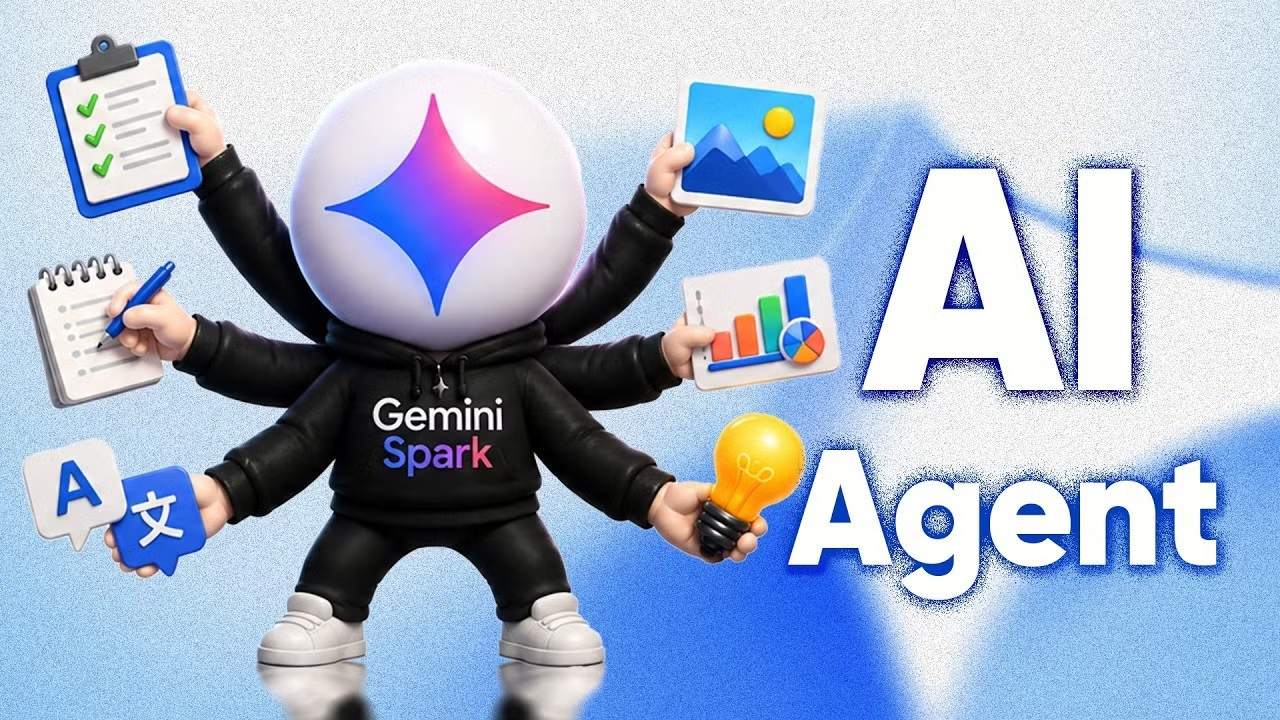
Google is expanding its AI agent services through "Gemini Spark." The focus of this service is integrating Google's own products such as Gmail, Google Docs, and Google Sheets, which are already familiar to users worldwide . For example, when a user receives a flight or hotel booking confirmation email, Spark will automatically add that information to their travel itinerary. It can even identify activities near the destination and update them in the personal calendar. Furthermore, the tool helps organize school-related email notifications and track deadlines for documents such as consent forms for children's field trips. By analyzing a user's past emails, the system learns their writing style and characteristics, then applies those traits to new email drafts.

Major technology companies are racing to launch AI agents, as they are expected to be game-changers in the market. Amidst this surge in investment by global tech giants, two leading South Korean IT companies, Naver and Kakao, are also accelerating the development of their own "agent AI" initiatives.
Naver has introduced "Agent N," a system capable of understanding user intent through natural conversations, eliminating the need for users to painstakingly compose specific search commands and directly performing practical tasks such as payments or reservations. Furthermore, after launching a shopping agent that proactively monitors product inventory and searches for discount offers for users, Naver plans to test a payment feature within this agent for certain product categories later this year. This initiative aims to enhance shopping convenience for users utilizing the company's AI agent. The agent also includes a specialized delivery feature, suggesting products that can be delivered on the user's desired date based on their registered address. For product categories requiring fast delivery, the system will automatically recognize the conversation context and suggest items that support express delivery, even if the user hasn't made a specific request.
Through "ChatGPT for Kakao," directly integrated into the KakaoTalk platform, Kakao is enhancing its AI agent service called "KakaoTools." A key feature is the ability to access services from external partners, such as Hana Tour, Daiso Mall, Shinsegae Duty Free, and LF Mall, by leveraging Kakao's AI technology. Users can interact with these integrated partner services simply by chatting within the "ChatGPT for Kakao" interface. Currently, KakaoTools supports a total of 28 services, including those from Kakao itself and its subsidiaries, as well as services from external partners. The scope of these services is diverse, encompassing various fields such as gaming, lifestyle, finance, travel, and shopping.
As the market for AI agents grows, so do concerns about security. Another key issue is how to compensate for damages arising from the autonomous actions of these AI agents.