
Junior Recruitment Portion at Anthropic Decreases, Employee Meeting Time Increases 20 Percent
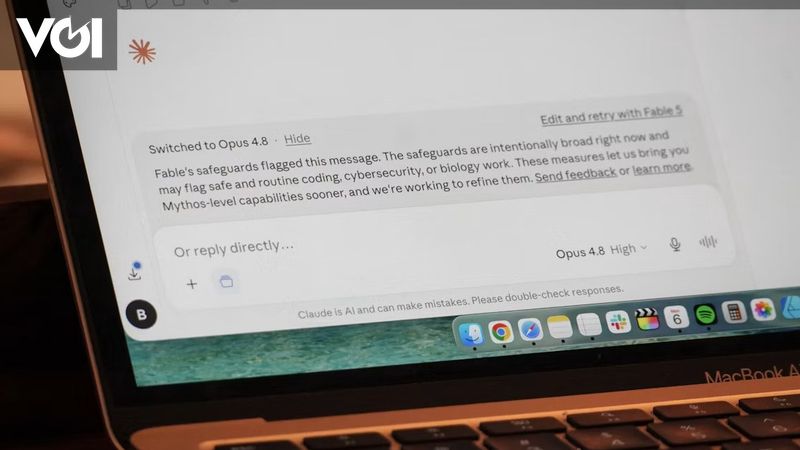
JAKARTA - The proportion of junior technical employee recruitment at Anthropic has dropped sharply, from 27 percent to only 9 percent since the beginning of 2025. In the midst of increasing use of artificial intelligence (AI), the Claude developer company also recorded a 20 percent increase in employee meeting time.
According to TechCrunch, quoted Sunday, October 18, the change was revealed in an Anthropic employment report published Friday. The report shows how the use of AI is changing the way work, the composition of the workforce, and recruitment patterns at the company.
In addition to recruitment, the percentage of junior employees in the technical division also shrank from 21 percent to 14 percent. Junior employees are entry-level workers or those with relatively little work experience.
The figure shows a decrease in the proportion, not that Anthropic cut the number of junior employees by the same percentage.
Changes are also seen in meeting time. Based on company calendar data, the time spent by each employee for meetings increased by 20 percent compared to the previous year. Especially employees who handle technical work directly, the increase reached 16 percent.
Anthropic attributes the increase to the importance of trust, accountability, and coordination among employees. According to the company, many workers still consider face-to-face meetings necessary even though AI has helped complete various tasks.
Meanwhile, the proportion of all technical employees to the total Anthropic workforce decreased from 61 percent to 56 percent.
The company explained that the change occurred as the business division developed. In addition, AI tools for writing program code are increasingly enabling non-technical employees to create their own software.
Program code is a series of instructions used to create software.
The use of Claude also changes daily work. In an internal survey in April 2026, as many as 27 percent of employees admitted to being more productive thanks to AI.
However, 20 percent of respondents said their jobs shifted from doing the work directly to managing the work Claude did.
An employee described constant pressure at Anthropic to work as fast as possible and use Claude in a variety of jobs.
An engineer even compared the task of managing AI to raising a child.
"When raising children, every child comes with the same problem that demands your attention. Various Claude also do the same thing," he said.
According to the Anthropic report, the large number of texts produced by Claude actually caught the attention of employees. The results of AI work still have to be read, checked, and regulated by humans.
Anthropic believes that time, attention, and human decision-making capabilities are beginning to become factors that limit productivity increases.
However, the company says the use of AI has improved work results. The number of program codes generated by each employee has increased, sales staff have completed more sales, and more contracts can be processed.
Anthropic acknowledges that more code does not necessarily mean better quality or greater business benefits. However, the company claims to have not found signs of a decline in code quality.
Anthropic assesses that changes in work patterns in his company can be an illustration of how AI affects labor needs and recruitment in various economic sectors. Even so, similar patterns are not necessarily the case in other companies that use AI in different ways.
The English, Chinese, Japanese, Arabic, and French versions are automatically generated by the AI. So there may still be inaccuracies in translating, please always see Indonesian as our main language. (system supported by DigitalSiber.id)