
OpenAI seeks to accelerate fundraising ahead of Anthropic IPO, sources say
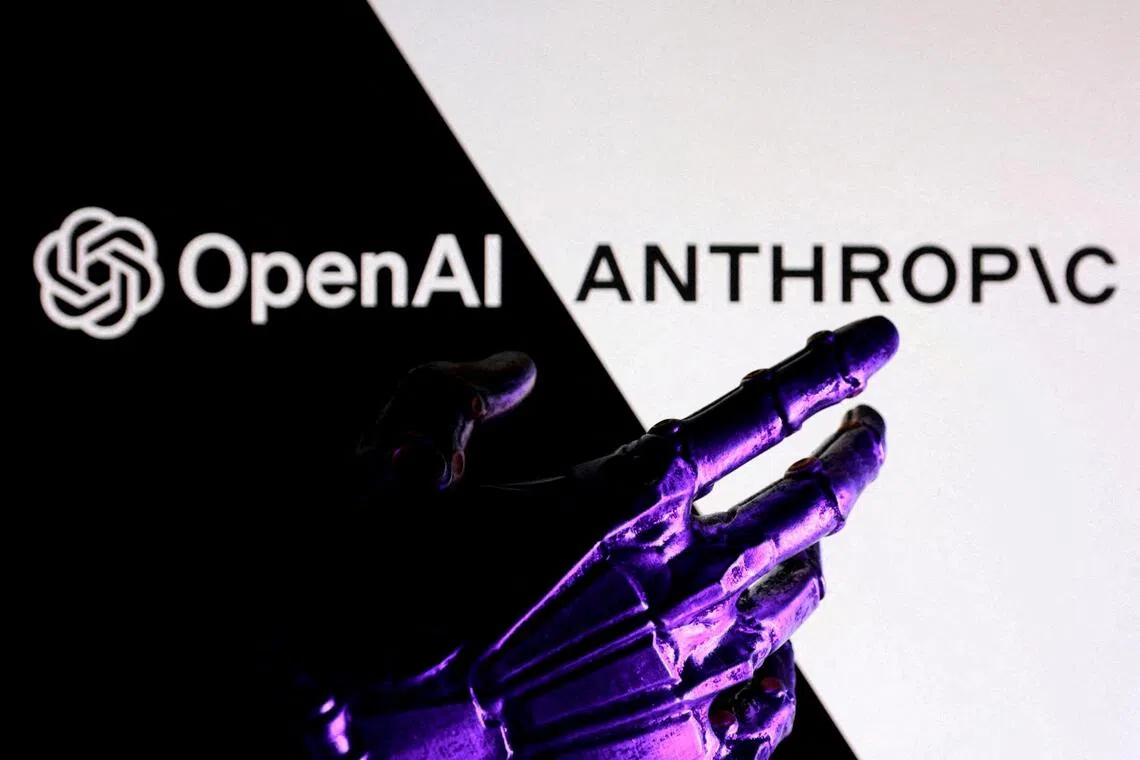
OpenAI and Anthropic, two major AI companies, are increasingly seeking money from the same group of investors.
PHOTO: REUTERS
Published Oct 20, 2026, 08:11 AM
Updated Oct 20, 2026, 08:11 AM
NEW YORK – OpenAI is moving quickly to get promises of investment from investors before its rival Anthropic is expected to go public in mid-November. The fast fundraising effort could value the company behind ChatGPT at more than US$1.4 trillion (S$1.79 trillion), according to two people who know about the matter.
The people said one reason for the tight schedule is that OpenAI wants to get ahead of Anthropic. Both companies, which develop advanced AI systems, are increasingly seeking money from the same investors. OpenAI also wants to take advantage of recent revenue growth following the launch of new models.
SoftBank Group, MGX, which is based in Abu Dhabi, and other current investors in OpenAI are discussing whether to take part in the fundraising round, which is expected to be worth about US$30 billion, one of the people said.
The faster schedule shows how closely the two AI companies are competing to raise money, as both aim for valuations of more than US$1 trillion. This is happening as people grow more worried about higher interest rates, big swings in technology stock prices and the high values placed on AI companies.
OpenAI met with investment funds that mainly hold investments for the long term and government-owned investment funds last week. Anthropic held its own investor day at the same time. People familiar with the matter said OpenAI's fundraising round is expected to move faster than most deals of this size.
People who know the company said OpenAI also needs money to pay for its major infrastructure commitments. It wants to strengthen its financial position in case worsening IPO market conditions delay its planned stock market listing in 2027.
Although many investors want to buy shares in both companies, they must decide how to judge and divide their money between two complicated, competing investment opportunities that may come within days or weeks of each other. Some investors believe OpenAI is trying to secure money from funds that might otherwise put more of their money into Anthropic's IPO, the people said.
OpenAI and SoftBank declined to comment. Anthropic and MGX did not immediately respond to requests for comment.
Trying to avoid comparisons
OpenAI is telling investors that its growth sped up after it launched its GPT-6 Astra model. It said its revenue had reached US$50 billion a year when calculated using its current rate of earnings, and it expects this figure to reach US$70 billion by the end of the year, according to one of the people.
OpenAI has also lowered the prices of its cheaper models. The company said this has led to more people using them. It also told investors that it could reduce AI model prices further, the person added.
Anthropic's annual revenue, calculated using its current rate of earnings, reached about US$65 billion by July, Reuters reported earlier.
Anthropic told investors that its revenue for the third quarter of 2026 rose to US$16.8 billion from US$11.6 billion in the second quarter. But its revenue has been growing more slowly from one month to the next, raising concerns among investors about its valuation.
One person said OpenAI wants to finish raising money before Anthropic shares more financial information. Those details would give investors a clearer view of Anthropic's business and make it easier to compare the two companies.
The new information could lead investors to ask OpenAI Chief Financial Officer Sarah Friar for more details about the company's revenue growth and financial outlook, the person added.
OpenAI records revenue after first subtracting the share paid to its partners. It has accused Anthropic of making its revenue look bigger by counting the full value of contracts sold through outside cloud service providers. Anthropic previously told Reuters that it follows accepted accounting rules.
“OpenAI could want to set its own valuation and not have to worry about a comp (comparison),” said Edward Best, co-chair of capital markets at Willkie Farr & Gallagher. He is not working on the deal and was speaking about a possible situation. “It’s really a two-horse race in terms of being public.”
OpenAI was last valued at US$852 billion in March, after raising a record US$122 billion. This included a promise from Amazon.com to invest up to US$50 billion in the AI company.
The Financial Times previously reported some details about OpenAI's possible fundraising round.
Market worries affect IPO plans
Bankers and investors said several companies preparing to sell shares to the public have decided to wait until after Anthropic's planned IPO. They are concerned that market swings could make it harder to attract investors while competing with Anthropic. They are also worried about falling prices of AI stocks. Some companies that are still privately owned are also planning their fundraising rounds so they do not happen at the same time as Anthropic's expected stock market debut, the bankers and investors said.
Some current and possible future investors in Anthropic have argued that the company should be valued at closer to US$1.5 trillion when it goes public, rather than the US$2 trillion it wants. Reuters reported last week that this followed third-quarter results from the AI startup that were weaker than expected.
The new estimates come as markets have been unstable since September. Changes in oil prices, rising bond yields and growing worries about AI safety have made investors less willing to put money into technology stocks. Investors are also taking a closer look at the cost of building the infrastructure needed for AI, including the loans used to pay for the data centres behind its rapid growth.
Cloud service provider CoreWeave is at the centre of the latest concerns. Its shares and debt prices fell sharply last week as investors examined the nearly US$50 billion it had borrowed to expand quickly.
These uncertainties have disrupted what many expected to be a busy autumn for companies planning to go public. Companies are reviewing their plans because markets are unstable and investors are questioning their valuations. AirTrunk REIT, backed by Blackstone, Firmus, backed by Nvidia, and SB Energy, backed by SoftBank, have either withdrawn or paused their planned listings.
Nuclear services company Holtec referred to a “perfect storm”, mainly caused by uncertainty about demand for data centres, when it withdrew plans for a US stock market listing in September.
Companies in the Philadelphia Semiconductor Index, which is widely used to track demand for computer chips linked to AI, have lost US$1.6 trillion in market value in less than two weeks. Companies that build AI infrastructure have faced especially strong pressure. REUTERS