
Anthropic's $750 Billion Compute Bill Could Delay Its Path to Profitability
Quick Read
AMD's Data Center revenue grew 107% to $6.72 billion in the second quarter of 2026. The business went from losing $155 million to earning $2.10 billion in operating income.
Anthropic has agreed to spend more than $600 billion on computing. That is more than Intel's total market value of $484.7 billion. Anthropic still says it needs more computing power than the market can supply.
AMD's price-to-earnings (P/E) ratio is 201. This means much of the growth investors expect is already reflected in its share price. The stock could be at risk if businesses slow their spending on AI.
Before its planned initial public offering (IPO), Anthropic has committed more than $600 billion to computing. That is more than the total market value of Intel (NASDAQ:INTC), which stands at $484.7 billion. "Compute" means the chips, servers and data centers used to train and run AI models. An S-1 is a document a company files with regulators before it goes public. The Wall Street Journal first reported details from this filing on October 20, 2026. The filing has not yet been made public, so the reports are based on leaked information.
Geiger Capital summed up the reaction on X:
"This is insane… Anthropic has $600B+ in future compute contracts, and they're still saying they need more compute capacity than the market can provide." (Geiger Capital on X)
Three different spending figures are now being reported. In late September, Reuters reported that a filing showed $518 billion in planned AI expansion, mostly tied to deals that cannot be canceled. Crypto Briefing's latest report puts Anthropic's commitments above $600 billion. The Wall Street Journal, in a report cited by Bloomberg, said Anthropic may spend $750 billion on additional computing capacity over the next several years.
The first two figures describe signed agreements at different points in time. The third describes planned spending. They measure different things, so they should be considered separately and not added together.
What It Means for AMD
The business behind these agreements is growing quickly. Crypto Briefing reported that Anthropic earned $16.3 billion in revenue during the first half of 2026, while InvestingLive reported that its revenue grew nearly 15 times. Crypto Briefing also reported a net loss of $80.7 billion during the first half of the year, mostly because of accounting charges. A loss caused by accounting charges is different from money actually spent. These charges reduce reported profit but do not take the same amount of cash out of the bank. Anthropic has agreed to pay far more for computing than it currently earns in revenue. It is counting on its revenue to keep growing.
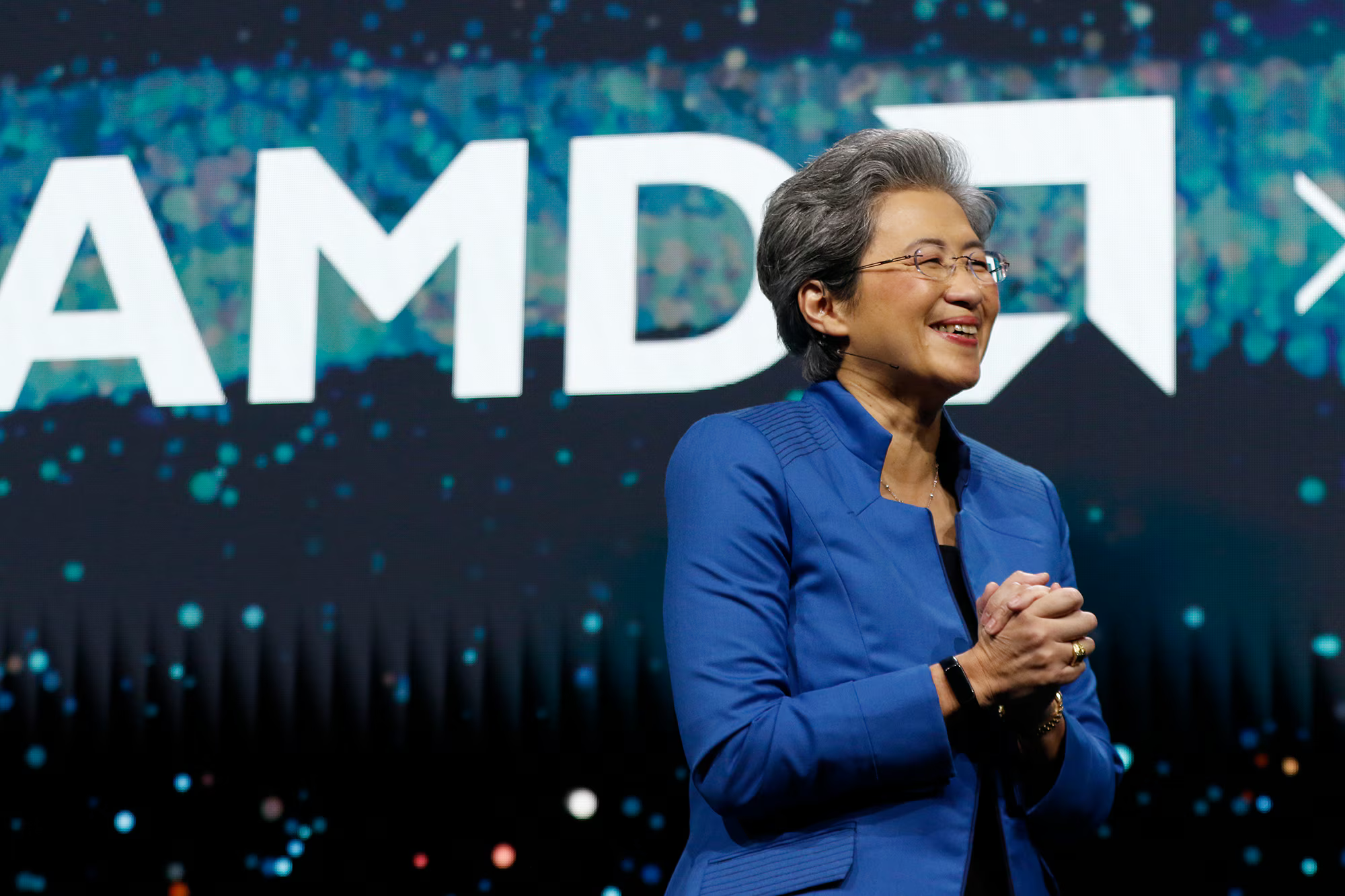
Companies that provide computing power and cloud services are on the other side of these agreements. CoreWeave (NASDAQ:CRWV) disclosed earlier this year that it had signed an agreement with Anthropic lasting several years. Amazon (NASDAQ:AMZN) and Alphabet (NASDAQ:GOOGL), through Google, have been long-time partners. Among chipmakers, the most important publicly disclosed connection is with AMD (NASDAQ:AMD).
During its August 4, 2026 earnings call, AMD said Anthropic would use up to 2 gigawatts of MI450 Series GPUs in Helios racks. The first gigawatt is expected to be put to use in the first half of 2027. AMD CEO Lisa Su named Anthropic, OpenAI and Meta as AMD's "strategic anchor customers." When asked how much revenue one gigawatt could bring in, she said: "I think we've said double-digit billions. We're still in that range."
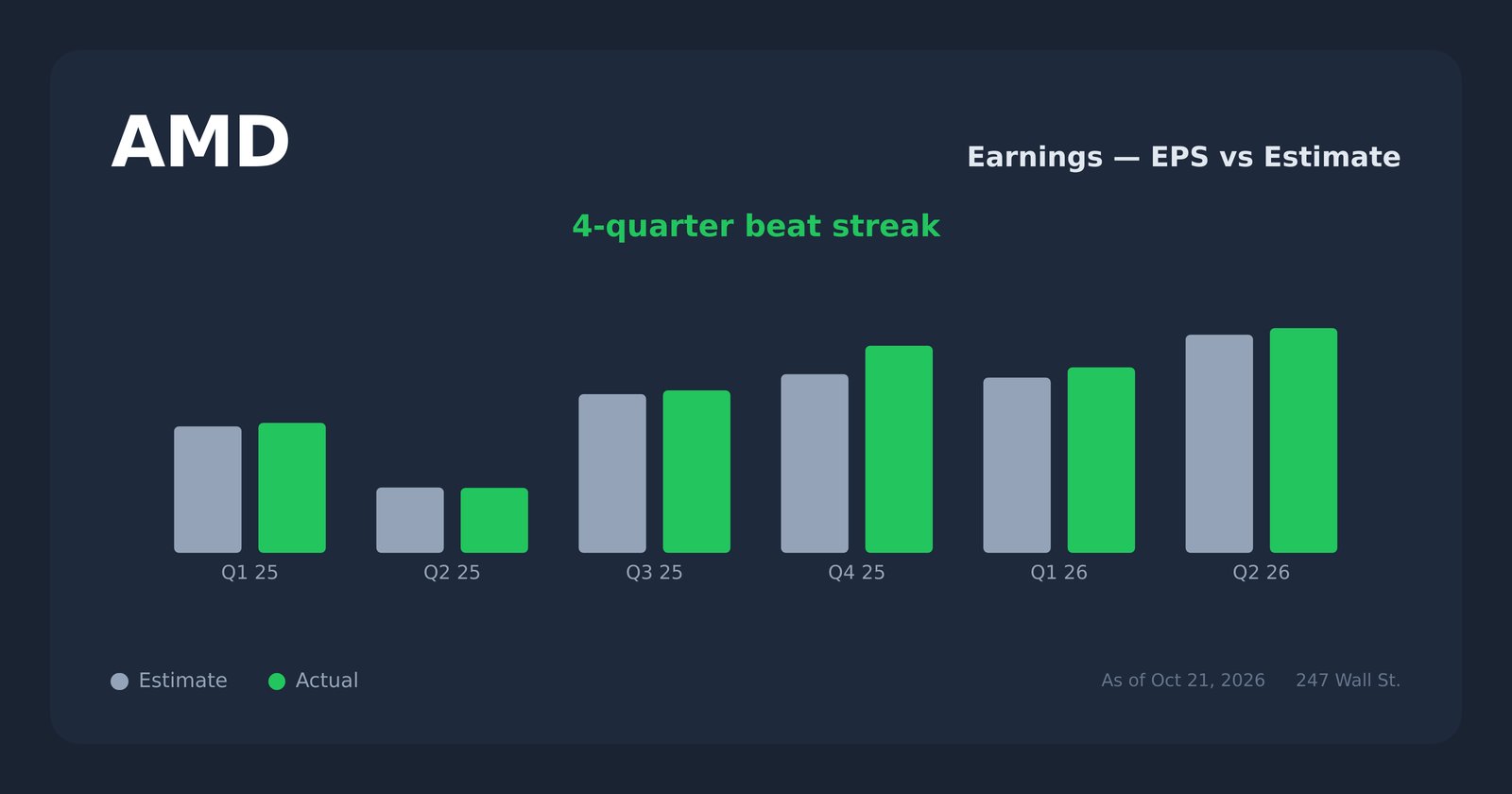
This demand is already showing up in AMD's results. Revenue in the second quarter reached $11.54 billion, up 50.1% from the same period a year earlier and above analysts' average estimate of $11.31 billion. Adjusted earnings per share, also called non-GAAP EPS, were $1.66, beating expectations of $1.61. Data Center revenue rose 107% to $6.72 billion, making up 58% of total revenue. The business also earned $2.10 billion in operating income, compared with a loss of $155 million a year earlier.
AMD Shares Rebound After an AI-Trade Pullback
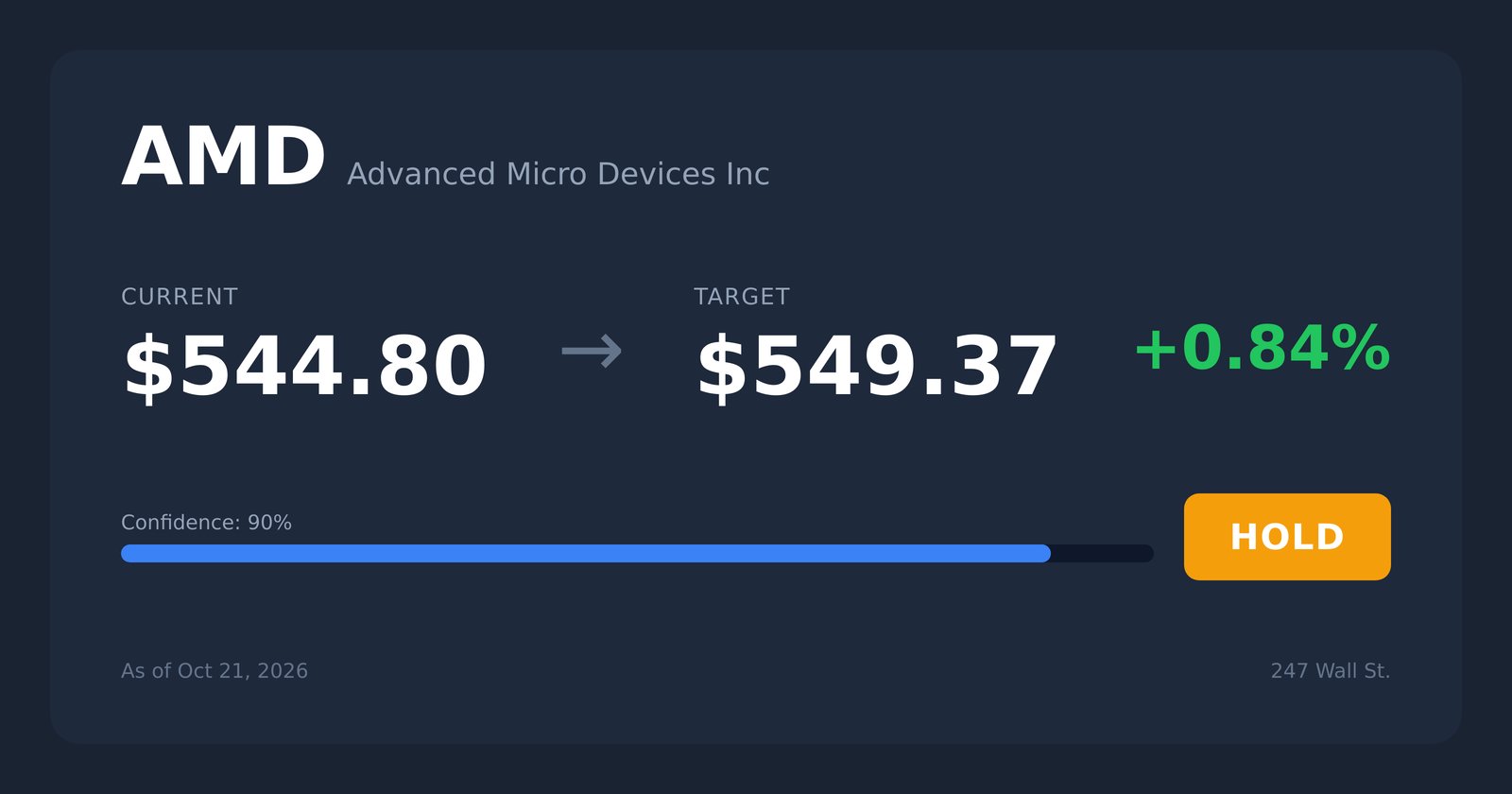
AMD shares rose about 5% after the August earnings report. More recently, they fell 6.32% between October 14 and October 20, dropping from $570.82 to $534.74. During that time, Barron's reported signs of trouble in the AI investment boom. On the morning after the Anthropic reports appeared, AMD shares rose 3.06% to $551.12. They were still up 157.34% for the year so far.
Bull Case and the Risks That Could Derail It
The positive case for AMD depends on demand being greater than supply. Anthropic says it needs more computing power than the market can provide. AMD says customer demand for its Helios systems is "very strong and tracking ahead of our initial forecast." AMD expects its Data Center revenue to more than double in 2027. It also has three major customers, so its growth does not depend on just one buyer. The AI infrastructure business includes much more than companies that make GPUs. A free report featured seven companies that supply, cool and connect these data centers.
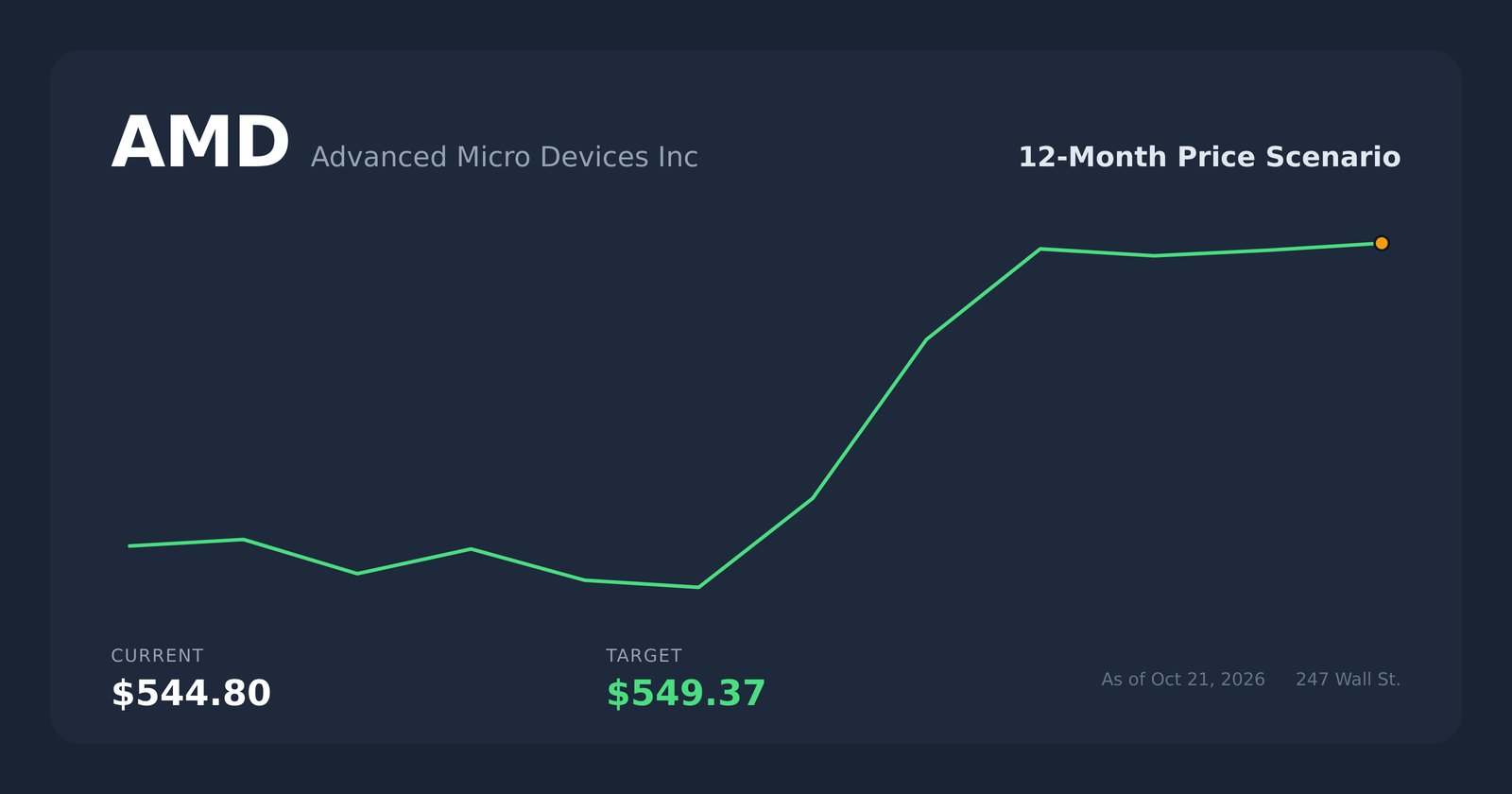
The main risk comes from Anthropic's finances. Its spending agreements are difficult to cancel, it is reporting losses, and it depends on going public and continuing to have access to investors and financial markets. On October 20, Ken Griffin said that companies across America were "looking at their bills from Anthropic and OpenAI" to check whether the spending was helping them become more productive. If the spending stops delivering useful results, companies could delay their AI projects. AMD's P/E ratio is 201, which means much of its expected growth is already reflected in its share price.
What to Watch Before Anthropic's S-1 Goes Public
The next key point to watch is AMD's forecast for third-quarter revenue of about $13 billion, with a possible difference of $300 million above or below that amount. When Anthropic's S-1 becomes public, investors should look at three things: how large its spending commitments are and whether they can be canceled, whether its revenue keeps growing, and how much cash the business actually spends. A customer that has committed more money to computing than Intel's entire market value and still says it needs more gives AMD a source of demand that could continue well into 2027.