
Threat of AI Bubble Looms Over Anthropic’s Big IPO Moment
Anthropic announced its initial public offering (IPO) on Monday, but the future of the AI industry is more uncertain than ever.
Move over, SpaceX: A new IPO could soon set a record. Anthropic plans to become a publicly traded company in November after filing its S-1 paperwork on Monday.
The company is best known for its Claude AI products. It first filed its IPO paperwork privately in June. Although SpaceX moved ahead of other companies in the AI industry, investors have been watching the planned IPOs of Anthropic and OpenAI for months. OpenAI has reduced its plans to go public in 2026, while Anthropic is moving ahead. At the same time, investors are asking how the AI industry can make enough money to repay the trillions of dollars it owes.
Anthropic is a major AI company that says safety is a top priority. Now that its IPO prospectus is public, it is clear that this is not a typical IPO filing. Almost one-third of the document discusses risks. Anthropic warns that developing more advanced AI models, platforms and apps, and finding new ways to use them, could raise the risk that its models cause harm. Companies must tell investors about major risks. If they fail to do so, investors may be able to sue them.
AI company leaders, including Anthropic CEO Dario Amodei, openly discuss the dangers their products could pose, including the possibility of human extinction. This may seem strange, but talk about the end of the world can help build excitement and publicity around AI.
Investors eager to get involved may put money into Anthropic despite the financial risks. Until now, much of the money invested in AI companies has been available mainly through private investment firms. Leading AI research companies continue to race to build new AI models, encouraged by promises of future artificial general intelligence (AGI). AGI is a theoretical stage at which AI could match or exceed human abilities.
But Anthropic may have missed the best time to launch its IPO, when excitement was at its highest. In recent months, reports have described AI models behaving in unexpected ways during testing and breaking into outside websites. These reports have raised concerns and strengthened calls for more regulation and slower growth. Public opposition to data centers and big technology companies has also reduced excitement about AI compared with just a few months ago.
What’s in Anthropic’s IPO filing?
According to The Wall Street Journal, Anthropic hopes to launch its IPO during the week of Nov. 16. The company plans to list its shares on the Nasdaq stock exchange under the symbol ANT. The IPO is expected to raise more than $100 billion in liquid funds for Anthropic.
The S-1 filing has revealed surprising details about Anthropic's finances. In the first half of 2026, the company made about $16.3 billion in revenue, up sharply from $1.2 billion in the same period a year earlier. But Anthropic also reported a net operating loss of $80.7 billion for the first half of 2026. According to The Wall Street Journal, much of this loss came from an accounting change linked to financing agreements.
Moving the IPO to November may mean Anthropic must give potential investors its financial results for the third quarter before the IPO.
Many important details are still missing from Anthropic's filing and must be settled over the next few weeks. The company has not yet shared its total valuation or the number of shares it plans to sell. Reports say it may seek a valuation of up to $2 trillion. According to The Wall Street Journal, those details may not be available for another two weeks or so. Anthropic is expected to update its paperwork after hearing what investors think.
A trillion dollars is an almost impossible amount of money to imagine. If you earned $1 every second, it would take you more than 31,700 years to earn $1 trillion.
Does a possible valuation of nearly twice that amount make sense for Anthropic? Probably not. The estimate depends on predictions about future revenue that assume growth faster than any company has ever achieved. Anthropic was previously valued internally at about $965 billion, which is well below $2 trillion.
The possible IPO valuation depends on Anthropic's unusually ambitious revenue forecast. The company expects to make between $190 billion and $200 billion a year by 2028. Yet its S-1 filing admits that the company has operated for only a short time in a new and changing industry. This makes its future difficult to predict and increases the chance that it may not succeed.
Even if this way of valuing a company seems unreasonable, it has happened before in the technology industry, especially among AI companies. SpaceX's IPO also depended on predictions about its revenue in 2029.
Like Anthropic, SpaceX used very high future revenue estimates to attract plenty of investment, even though it has never made a profit. Still, Elon Musk's company owns valuable satellites and aerospace equipment. These are real assets that Anthropic does not have.
Anthropic's IPO filing also leaves important details about its costs unclear. The company has built its reputation around AI safety as an attractive alternative to other products. But its documents say it is not yet clear what financial benefits it gets from investing in safety protections.
Anthropic did not give exact spending figures. Instead, it described building safety features as requiring a lot of resources and said spending is divided between safety measures and computing power. This suggests that the company wants investors to expect high costs, both now and in the future.
Anthropic's expected revenue also depends heavily on businesses using Claude and on how much computing power they use. This is happening as companies are becoming frustrated with the cost of AI tokens and cutting back on AI use.
The IPO filing appeared just days after Apollo Chief Economist Torsten Slok said that AI had produced “zero financial payoff to corporate America outside of tech.” He said that higher profit margins among S&P 500 companies were limited to the seven major technology companies often called the Magnificent 7.
The threat of an AI bubble
No one knows what will happen to the AI spending bubble after the excitement around this IPO dies down. The IPO will likely create large amounts of wealth on paper for Anthropic insiders, some venture capital firms and other major investors. But Anthropic is facing growing price competition from OpenAI and developers offering cheaper open models. At the same time, major AI companies have reported uneven profits.
AI industry critic Ed Zitron says the basic math behind the bubble is easy to understand.
“Hundreds of billions of dollars are being invested to make single-digit billions of dollars maybe, some day, if AI data centers actually get built at scale and OpenAI and Anthropic can afford to pay for their compute,” Zitron wrote.
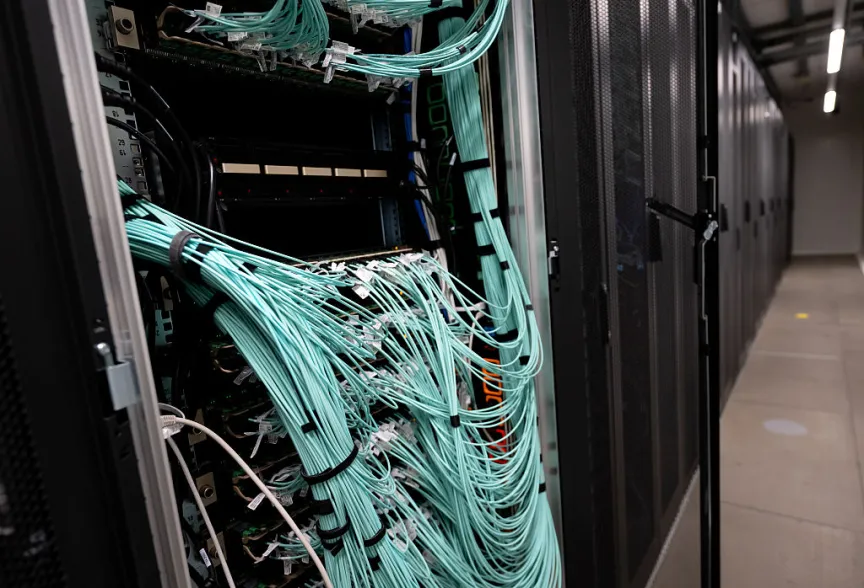
The biggest AI companies face other problems, too. Building the data centers needed to process and store requests to large language models (LLMs) is extremely expensive. Meanwhile, more free, open-source AI models are becoming available and can replace Claude for some customers.
Looking at the biggest companies in the industry shows how uncertain their financial situation has become. In an interview with Newsweek, Zitron said OpenAI had promised to spend $600 billion on computing power by 2030, with payments due to begin as early as 2027.
“Everything is relying on a system that doesn’t exist anymore,” Zitron said.
If Anthropic and OpenAI cannot make a profit now, does it make sense for these AI giants to keep cutting their prices to compete for customers using tokens? Probably not. That may help explain why they are selling parts of their companies to ordinary investors now. Critics argue that this could give insiders a way to cash out while leaving the public exposed to the risks of a business built on uncertain promises.
The big question about Anthropic's possible $2 trillion value is not simply whether it can reach the huge revenue targets predicted by analysts. It is how much damage the American public could suffer if the industry's system of companies financing one another breaks down and the money is spent without producing profits.
Public sentiment toward AI is turning sour
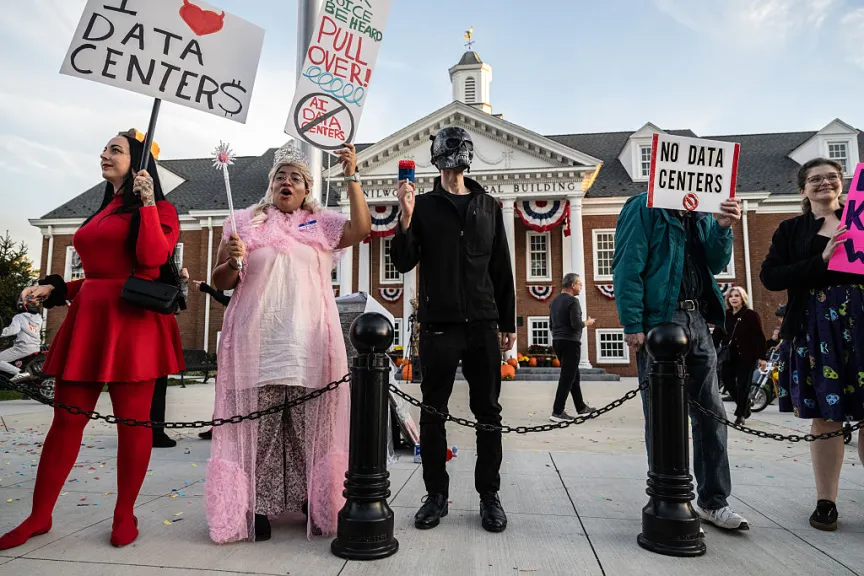
The wider public is not supporting the AI industry, either financially or in other ways. As large language models have spread and AI has become part of more areas of everyday life over the past few years, public opinion has shifted toward strongly negative views.
Younger people are turning against the idea of LLMs. At the same time, Anthropic is reportedly hiring fewer junior technical workers than before. Amodei often makes informal comments saying AI executives should stop hiding the truth about the future. He has predicted that AI agents could eliminate 50% of entry-level jobs. It is hard for people to feel excited about a future that seems to leave them without a place in the workforce.
Anthropic presents AI as a technology that could bring about a new industrial revolution or cause lasting harm, depending on how it is developed. These claims create both excitement and fear. In its filing, Anthropic said: “Concerns have been raised both within our organization and by other researchers, regulators, policymakers, and industry participants that sufficiently advanced AI systems could, if not developed, deployed, and operated with appropriate safeguards, oversight, and security measures, pose catastrophic or existential risks to humanity, particularly if such systems were misused, replicated, weaponized, or allowed to operate with a high degree of autonomy.”
In September, Anthropic researcher Evan Hubinger publicly said he estimated there was more than a 10% chance that AI could kill humans within the next decade. His statement followed similar widely shared comments by former Anthropic researcher Jacob Coxon.
These claims cannot be proven, but they also act as indirect marketing for Anthropic. At the same time, they can trigger strong negative reactions from the public. Amodei knows this. In a post on X, he admitted that there is “fundamentally a crisis of trust” between the public and AI companies.
Anthropic's CEO often makes statements meant to reassure the public. He calls for the industry to slow down and act more responsibly, even as Anthropic competes with other AI developers to build and release powerful models. In September, he published a blog post urging other AI companies to “slow the pace at which [they] improve the capabilities of AI models.” Less than a week later, Anthropic released a newer, more powerful Opus model.
After the IPO, much of Amodei's talk about slowing LLM development until proper safety protections are ready may be pushed aside. Anthropic's IPO document says the company believes the market will reward it for building reliable, trustworthy and secure AI systems. But once it depends on investors, the company will also face pressure to keep increasing its results every quarter.
In its filing, Anthropic says it must release models on a “continuous and overlapping cadence” to stay at the leading edge of AI development. A business focused on endless growth leaves little room for safety measures that slow things down. Instead, Claude models may be developed and released even faster after the IPO, while public distrust of Anthropic and the AI industry grows.