
The Hinge on Apple’s Constantly Breaking New Foldable iPhone Was “Built With AI”
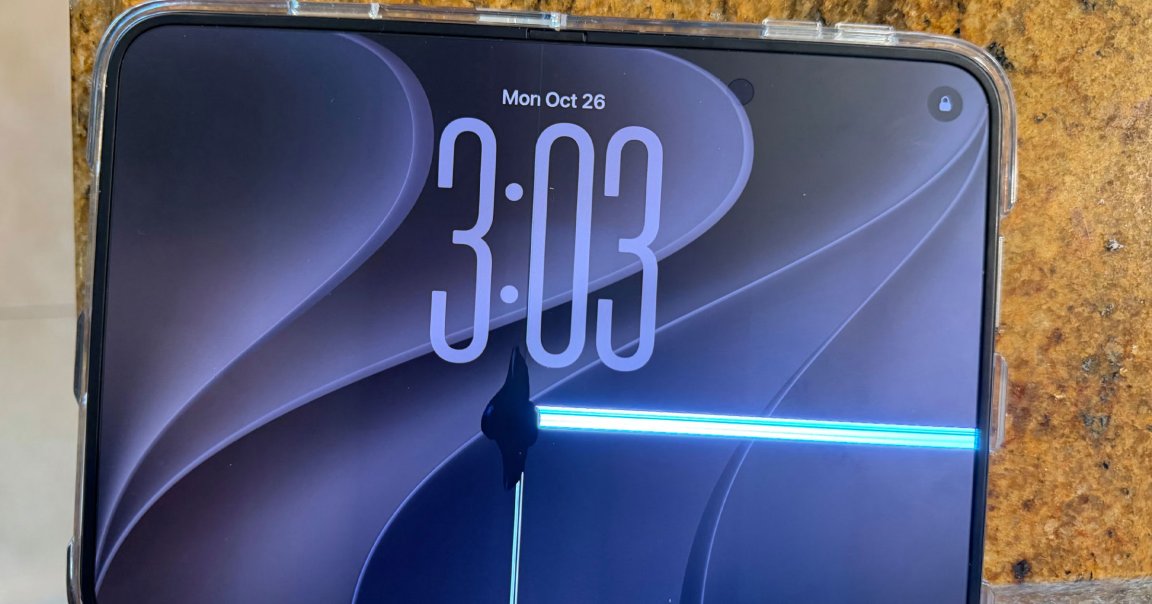
The success of Apple's new foldable iPhone Duo depended on one important part: its hinge, which lets the phone fold.
But some of the large inner screens on these phones, which cost more than $2,000, are already cracking. Early reports about what went wrong point to a faulty hinge design. This is a serious problem for a company worth trillions of dollars.
Given these problems, it is worth looking at how the hinge was designed: with help from AI.
Last month, Johny Srouji, Apple's chief hardware officer, explained the process at an event.
According to TechCrunch's report, Srouji said: “During manufacturing, we use AI algorithms to precisely match each individual hinge with its best-fit housing to ensure perfect alignment,” Srouji explained, “and a confocal laser progressively scans the topology of every single unit and 3D prints up to 25 micro layers of a custom photopolymer to eliminate residual waviness.” In simple terms, Apple uses computer algorithms to match each hinge with the part that holds it. A special laser scans each unit, and a 3D printer adds up to 25 very thin layers of a special plastic material to smooth out any remaining uneven spots.
It is important to understand that “AI algorithms” can mean many different things. A machine-learning tool used to design a product is not the same as a chatbot like Claude or ChatGPT. These kinds of algorithms have been used in factories and other industries for years. Apple has also talked for a long time about using machine learning to design and improve its software and devices. For example, machine learning, which some people call AI, helps an iPad ignore a person's hand resting on the screen while they write or draw with a stylus.
Still, Srouji chose to connect machine-learning algorithms, if that is what Apple used here, with what many people now mean when they say “AI.” Today, the word is often used for chatbots, computer agents that can act on their own, and other systems powered by large language models that seem intelligent. Perhaps he thought this description would impress investors and the public more.
Whether AI played a major role in designing the hinge or not, the hinge is clearly causing problems. A small but significant number of customers say their screens cracked along the hinge just hours after they opened their new phones.
Shahram Mokhtari, the lead technician who takes apart devices at iFixit, told The Verge that part of the phone's “extremely sensitive” flexible inner screen is pressing against the hinge. It appears that a support bar in the middle, which should move out of the way to let the hinge fold without creating a crease, is not pulling back far enough. This puts too much pressure on the screen.
Apple acknowledged on Monday that there was an “issue” and said it was replacing the damaged phones.