
Framework launched at COP31 to ‘make AI part of the climate solution’
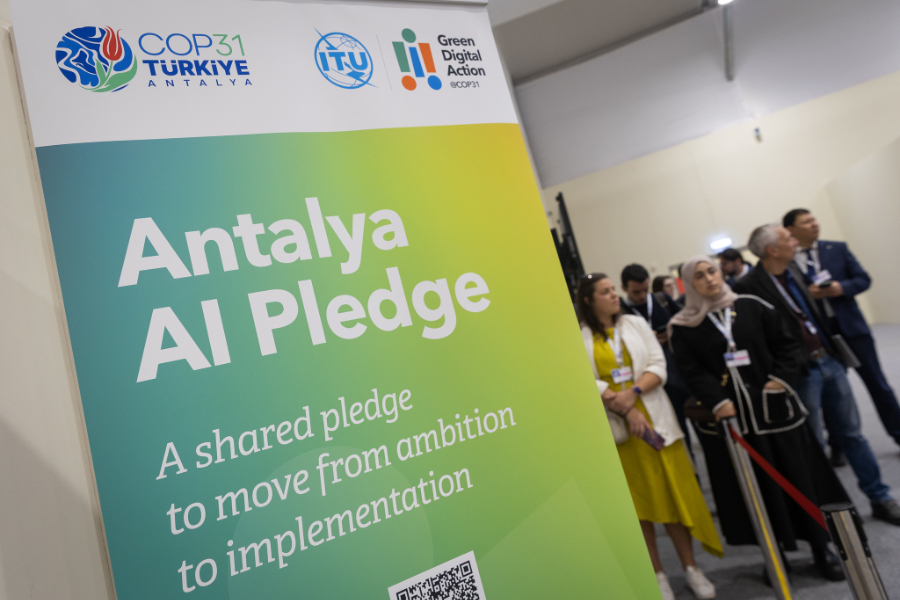
A new voluntary framework called the Antalya Artificial Intelligence Pledge was launched at COP31. It encourages governments, businesses and organisations to make clear promises about how they will use AI to help solve climate problems.
The pledge was launched at a High-Level Green Digital Action Roundtable. It sets out actions in four areas: making the energy and hardware needed for AI in a sustainable way; designing, managing and buying AI responsibly throughout its life; helping measure and report the environmental effects of AI systems; and providing more funding and technical support for using AI to fight climate change, especially in developing countries.
‘A double-edged sword’
Speaking at the roundtable, UN Climate Change executive secretary Simon Stiell described AI and other new technologies as a “double-edged sword. The task ahead is to blunt their dangerous edges, sharpen their catalytic ones, and put these technologies responsibly to work.”
The pledge also encourages those who sign it to share information about their energy use and environmental impact, invest in low-emission energy for AI systems and data centres, build AI infrastructure that uses fewer resources, and support AI tools that can help put climate solutions into practice.
The pledge has received early support from governments, universities and other academic groups, civil society organisations and private companies.
Finding a balance
“AI’s benefits must outweigh its growing costs,” Stiell added. “And those benefits must reach every country. […] AI companies’ licence to operate is already on thin ice, right across political spectrums in many countries. And under that thin ice lie some potentially very deep regulatory waters, as political landscapes shift.”
“So, CEOs and boards need to step-up, and align business and investment plans with the world’s agreed climate goals.”
The roundtable also presented the 2026 UN Climate Change AI for Climate Action Award. The winner was Tanzanian entrepreneur Upendo Ernest Lyimo, who developed CLIMAID. This AI-powered platform brings together climate data, satellite observations and local information to help assess climate risks and plan ways to adapt to climate change.
“That is how AI earns public trust, and takes it to places as a climate solution,” Stiell noted. Read more here. [Photo: ©UN Climate Change – Kiara Worth]