
U.S. tightens AI chip export controls targeting China ahead of Trump-Xi talks
The new rule targets data centers in other countries that provide services to Chinese companies. It replaces an older rule from the Biden administration that was not being enforced and had allowed restricted chips to keep reaching these data centers.
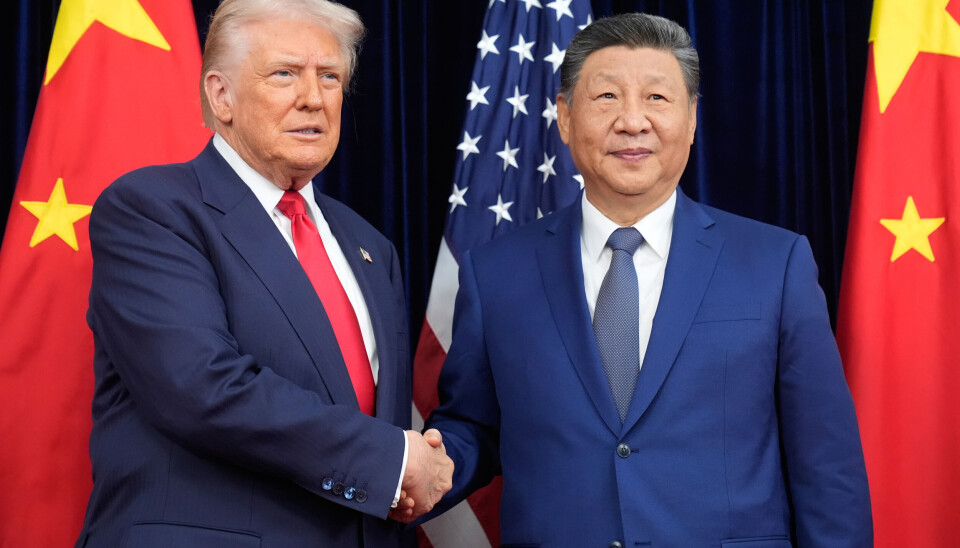
The Donald Trump administration said on Monday that it would further limit China's access to advanced AI chips made by companies such as Nvidia. The tighter rules were announced as U.S. President Donald Trump traveled to China to meet President Xi Jinping.
The Commerce Department's effort to stop the use of overseas data centers and the illegal movement of chips comes as more people question whether the department has done enough to keep sensitive technology out of China's hands.
The new rule limits shipments of advanced chips to Southeast Asian countries such as Malaysia, Singapore and Thailand. Chinese companies have used these countries to access computing power for training AI models. The rule also sets new requirements for overseas data centers that provide large amounts of computing power to companies based in China.
The rule was announced days after reports said Nvidia CEO Jensen Huang had resigned following an alleged affair with a person suspected of being a Chinese spy. The person worked for Megaspeed, a cloud computing company based in Singapore and an Nvidia partner. Megaspeed rents computing power through its data centers and has faced questions about whether advanced AI chips were illegally sent to China.
The rule sends a message "that America is serious about closing dangerous export control loopholes China has been exploiting for years," said John Moolenaar, the Republican chair of the House Select Committee on China.
Trump is scheduled to meet Xi on Thursday in Shenzhen, China, during this week's Asia-Pacific Economic Cooperation summit. Trump has threatened or introduced technology limits on Beijing before other important meetings with Chinese leaders.
The new rule names Singapore, Thailand, Malaysia, Indonesia and Brazil as countries where advanced chips are at greater risk of being sent to China. Companies now need a U.S. export license to ship covered chips to these countries.
These requirements do not apply to U.S. companies that operate data centers in the five countries.
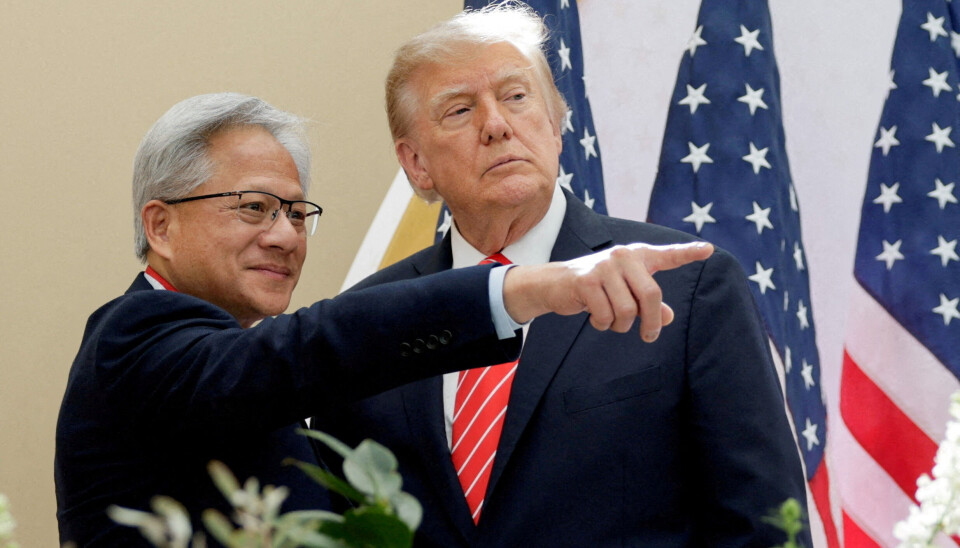
Lutnick joins Trump on China visit
U.S. Commerce Secretary Howard Lutnick is among the government officials traveling with Trump to Asia, a White House official said. Lutnick has faced criticism over how he has handled rules controlling chip exports to China following the Nvidia scandal.
Senior White House officials have discussed whether Lutnick should be removed from his job, Reuters reported last week. But Trump told reporters on Monday, as he left the White House for trips to the Philippines and China, that he had no plans to replace Lutnick.
The United States may be preparing more actions against China. U.S. Treasury Secretary Scott Bessent said on Friday that four government agencies had supported adding Megaspeed to a trade blacklist. However, the Commerce Department, which was responsible for the decision, had not done so.
"It's a different viewpoint. One wants to be friendly with China and one wants to have a blowup with China," Trump said on Monday. "They both are acceptable but they are different views.”
The disagreement drew more attention after the Commerce Department said the new rule had been written by the Treasury Department and the White House's National Security Council. These two groups also ordered the rule to be released.
Trump also said he would not mind seeing Huang return as Nvidia CEO. This added his support to calls for Huang to get his job back.
In a statement on Nov. 15, Megaspeed said it follows all laws and government rules that apply to it, including U.S. export control requirements.
U.S. authorities began investigating Megaspeed in 2024 over possible violations of export control rules. Nvidia added the company to its list of businesses it would not sell to in June 2025, the Commerce and Justice departments said in a joint statement on Monday.
Stricter rules for chip exports
Kate Koren, a former Commerce Department official, said Monday's new rule would have a much greater effect on China than simply adding one company to the department's trade blacklist, called the "Entity List."
"Nvidia and Jensen [Huang] himself were key drivers of the argument for selling chips to China as a strategy," Koren said. "The revelations last week put that argument into question, and the pendulum is swinging in the other direction — toward tighter export controls.”
The rule gives overseas data centers that provide large amounts of computing power to companies based in China 90 days to get U.S. export licenses if they want to continue providing those services. If they do not get the licenses, they could face further export restrictions in the future.
The rule also limits shipments of chips to data centers whose computing power is above a certain level.
The license requirement does not cover systems used by online shopping companies and social media companies. The Commerce Department said these systems do not create the same national security risks.
The new rule also officially cancels an earlier rule from the Biden administration. That rule had limited access to AI chips around the world by requiring companies to get licenses.
In early 2025, the Commerce Department said it would not enforce the Biden-era rule and planned to cancel and replace it. However, the department did not take action until Monday. During that time, billions of dollars' worth of restricted Nvidia chips continued to reach data centers used by Chinese AI companies.
Nvidia, which strongly opposed the Biden administration's rule, declined to comment on the new rule.
Reuters